EKIP– Expert Club for Economics and Politics A Different Opinion

Authors: Georgi Vuldzhev, Emil Valkov
This commentary is an analysis of the government's programs in the fields of economy, energy, transport and tourism for the period 2017-2021, published on 02.08.2017 on the website of the Council of Ministers here.
Economy:
(Georgi Vuldzhev)
The first priority in the government program in the "economy" sector is the elimination of the administrative burden for business by introducing the principles of "tacit consent" and "one information in one administration". This is a very good measure, about which there is not much to say. Reducing the administrative burden is a highly necessary measure given the low efficiency of the state bureaucracy. This reduction will facilitate the work of entrepreneurs and will lead to higher economic growth (something that we have commented on before, in our analysis of the election programs), so it is an obvious positive.
The government should consider more radical deregulation
The measures envisaged by the government will not, by themselves, "remove" the administrative burden completely. There is still much to be desired in this area. The reduction in the administrative burden that the government plans is not very large and is not sufficient to have a very serious positive effect. If the government really wants to support business and improve the level of economic growth, it should carry out a complete reassessment of all regulations on business and eliminate unnecessary ones, or at least consider introducing a rule according to which for every new regulation, two old ones must be repealed. Then it will already be a question of a very significant reduction in the administrative burden.
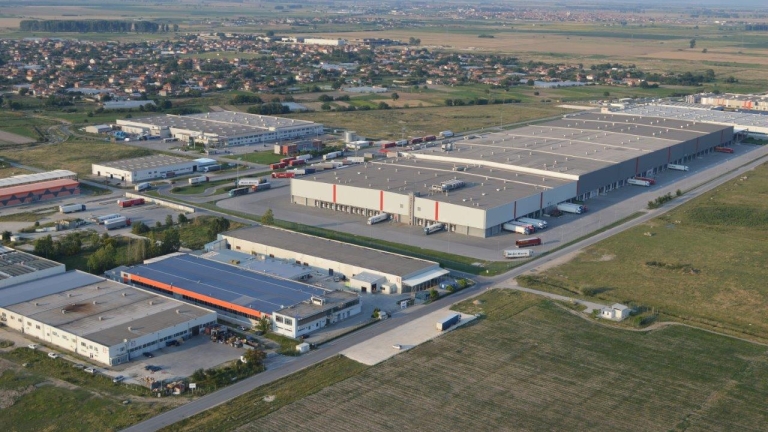
The next two priorities in the program include support for economic zones through financing measures to encourage investments and the implementation of the Strategy for the Development of the Capital Market. What the capital market needs in order to develop well can be described in one word – privatization. The state does not need to do anything other than privatize the Bulgarian Stock Exchange if it really seeks stable development in this sector of the economy. Similar stock exchanges are private in every developed country. Especially in a country like Bulgaria, where the level of corruption is one of the highest in Europe, having the state de facto own the capital market creates too many risks and hinders the development of this market.
Decentralization and less state intervention is what the economy needs
As for the economic zones, this is a model that has already proven to be relatively successful in some respects and it is good for the state to continue to replicate it, but not recklessly. The model should be developed in the direction of more decentralization, which allows more autonomy for local authorities to compete in offering good conditions for investment. It is the element of decentralization that makes this model successful.
At the end of the program for the "economy" sector, there is a rather funny priority 53, which is for "increasing the growth and competitiveness of the Bulgarian economy". Under this priority, a number of measures are listed that the state intends to take in order to improve this competitiveness. However, what is needed is not for the state to interfere more in the economy, but less. This is the way to improve its competitiveness. State incentives and subsidies provided to various companies only distort the natural market process, lead to abuses and the benefit of politically connected businesses at the expense of taxpayers. If the government really wants to improve the competitiveness of our economy, then it should interfere less in it, not more.
Energy:
(Georgi Vuldzhev)
The first major priority of the management program in the energy sector is the achievement of energy security through domestic production in the Black Sea and diversification of natural gas sources. This includes the construction of gas interconnections with Greece and Turkey to achieve this goal. It is good that this priority is included in the government program, because the diversification of natural gas sources is something that Bulgaria has needed for a long time. Excessive dependence on Russian production creates not only economic, but also geopolitical risks for the country, which can be minimized only through diversification.
Overall, this priority is commendable (as long as it is implemented), but the exploration and development of the deposits in the Black Sea must be carried out in a market-based manner. Corruption at the highest levels of power in our country is very high, and accordingly, abuses and irregularities with concession contracts remain a serious risk. The surest way to eliminate the corruption risk is for such deposits to be fully privatized through a transparent procedure with the guidance of international consultants (perhaps from the IMF, the World Bank or another similar organization). Unfortunately, however, the current government does not seem to have the will for such a radical (but necessary) move, and therefore the corruption risk will continue to be a factor that can taint the otherwise good idea of diversifying energy sources.
The state promises liberalization, but when and in what way is still a mystery
In second place comes the long-awaited liberalization of the energy market. This is a laudable priority, but unfortunately, apart from this vague promise that the market will be liberalized at some point, there is no specifics about when and how this will happen. In practice, the same song is being sung that we have been listening to for, what, 10 years? The electricity market will be liberalized, the government says, but when and what it means by "liberalization" are "details" that are left to the reader's imagination. If the government is not going to specify its intentions in this regard, it would be better to spare us the embarrassment.
In order to take this priority seriously, it is first necessary to clearly define what is meant by "liberalization" - is it about eliminating the "NEC-single buyer" model entirely or about some softer form of liberalization? The program does not make it clear at all, and this is probably the government's goal - to constantly talk about liberalization and thus nourish the illusion in society that such will be implemented, even though in practice nothing of the kind is happening.
The Belene NPP madness, for some unknown reason, returns as a target of the government
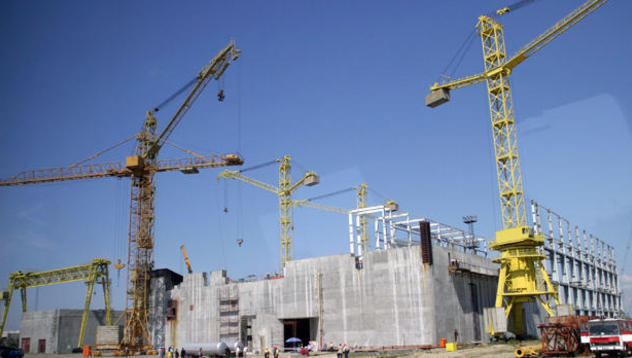
The biggest problem in the energy program, however, is the Goal 206 under Priority 56, where the government promises to conduct an analysis of the possibility of using the already acquired equipment to build a nuclear power plant at the Belene site on a "market principle", without any participation and guarantees from the state. And of course, without concluding any long-term contract for the purchase of the produced electricity.
The promises that the Belene NPP would be implemented as a project solely on a fully market basis are a farce. So many calculations and estimates have already been made that to claim that it is possible for such a nuclear power plant to exist without state support is a blatant lie. All calculations and forecasts made so far show that the Belene NPP will have to sell electricity at a price higher than the market price.
This means that this nuclear power plant will not be competitive on the free market. And because of this fact, the government is considering options for subsidizing the plant. For example, it is being considered that the difference between the production and market price of electricity produced in Belene be covered through the "Security" fund, where currently electricity producers make deductions of 5% of their revenues to subsidize NEK. What market principles can we talk about in this situation? As if the deplorable financial condition of NEK is not a big enough burden that absorbs hundreds of millions every year, but now the government wants to burden the taxpayer with subsidizing a completely unnecessary and uncompetitive nuclear power plant.
Transportation:
(Georgi Vuldzhev)
The management program in the "transport" sector begins with the presentation of priority 45, which concerns the effective maintenance, modernization and development of the transport infrastructure. The first objectives of this priority are the modernization of a number of railway lines such as Sofia - Septemvri and Plovdiv - Burgas. The next objective is to improve the technical condition of the rolling stock. A few pages later, the last priority in the sector is listed as improving the quality of services in the railway sector and developing a long-term strategy for Bulgarian railways.
It is good that there is talk of modernization, it is good that there is talk of developing a strategy. Unfortunately, however, as with regard to the liberalization of the energy market, the specifics here are also lame. It is obvious to everyone (or at least it should be) that BDZ is practically a bankrupt enterprise and is maintained only by the constant infusion of money from the central budget of the government. As measures to address the financial problems in BDZ, the government has included the sale of non-operating assets, optimization of costs and maintaining an active dialogue with creditors to restructure liabilities. The problem is that these are all things that have been done so far.
The state's policy in the railway sector continues to be inadequate
The state policy towards BDZ needs a radical change, not a continuation of the old one. For years, following the approach described above has made absolutely no progress towards the recovery of this enterprise, quite the opposite. At this point, the problems in BDZ (specifically BDZ – Passenger Transport) are so deep that this enterprise must be privatized, or even outright liquidated, and the railway services market in Bulgaria opened to competition. A number of governments have failed in any way to improve the condition of this enterprise in the long term, which is a sign that perhaps it is time to stop doing the same thing with the same highly unsatisfactory result.
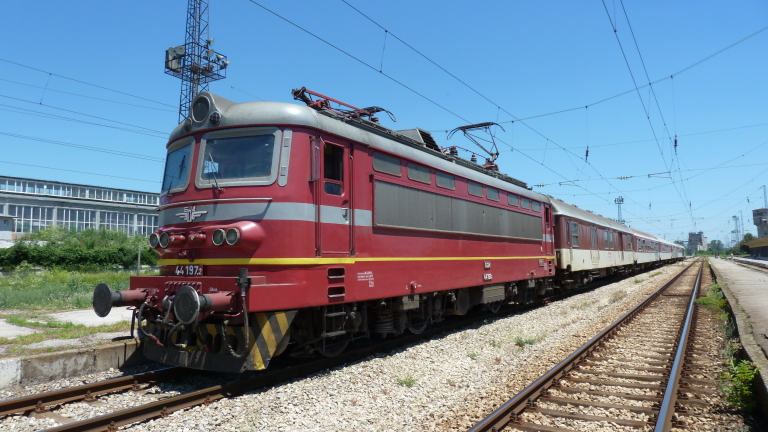
The sad thing is that there is no hint in the management program that the current government is ready to take any new approach and experiment. This is very disappointing, considering how big a burden BDZ is for the state treasury (over 400 million leva in transfers from the budget annually for the enterprise to survive). Such enterprises carry with them a serious fiscal risk, which in an economic crisis and a corresponding drop in tax revenues could lead to a serious fiscal crisis.
Not to mention that the "cheap" subsidized railway transport in practice costs taxpayers more than a private one would, because they have to pay twice for the "pleasure" (I use this word quite loosely in the context of BDZ) of using it. If there is no political will to privatize or liquidate the enterprise, then at least it would be good to see some structural reform in its governance and management, but unfortunately even that is missing. So, do not expect the state of BDZ to improve in the next 4 years. Quite the opposite.
When will we start prioritizing quality over quantity in infrastructure projects?
The rest of the sector program is dominated by priorities related to the construction of new roads and motorways and the provision of more funding and investment for their implementation, as well as improving the safety of the road network. There is nothing wrong with building new infrastructure (as long as it is necessary), but unfortunately the program says nothing about improving the quality of these infrastructure projects. In Bulgaria, the same roads are very often built one year and only need repair a year or two later.
It is high time that the government started focusing more on the quality rather than the quantity of infrastructure projects. However, this would most likely require a reform of public procurement tenders as a starting point, or at the very least a change in the authorities’ priorities when evaluating the offers of potential contractors. For example, a greater emphasis should be placed on the quality of a project rather than its price. In the long run, “cheap” ends up being much more expensive, as the constant renovation work clearly demonstrates. And of course, corruption related to public procurement must be eradicated, although here we are already going beyond the boundaries of the specific sector.
Tourism:
(Emil Valkov)
It's hard for me to say anything good about the endless strategies of the Ministry of Tourism. This is an administration notorious for its inefficiency and pointless activities - from participation in international tourism exhibitions with close to zero returns, to a series of national logo competitions to present a common tourism brand for Bulgaria with, to put it mildly, questionable results. The Ministry of Tourism - a sector that is almost entirely private, and a huge percentage of which is made up of small and medium-sized businesses - is something like the slightly slow cousin of the other ministries, which, out of bureaucratic compassion, must be given work.
However, I cannot help but note some positive things in the program - a plan to reach the top 5 in terms of visits in Southeast Europe, which in itself is not a lofty goal, and in the end - private business will have to do it somehow, the adoption of the principle of tacit consent - a principle that should always be applied by every administration, and in this case will lead to long lunch breaks in the ministry - also always welcome, as well as the above-mentioned strategy for the development of cultural and historical tourism.
The tourism program is full of pointless spending
I am amazed by the following three “strategies” and “plans” - for “an effective model for financing the socialization of tourist attractions in public state ownership”, for creating a long-term national strategy for tourism products in Bulgaria “with potential for sustainable development” and “interaction with the World Tourism Organization of the United Nations”, of course - well supported by plans for operational programs. The only thing I can say regarding the above three - do you really want our money to go to this? Your money, which you work hard to earn... And from which you barely save for one vacation a year, increasingly often - in Greece... Why?
This socialism must one day, finally, be stopped.
What needs to be done, instead of working on the proposed program, is to execute the following program from one point:
- Closure of the Ministry of Tourism and complete privatization of all remaining assets and state shares in the tourism sector.
Image source: Google, News.bg