 EKIP– Expert Club for Economics and Politics A Different Opinion
At the BSP plenum on Friday, Prime Minister Oresharski presented his action plan to his socialist colleagues. The Oresharski Plan - also known as "protest as much as you want, don't bother me" - contains the priorities of the "program government" of the ruling BSP-DPS coalition.
Overly optimistic, this plan contains both short-term and long-term measures. But they all fall into the spectrum of Keynesianism, shurobajinism and an inflated welfare state. Predictably, the socialists' plan is to ignore economic realities and instead rush first to pay off the debt to their sponsors, with whose help they won the elections; and then to proceed to their own benefiting and handing out goodies to retain and win over the electorate.
One of the points of the plan is the repayment of the accumulated debts of the state to the business. As of the end of March, they (state plus local government) amounted to 263 million leva. The government has already taken the necessary steps to pay off these debts through the draft budget update. According to the proposal of the Council of Ministers, approved by the parliament at first reading last week, the state must pay the business about 160 million leva before the end of this year.
The Ministry of Finance only specified that the money would help the ministries of defense, interior and justice to repay their debts. The idea is to stimulate the economy, and part of the funds would also be distributed to the Ministry of Health and agricultural producers. Very curiously, there is no subsequent justification and analysis of why exactly these state structures should repay their debts as a priority. No information has been provided on the amount of these debts, when they were accumulated, what services are consumed and most importantly - who the creditor companies are.
Despite Oresharski's promises of transparency and a preliminary assessment of the effect of implementing a given policy, the budget update remained without serious motivation and was quickly proposed for a vote in parliament. This, in conjunction with the essence of the policy, makes us speculate with reasonable doubt that the 160 million leva will go not to "stimulate the economy", but to stimulate the sponsors of the BSP and MRF.
Another manifestation of Keynesian scoundrelism the government is preparing us with through the so-called public procurement, on which work is also urgently underway to draft a new law. According to Minister without Portfolio Daniela Bobeva, it is precisely state spending on services provided by business that would help small businesses. While in fact, any state spending is ineffective, since it is carried out outside the coordinating mechanism of the market, and Bulgaria in particular is famous as a champion of corruption and inefficiency in the spending of public funds. This confirms our assumption that the government will rather stimulate the economy of Germany, from which the Bulgarian scoundrel capitalists will renew their car fleet with taxpayer money.
Of course, there is no way that some self-respecting socialists would not want to maintain and increase state employment. In essence, all so-called state-owned enterprises are huge employment programs that provide a livelihood for the socialist electorate. The BSP has already stopped the privatization of the Bulgarian Railways and is now wondering with what balancing acts and transfers of assets from the left to the right pocket to "revive" this symbol of the failure of socialism and trade unionism. The BSP also "saved" for the time being the arms manufacturer VMZ-Sopot - again by transferring funds from empty to empty. In addition, the BSP promised the miners to provide them with jobs - of course, with foreign money.
A manifestation of the Keynesian labor office are the temporary employment programs that the government plans to extend. Thanks to these programs, small towns will continue to be as clean as ever, because taxpayer money is spent on hiring street sweepers in the countryside, where unemployment is relatively higher and low-skilled labor predominates.
In line with the socialist credo, and above all to ensure the loyalty of its electorate, the government is also betting on expanding the welfare state. By handing out small favors, Oresharski hopes to retain and win the support of voters, because two terms are better than one.
In short - the Oresharski plan envisages full-blown Keynesianism. Unfortunately, as Keynes himself said, his doctrine flourishes mostly in totalitarian states - i.e. in addition to the economy, we must be vigilant about our personal freedoms.


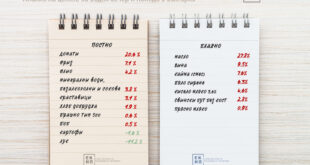



Mr. Oresharski is trapped and, given the error he made (an unprofitable way of governing), there is no useful move.
Regardless of whether anyone supports or protests, the government itself is now working against its own and public interests and is certain to fail.
Today, the government is a victim of its own mistake and has no opportunity for a useful solution, as the cause of the crisis leads to economic collapse, and the more the government works to ensure economic growth, the stronger the crisis will develop and the greater the damage will be.
There are two options for the government:
1. При реализиран икономически растеж се подпомага допълнително развитие на потенциал за криза със съпътстващи щети и при достататъчно време кризата ескалира. (Катастрофалната зависимост не е публично известна и нейните вреди продължават);
2. In the absence of economic growth, painful damage and escalation of the crisis are accelerated.