EKIP– Expert Club for Economics and Politics A Different Opinion
Author: Filip Petrov
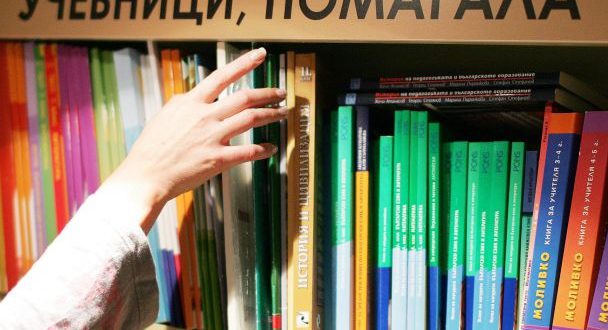
The news in the media has been circulating about how a publishing house has printed two editions of a textbook – color and black and white. The mass indignation that various populists have expressed is that this was bad – fueling the division between poor and rich in schools. Let us think more seriously about the question of whether this is so.
First the textbooks, and then...?
Let's assume that we make the children's textbooks the same. We will immediately remember that there is another problem - the poor child's clothes will be torn, while the rich child's will be luxurious.
Let's say we make students wear the same uniforms. We'll immediately think of another problem - the poor kid's shoes will be different.
Let's say we include shoes in the uniform. Then it would be his cell phone.
Let's ban cell phones! Then it'll be some other trinket.
Let's ban trinkets! The poor child will eat more modest snacks than the others.
Let's provide equal breakfasts! Well, dear people… the poor child does not live only in school. He will eventually go out into the outside world, where other children will at least see that his father does not take him home in a Mercedes, but by public transport… At the same time, what have you managed to do inside the school itself? You did it on the model of North Korea – everyone hypocritically looks the same, but they are not. You planted exactly this equalizer, which is the main problem of the Bulgarian education system today – common educational standards, the same curricula, the same textbooks, equal salaries for everyone, fixing who can enroll their child where through a zoning system… And these are all bad things – this is trying to make everyone wear size L clothes. Yes, for most they will be OK, but for a significant part they will be either small or large.
Every child is different.
So what is the solution to the case? It is to recognize that children are different! Yes, there are poor and rich. Yes, there are whites, blacks and all sorts of other races. Yes, there are Christians, Muslims, why not Buddhists, and people from all sorts of other religions. Yes, there are children who are ambitious and there are those who are lazy. Yes, there are children with special educational needs. Yes, there are children who are naturally smarter and there are those who are dumber. Yes, there are beautiful and ugly. Yes, there are… EVERY CHILD IS DIFFERENT.
The moment our education system recognizes this, this will be the revolution that will allow us to push ourselves off the bottom, to which we have long anchored ourselves. Instead of hiding that there are poor children, we will educate the rest so that they treat poorer children as their equals! Instead of educating our children according to a general mold, we will take into account the individual needs of each child and choose the appropriate standard, the appropriate curriculum, the appropriate teachers, the appropriate environment for him. This way we will teach our children that instead of making fun of the neighbor for having a black and white/photocopied/no textbook at all, it is right to accept him as he is and be his friend.
Let there be a choice for parents and students
And now to the question from the beginning – is it bad to have different editions of the same textbook in terms of price and appearance? It is not necessarily bad, but it is not necessarily good either. The textbook market should be the one to determine the answer. Somewhere people will be outraged and will not want their children to study with different textbooks – there they will unite and decide to buy only black and white or only color ones. In other places, children will be well integrated with each other and it will not matter at all. After all, we keep complaining that “there is no civil society” – here is an opportunity for you, dear citizens, to gather your small group of parents of your class and solve a problem, if it exists at all for you (I hope that you do not have one). Do you have the strength to do it or will you once again wait for “the state to intervene”? It is not difficult, I assure you!
Image source: Teacher.bg