EKIP– Expert Club for Economics and Politics A Different Opinion
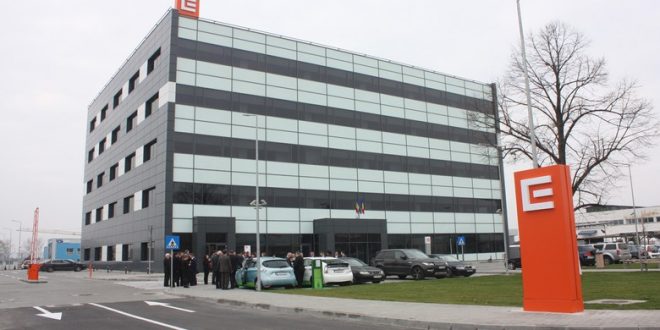
After a week of media dramas, accusations, speculations, doubts, threats and scandals, the saga "Ginka Varbakova and the sale of CEZ" seems to have found its very unpleasant ending. The government officially announced that it will try to acquire a "controlling stake" in CEZ Bulgaria. In other words, the government wants to become the de facto controlling owner of the energy company in Bulgaria. That is - the government will practically nationalize the company.
Have we witnessed a well-played scenario?
This is just speculation, of course, but the whole fiasco surrounding the scandal with the sale of CEZ may have been just a theater played out precisely to get to this point. A fuss is being made due to the fact that a very small and almost unknown company, whose owner is known to Minister Temenuzhka Petkova, is about to buy CEZ. Suspicion is immediately raised about corruption and that, due to her relationship with Ginka Varbakova, Petkova may have somehow helped Inerkom become the favorite for the sale. This suspicion is further fueled when Prime Minister Borisov advises Petkova to resign. Under the pretext that doubts must be eliminated that the government has interfered in the sale competition in favor of Varbakova.
The media scandal is taking shape and it cannot be otherwise than in view of the many corruption scandals we witness every year. Public suspicion is fueled, speculation is created that hidden political or business interests are behind Varbakova and demands are made to prevent the deal. And here it is - the perfect excuse for the government to intervene through nationalization to calm public doubts and "guarantee" the protection of the interests of Bulgarian CEZ consumers.
This, of course, is a complete lie. Nationalization is not in the interest of consumers at all, but quite the opposite – only in the interest of politicians and bureaucrats (and perhaps their related businesses). Once the government gains control of CEZ Bulgaria, it can do whatever it wants with it. And now the state has three options.
- To take an active role in the management of the company
- To sell his key stake in the company, most likely to politically connected businesses
- To be a key owner, but to leave the active role in management to Inercom.
Nationalization harms all taxpayers and consumers
All three options will have extremely bad consequences for consumers. It should be clear that whichever option the government chooses, we initially lose as taxpayers. Because the money that the state will give for this nationalization will come out of our pockets. That is, we are already at a certain loss, which will worsen, whichever option from the above three is chosen by the government. Let's look at them one by one.
Let's call the first scenario by its real name - permanent and practical nationalization. Of course, "nationalization" sounds pretty scary, and too close to what the communists did after coming to power in 1944 and seizing the country's economy. That's why the government doesn't use that term, but speaks in a roundabout way about the subject, with euphemisms.
But nationalization is nationalization, no matter what beautiful epithets you try to adorn it with. It is an economically dangerous and short-sighted measure that will set the energy sector in Bulgaria back several decades. If CEZ becomes an enterprise with dominant state participation, the quality of its activities, not to mention its financial condition, will be affected.
The quality of CEZ will fall to that of Toplofikatsiya and BDZ
First, just look at state-owned enterprises like BDZ and Toplofikatsiya. Is there a single taxpayer customer who is satisfied with them? No, there isn't. Both enterprises are synonymous with carelessness, inadequate management, customer disappointment, and generally low quality at too high (for this quality) prices. And they are among the largest state-owned enterprises. You may be unhappy with CEZ right now for one reason or another, but if the company is nationalized, you can expect it to become something like BDZ in the energy sector, and then you will be begging for the old owner to return.
Second, the saying "the state is a bad manager" is not just a hollow mantra of market fundamentalists. The reality is this, especially in Bulgaria where corruption levels are the highest in the entire Western world and the EC tells us every year that we need to improve the quality of our institutions. With such high levels of corruption and nepotism at every level of power (do I need to list the recent corruption scandals when there is one almost every other week?), abuses are guaranteed if the government buys out CEZ.
Here you may object that CEZ is still state-owned – the Czech Republic anyway. Yes, that is true, CEZ is a company with a 70% stake in the Czech state. But that is precisely the key point – the Czech, not the Bulgarian state. No, I do not prefer the Czech state to own the largest electricity company in our country, because I am a national nihilist and I do not care about my homeland. If it depends on me, it is always better for the investor to be private, and not part of any state.
The state has a conflict of interest as owner and regulator
But even as the property of the Czech state it is better, because at least there is no risk of the company being drained by domestic politicians. The risk of being drained by Czech politicians is also lower, because it operates on the territory of Bulgaria and must comply with our regulators and regulations. And the regulators are Bulgarian, not Czech, bureaucrats and the regulations are written by Bulgarian, not Czech, politicians. Because the regulation is not carried out by the same state that owns CEZ, the chance of abuse is lower.
Think about how absurd it is for a company and the institution that regulates it to have the same owner. This is the definition of a conflict of interest! The owner has a vested interest in writing and enforcing regulations that give his company an unfair advantage to the detriment of other players in the market and, most importantly, consumers.
What if the state resold its stake in CEZ?
What happens in the other two options? In the second, the government may not keep the key stake in CEZ, but say that it will sell it at some point, precisely to thwart concerns related to the conflict of interest. This would be a clever PR move, but do you remember who the favorites would be in such a sale? "Successful" and well-connected businessmen who will acquire ownership of the company through corrupt channels.
Given how many corruption scandals surrounding the acquisition of (former) state assets we have witnessed over the years, it certainly does not seem like a good idea for the Bulgarian government to be the one controlling the sale of CEZ. This is a guaranteed worsening of the situation and an increase in the corruption risk compared to when CEZ and the Czech state themselves controlled the process. At the very least, Czech bureaucrats and politicians are hardly as corrupt and dependent on local businessmen as ours. The state in the Czech Republic is not incorruptible, of course, but it is certainly more difficult to bribe (the levels of corruption there are lower) than ours, especially by our businessmen.
Conflict of interest and potential for abuse remain
That is, the second option for the future development of CEZ after nationalization means a deterioration compared to the current situation. What about the third, in which the state retains a key stake, but leaves "Inercom" to play the active role of owner? In this case, it is as if CEZ sold its Bulgarian branch to "Inercom" anyway, with the difference that Varbakova's company acquires the direct protection of the state.
The problem of conflict of interest remains unresolved because the state retains a key stake in the company and the possibility of abuse, with the difference that in the event of a possible deterioration in the quality of the service, it can try to wash its hands of Inercom, which plays an active role in the management of CEZ.
Not to mention that this does not eliminate the doubts that hidden interests are behind Varbakova. The same applies to the first option, by the way. After a whole week of listening to speculation and doubts about Varbakova's integrity, it is strange that the government decides to directly get involved with her company by practically becoming its guarantor in the deal with the Czech enterprise.
Overall, the government's decision to effectively nationalize CEZ Bulgaria creates far more problems than it solves. Not to mention the question marks surrounding the whole story, which have become even more than they were initially. One thing is certain – whatever happens from now on, as I explained above, the losers are Bulgarian citizens. As taxpayers and as electricity consumers.
What is needed is not nationalization, but liberalization
By acquiring CEZ, the state will return with a bang to the electricity market when it should be doing the exact opposite. If the electricity market were fully liberalized and privatized, there would be no such scandal at all. If CEZ Bulgaria did not hold a monopoly created by the state, no one would be interested in the fact that Ginka Varbakova from Pazardzhik wants to buy them. Because there would be real competition and if after the sale the quality of the service drops - switching to another operator would be much easier. And the presence of this real market competition would guarantee quality far higher than the current one.
But unfortunately, our politicians clearly have no intention of implementing real liberalization in the sector. Instead, they are devising creative methods to expand their power and line their own pockets at the expense of taxpayers and consumers.