Georgi Vuldzhev January 05, 2019 Editor's Choice, Economics, Economic Theory, Culture and History
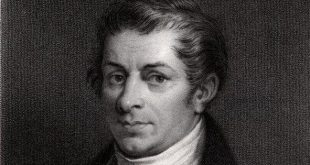
Many young libertarians are familiar with Frédéric Bastiat, but few are aware of his most significant predecessor, who is also one of the greatest "classical" economists - Jean-Baptiste Say. Nowadays, Say is one of those figures in the history of economic science who is systematically ignored, despite his ...
More » Guest Author January 04, 2019 Editor's Choice, Economics, Economic Theory
Author: Martin Tarpev From January 1, 2019, the state made a gift to lower-skilled workers by increasing the minimum wage to 560 leva. Many people are accepting this measure with applause, which on a more abstract level seems normal. Who doesn't want to receive more money? Beyond rosy economic dreams …
More » Georgi Vuldzhev November 30, 2018 Economics, Economic theory, Translation
Author: Frank Shostak, Mises.org According to many mainstream economists, the lack of a strong correlation between money supply growth and growth in various price indices casts doubt on the theory that increases in the money supply are the main source of inflation. It is also argued that before 1990 there was a positive correlation between …
More » Guest Author November 11, 2018 Economic theory, Culture and history
Guest author: Stefan Boyadzhiev Man never mounts higher than when he knows not where he is going. —Oliver Cromwell* Two weeks ago, EKIP published an article by Slavcho Marinov, which was dedicated to a critique of libertarianism. It, in turn, was the second part of the author's more general theme and idea, to …
More » Kaloyan Pravov November 09, 2018 Economic theory, Culture and history
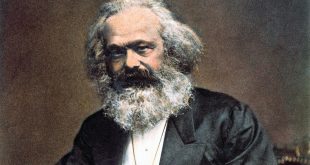
Despite its obvious failures in the twentieth century, Marxism remains one of the most widespread political and economic ideologies of our time. Western democracies have adopted many of the principles and policies advocated by Marx and his followers, and many post-colonial developing countries have built their societies on the basis of socialist …
More » Daniel Angelov November 04, 2018 Economics, Economic theory, Investments
Most economists have opinions about what stage of the business cycle an economy is in. But if you haven't noticed, many of their predictions turn out to be wrong. For example, Ben Bernanke in 2007 (then chairman of the Federal Reserve) predicted that the US was not headed for a recession and that …
More » Boryana Yosifova October 21, 2018 Economics, Economic theory, Translation
This text is a translation of the article “The problem of corruption” published on Mises.org more than 16 years ago. This translation is provoked by the unwillingness to accept the thesis that the quality of the state is solely a consequence of what the people in the country in question are like. This would, for me, …
More » Daniel Angelov September 19, 2018 Economics, Economic theory
The investment community and financial media pay close attention to interest rates—the price a borrower pays to borrow money—and for good reason. When the U.S. Federal Open Market Committee (FOMC for short), or any other central bank committee, sets a target for …
More » Natalia Chomakova August 28, 2018 Economics, Economic theory
If the activity of bankers/banks, even in the earliest existence and formation of banking, is to store deposits and, based on the available funds, to grant loans, then it is appropriate to trace the contractual relations in this process. If a person has great wealth – measured in money/barter goods, …
More » Daniel Angelov July 27, 2018 Economics, Economic theory
According to mainstream economics, the central bank is the key factor in determining the level of interest rates. By setting short-term interest rates and based on expectations about the future course of its interest rate policy, it influences the entire structure of interest rates. It follows that economic players have almost no …
More »
 EKIP– Expert Club for Economics and Politics A Different Opinion