On 05.07.2018, EMA – the European Medicines Agency, issued a statement on the so-called “precautionary recall” of valsartan-containing products due to a received signal for a detected adulteration in the raw substance, namely NDMA – N-nitrosodimethylamine. The signal was submitted by the manufacturing company, namely the China-based “Zhejiang Huahai …
More »NHIF – a financial colossus on feet of clay
Uncontrollably growing budget for medicines Over the past few years, the growth in the cost of medicines paid by the NHIF has been between 15-20% on an annual basis. In 2018, the costs reached 1 billion, and the primary reaction of the institutions was the so-called limitation of payment for innovative medicines, entitled "moratorium", which fell ...
More »Three problems facing domestic healthcare
What are the critical points that the healthcare system will face by the end of 2018? Over the past few months, we have witnessed a number of scandals in the healthcare sector and an unceasing whirlpool of ideas, proposals and policies that, after an attempt to be put into practice, are rejected by the system in every possible way and …
More »About Novartis and corruption in healthcare
What happens when a country has a limited public resource for healthcare that has no clear owner? Quite simply – it is distributed according to the needs of certain market players, and the entire system starts bidding for a piece of it. What happens? This is also the case with …
More »Press Conference: Progeneric Policy for Lower Drug Costs
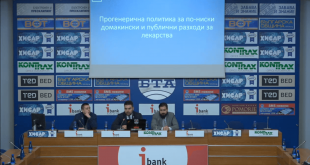
In connection with the deepening financial instability of the healthcare sector in Bulgaria, the experts from the EKIP have found a solution to the problem of the continuous increase in the costs of medicines of the NHIF. The analysis used data from the drug group of sartans (medicinal products for the treatment of arterial hypertension) for the period 2005-2016. …
More »Reform for more accessible and cheaper medicines in Bulgaria
|Full text of the analysis| Summary and conclusions from the analysis of the sartan group: The results of this study confirm the conclusions of previous analyses, such as the World Bank's 2015 analysis, as well as good practices from EU countries, and quantify the positive effects of implementing a progeneric policy within the framework of …
More »Health care moratoriums do not reduce costs or solve problems
Author: Kaloyan Staykov They say that violence is the last refuge of the incompetent. This phrase seems like a very accurate analogy to the moratorium imposed on the financing of new drugs and new medical activities by the National Health Insurance Fund in 2018. The reason for the restrictions is the inability of the authorities to limit the steep increase in health insurance costs in …
More »Some advice for the new Minister of Health
After the latest upheavals in the healthcare sector, it is necessary for the power to be taken over by an expert who can offer optimal solutions to the problems in the sector - ones that will not harm the budget and will optimize the consumption of money from health contributions to the extent that they meet ...
More »What's happening with e-health - a look at the project budget
What is the problem? Several months have passed since Dr. Ilko Semerdzhiev, as acting Minister of Health, signed a contract to launch a European project with the Ministry of Health as a beneficiary under the Operational Program "Good Governance". The project concerns the completion of the National Health Information System (NHIS) and has a duration of 22 months. The project …
More »The failure of the centralized healthcare system in Britain
Author: Nikolay Filibev The National Health Service (NHS) of Great Britain was created after the end of World War II and is the jewel in the crown of the Labour Party (the largest left-wing party in Great Britain). Although among the most developed countries, Great Britain has its own problems in healthcare. They are much deeper than what politicians want to debate or …
More »
EKIP– Expert Club for Economics and Politics A Different Opinion