 EKIP– Expert Club for Economics and Politics A Different Opinion
The main requirement for the state is to be an impartial machine, whose driving force is the legal framework. The possibilities of state intervention must be strictly defined, and its perimeter of action - limited.
In recent months, the public space has been shaken by civil disobedience, which began spontaneously, but subsequently developed into a truly global phenomenon. We are talking about the Occupy movement, which rose up loudly against the economic and social reality in which we live today. The main demands of the protesters in different parts of the world were directed at the state. Their wishes - for direct intervention in the private sector, which would force entrepreneurs to change their current behavior.
Before we talk about public desires and expectations, it is important to clarify what exactly the concept of "state" is. The German sociologist Max Weber, who also advocated the theory of violence, defined it as "a human community that successfully claims to have a monopoly on legitimate physical violence in a given territory." The fundamental difference between private action and that of the ruling class lies in the fact that the government has monopolized the legal use of physical force.
Individual human rights can only be violated through the use of force. At the same time, the state apparatus is the structure in the public sphere that receives its income not through voluntary contributions or payment for services rendered, but through coercion. There is a direct interference in the personal space of each individual who is forcibly forced to be part of the so-called "social contract".
The main requirement for the state is to be an impartial machine, whose driving force is the legal framework. The possibilities of state intervention must be strictly defined, and its perimeter of action - limited.
Fair expectations for the role of the state apparatus should be directed towards the following three main directions:
- protection of national borders– by maintaining a small but high-quality and well-trained army, the state must take care of the security of its citizens;
- legislation– the unified legal framework is the guarantor for the settlement of property and non-property relationships between individuals and legal entities;
- judicial system– although there are some debates whether state intervention in the judiciary is necessary, it should undoubtedly be present there. A problem today is the monopoly that has been imposed in this area. A fair solution would be a mixed model in which state and private courts work equally, implementing the unified legal framework. Based on the principles of competitiveness, the quality of the service will certainly increase.
Considering the three main functions that the state is supposedly engaged in, we also need to mention the activities that should not be under the direct dictation of power:
- social life - interference of the state apparatus in the social sector is extremely unreasonable. From a historical point of view, the facts show that the fusion of political and public life is the basis for the emergence and development of all totalitarian regimes known to date.
- Monetary policy– direct and firm intervention in the sphere of monetary policy leads to seemingly positive results in the short term, but extremely negative in the longer term. A current example of this is the global economic crisis, the consequences of which we still feel today. Relying on the theories of J.M. Keynes, many countries and supranational unions are permanently entering economic life, trying to solve their current financial problems by injecting even more funds into circulation. The result in the long term is the activation of the mechanisms of inflation, which practically "eats up" income and savings.
- Fiscal policy and regulations– numerous regulations and unjustifiably high tax rates hinder the activities of entrepreneurs and increase their sense of insecurity. Stable private business is the basis of the prosperity of any economy
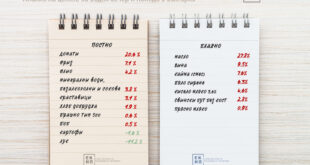
A classic example of gross interference by the state apparatus in the private sector are the recent events initiated by the Minister of Agriculture Miroslav Naydenov. We have witnessed measures that are completely contrary to the basic principles of a market economy. As a result of the cartel created by the state and several food chains, small and medium-sized businesses will be forcibly “killed”, which will be forced to work for months at a loss and most likely will not withstand the competition. The winners from the situation will be large companies, which will increase their market share.
Whether due to their incompetence or other circumstances, those in power are once again proving the well-known maxim – the state apparatus is incompetent in the face of working market mechanisms. Violent interventions are absolutely inadvisable.
The conclusions that should be drawn from our expectations of power are unfortunately at odds with today's realities. The desire for greater state intervention, which was loudly declared by the Occupy movement, will have its negative results in the long run. If people want to live together in a peaceful and productive society, they must accept one fundamental principle without which no moral and civilized community is able to function - the principle of individual rights and their complete inviolability. The belief remains that public reason and economic logic will prevail over impulsiveness, poor historical memory and ignorance of the other side of the coin.





One comment
Pingback: What should we expect from the state?