 EKIP– Expert Club for Economics and Politics A Different Opinion
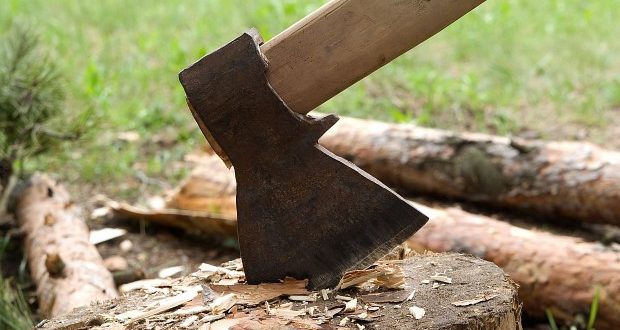
The ban on the export of unprocessed timber has provoked a lot of reactions, mostly because of the very initiative taken by the government. The ruling coalition, which has become known for its spontaneous decisions attacking specific problems under the guise of the term “reform”, has once again pitted business against society. The peculiar populism, evident from the similar positions on the subject in both political spectrums, shows precisely the nature of yet another controversial decision – it is untimely and ostentatious.
The economic consequences of the three months of export restrictions, according to business calculations, would lead to 40 million leva in direct losses for about 100 companies that export timber and about 800 related companies. Also, the export restrictions will harm contacts with foreign customers, literally severing certain business relationships. Given that a large number of companies in the sector are mainly engaged in logging and marketing, the chance that they will be able to sell part of their production on the domestic market, thereby reducing their losses, seems minimal.
In the medium term, the moratorium will not be the worst for entrepreneurs. The very purpose of its introduction is to limit legal and illegal logging in order to be able to push through and implement additional regulations. They are mostly related to intervention in the free market, and even provide for restrictions on the trade of wood on commodity exchanges. The plans also include higher requirements in government procurement for unprocessed wood and investments in GPS systems for tracking companies' vehicles. The new regulations at this stage would force enterprises that are primarily export-oriented to cease their activities. Created in conditions of a lack of monitoring and control, these companies have no chance of adapting in their current form to the market in which they were competitive before March 10 (the date of the moratorium's promulgation).
Tightening regulations in one of the most painful sectors in the country should ultimately be a positive thing. No one would want the deforestation of Bulgaria to continue. However, the government's economic policy shows populism and inadequacy. We are witnessing literally a "pull of the switch" of a business that has more or less reached its current size thanks to the lack of any rules and monitoring of their observance. To create such an economic education from the negligence and lack of initiative of the previous and current governments, to let it grow so that it provides a livelihood for an unknown number of people, and finally to simply try to put an end to everything within three months, by simply letting the sector be suffocated by the lack of a market through measures that can be interpreted in violation of current European legislation, is impudence. Undoubtedly, the situation resembles what happened with pension funds and the moratorium on the sale of land to foreigners, both of which pose a direct threat of ruining the respective economic sectors.
On the other hand, there is the question of whether the measures in question will succeed in introducing lasting order in this economic sector. Replacing misinformation about what is happening in the forests with a heavy administrative apparatus to monitor compliance with the planned regulations does not sound like a formula for success. Companies that have violated the established legal order until now will most likely adapt their "business model" to the "requirements" of the new civil servants who have to fight them, especially if the rumors of a political umbrella from above turn out to be true.
Moreover, the moratorium is a wrong move, because by destroying an entire industry, the state is trying to suppress the reaction against its own inability to protect forests. That is, a problem created by the state (poor forest management) is “solved” by creating problems for other people. A classic example of the well-known situation where intervention is piled on top of intervention to hide problems from previous government actions or regulations in the industry.
The introduction of additional regulatory measures, instead of clearly defined private property rights over forests, will continue to reap the sad results that we are currently witnessing. Restricting the market principle, which contributes to uncontrolled logging, has so far yielded no results either in the energy sector or in the sectors mentioned above. In view of the upcoming events, the likelihood that new restrictions will stop the trend in question is small. Instead, we are witnessing yet another case of the creation of an industry that operates outside the law and which, like a balloon, inflates, bursts and takes its participants with it.






This is what really breaks it - "We are witnessing a literal "turning off" of a business that has more or less reached its current size thanks to the lack of any rules and monitoring of their compliance."
I want a business like that too, without rules!