 EKIP– Expert Club for Economics and Politics A Different Opinion
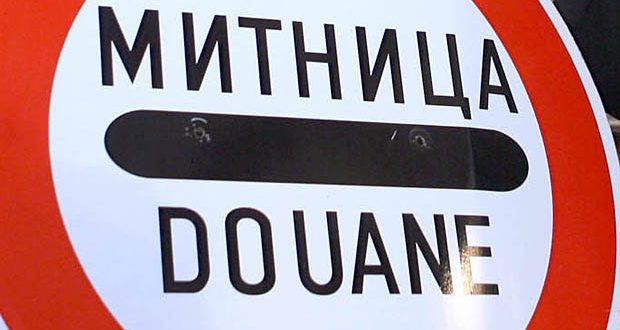
Just over a week ago, the entire government jumped into a campaign against smuggling, and more specifically against fuel "fraud" (in quotes, because it turned out that violations occur at about 2% of gas stations). It was heavily garnished with advertisements sponsored by the Ministry of Finance, convincing us that without government taxes we would not have parks and roads, as well as semi-secret changes in the excise rate aimed at stimulating certain companies in the cigarette sector.
Something is boiling and seething again with excise goods, but let's think about why they are so interesting to politicians and why some campaigns or scandals constantly arise in the sector. The classic explanation for the existence of excise duty as a form of additional tax imposed on a certain type of goods is that the consumption of the same leads to certain negative effects. Smoking can lead to a bunch of lung diseases, alcohol to asocial and even destructive behavior, and gasoline pollutes the air. Therefore, the state decides that it must take care of the "health of the people" and imposes the corresponding additional taxes - excise taxes (called Pigou taxes in economic theory) in order to discourage the consumption of the corresponding goods.
Without getting into a discussion of the negatives of Pigou’s taxes, let’s point out a few obvious problems. First, if excise taxes exist as a deterrent to certain types of behavior, why don’t we simply expand the range of behaviors that the state taxes? If the above is true, then the point of an income tax is… to encourage us to work less! If a tax on cigarettes is supposed to reduce smoking, doesn’t a tax on output reduce work?
Secondly, it is somewhat strange that the goods for which we pay excise tax coincide with the fact that they all have relatively low price elasticity – in other words, consumers find it difficult to give them up, even if the price increases (a jump resulting, for example, from the imposition and increase of excise taxes). This, of course, makes them a great source of serious revenue for the treasury – politicians and officials know which goods can be used to extract additional revenue for their own pockets.
The fact that people cannot do without cigarettes, alcohol and fuel sometimes leads to inventive traders looking for different ways to circumvent the payment of this tax, gaining an advantage over the competition, which calculates the state surcharge into their prices. Whether they will smuggle a few stacks across the Serbian border, touch the seal of the gas pumps or brew rakia in the village - the effect is the same: that of "smuggling".
However, it is naive to think that these are the only people who benefit from excise taxes. In fact, the big winners are the same ones who “fight” smuggling. Yes, they really want to stop cigarettes without a tax stamp at the Women's Market, not only because they manage the budget, but also because they have their own “projects” that rely on special rules for them (I refer to the link at the beginning of the article). That is why excise taxes and customs are nirvana for any government – they profit both from the revenues they take from us and from the massive smuggling they create, control and/or regulate.
Let’s look at other types of interference by politicians and bureaucrats in business through the same lens. We decide that payday loans are bad and even dangerous (a classic step-state gimmick), even though some people find them a useful bridge between the cashless end of the month and their paycheck. [1] Under this pretext, like white knights, we impose a bunch of unnecessary regulations that are there for the needs of our friends with similar businesses.
Or we create a food agency to "protect consumers" from the bad food of the doner kebab shops... and in fact we use its power to blackmail the owners of food establishments. We empower a commission that is supposed to protect competition, and it not only supports all existing and state-created cartels and monopolies, but also plays at punishing millions of different businesses for their advertisements or promotions that are too generous.
The political aspiration for regulatory and taxing power is not an end in itself or a manifestation of maternal concern, but a calculated request for redistribution from those who work and create to the groups behind the levers of power.
[1] For the negative effects of payday loan regulations, see: Daniel Vassilev, Effects of Payday Loan Regulations in Bulgaria and Great Britain.



Hey TEAM, you started writing/publishing very basic articles.
The problem is not in taxes, but in their spending, and under the previous article "On the theft in the form of taxes" I have commented on the main point.
that is, we need total transparency of budget expenditures and a simple report from Eurostat - the average level of corporate tax in the EU is 2.5 times higher than ours, and the personal income tax is 4 times higher.
Here is a good article about taxes by former Deputy Minister of Economy Lyubka Kachakova - http://darikfinance.bg/novini/83787#comments
Not only economists, but also psychologists, philosophers and historians have studied the tax system to come to the conclusion that it is the highest form of a social contract. Citizens accept that they have obligations, and the state assumes the responsibility to use the resources collected through taxes to build the necessary goods, infrastructure, ensure equal access to them and, last but not least, redistribute wealth among the members of society.
"Taxes are like a fee we pay for the privilege of being members of an organized society," said Franklin Roosevelt. Another public figure and thinker, Oliver Wendell Holmes Jr., said: "I like paying taxes. With them I buy civilization."...........
In this modern system, taxes have five main functions:
- To finance basic social services such as defense, emergency assistance, police, public transport;
- To finance long-term investment projects that bring returns in the form of social goods and public services - healthcare, education, infrastructure;
- To discourage people from consuming goods that have a negative effect on society, at the expense of those that generate social benefits;
- Be a macroeconomic impact tool that plays a central role in fiscal policy;
- To be a tool for income redistribution and equal access to resources and services.
In her study "The Philosophy of Taxes," Catherine Gregory suggests viewing taxes as a special currency. We pay in them and get in return police, street sweepers, healthcare, education for children, and equal access to resources in a given country.
Ehhhhhhhhhhhhhhhhhh, colleague, we need nationalization, what are these tax-scams? The state, through its holy and ancestral wisdom, knows how to use the resources that we produce and otherwise waste aimlessly. Words pale before the power of the leftist idea, besides, the bright communist future blinds me and I can't write any more. Therefore, for greater legitimacy of what was said, I will end with two lines of full stops................................................................................................................................................................................................................................................
Momchil Dilov - I explicitly wrote about total transparency of budget expenditures, that is, I am talking about principles, and the fact that civil servants are incompetent and thieving is a separate topic of conversation.
I have described everything (comment #1) - http://darikfinance.bg/novini/115933#comments
I have given an article to Prof. D.Sc.Econ. Ivan Angelov who says it well - ''The difference in GDP per capita (i.e. in social labor productivity) and in average salary per employed person with those in the EU is huge (45% and 22-23% respectively) and contradicts all economic logic and elementary justice. The share of budget expenditures in GDP in 2013.''
FACTS ARE FACTS - the average corporate tax rate in the EU is 2.5 times higher than ours, and the personal income tax rate is 4 times higher.