 EKIP– Expert Club for Economics and Politics A Different Opinion
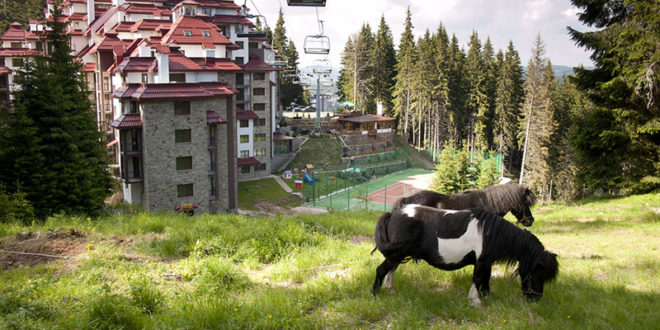
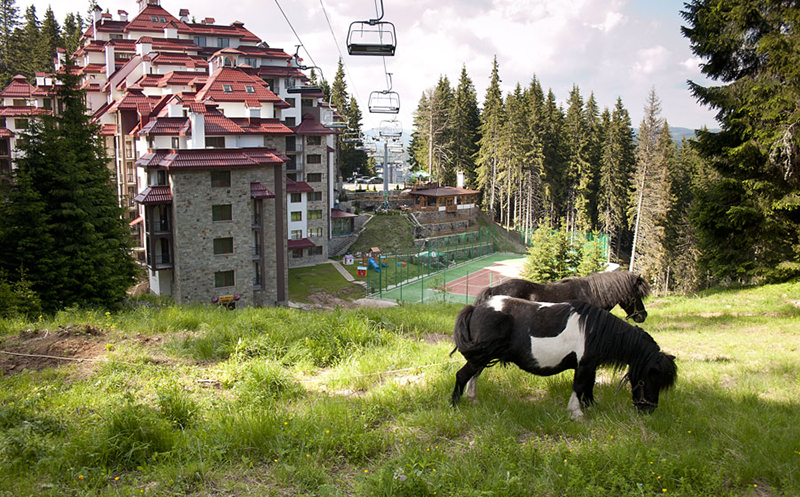 Every winter, along with the Punic Wars around the second lift in Bansko, the first in Pamporovo and the zero lift in Vitosha, we hear the propaganda that there was no year-round tourism in the Bulgarian mountains. The understanding is instilled that in Bansko (Blagoevgrad), Pamporovo (Smolyan) and Borovets (Sofia region) some bad and stupid people invest in hotels and ski areas that welcome tourists only in winter, and in the summer they turn the towns into deserted deserts and tombs. While abroad it was exactly the opposite – there the smart people did not build hotels and ski areas... but something else (but it is not said what), which welcomed tourists all year round.
The strange thing is that so far we haven't seen anyone ask themselves - is this, damn it, true or not? Besides, this question is relatively easy to answer, considering the available statistical data.
Let's take the three Bulgarian mountain regions, the French Rhône-Alpes as one of the best examples of year-round tourism, and the powerful Slovenian tourist alpine region of Gorenje. We distribute the number of overnight stays in each of the regions for the last 12 months - i.e. from September 2015 to September 2016. Then we calculate the overnight stays for each month as a percentage of the total overnight stays for the year, to see the distribution of tourist traffic. The following graph is obtained:
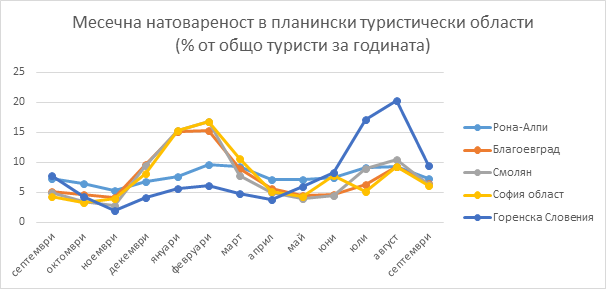
It can be seen that the French Rhône-Alpes really has an almost ideal year-round occupancy rate – the weakest month was November 2015 with 5.2% of the total tourists last year, and the peak was February 2016 with 9.6% of the total. The difference between the peak and the weakest month is only 4.4%.
In Bulgaria, we traditionally have the heaviest traffic in January and February. For example, in the Blagoevgrad district with the mountain resort of Bansko, the weakest was November 2015 with 4.2% of the total tourists, and the strongest was February 2016 with 15.3%. For Smolyan and Pamporovo, the weakest was November 2015 with 2.8%, and the strongest was February 2016 with 16.8%; for Borovets and the Sofia Region, the weakest was October 2015 with 3.25%, and the strongest was February 2016 with 16.7%. Mountain tourism in the Slovenian region of Gorenje has a different dynamic – there is a strong influx in July and August 2016, and the ski season is relatively calmer.
Although inferior to the French champion in harmonized occupancy, the Bulgarian mountain regions are far from concentrating their tourism activity only in winter. The summer season in Pamporovo and Smolyan was extremely strong in 2016 - between June and September, as many as 30% of all overnight stays for the past 12 months were realized, compared to 33.3% for the summer season in Rhône-Alpes. Bansko and Blagoevgrad lag behind only slightly with 27% of overnight stays for summer 2016.
If we are even more precise statistically and calculate the deviation from the average norms for the year, we find the following data (the lower it is, the more "year-round" tourism is):
| Tourist area | Standard deviation |
| Rhône-Alpes | 1,25 |
| Blagoevgrad with Bansko | 3,7 |
| Smolyan with Pamporovo | 4,25 |
| With Borovets | 4,14 |
| Gorenska (Slovenia) | 5,12 |
| Austria – national level | 3,17 |
The deviation is lowest in Rhône-Alpes, that is, there the peak and weakest months have the smallest deviation from the average occupancy for the year, and the French region is absolutely rightly cited as one of the best examples of a year-round tourist destination.
The deviation in Bansko is the lowest of the three Bulgarian mountain regions, but it is far from a critical value. We see that the powerful tourist region of Gorenska in Slovenia has much higher deviations than all three Bulgarian regions and resorts. And just for comparison, the deviation of Austria is almost identical to that of Blagoevgrad – that is, Austria as a country is just as much of a year-round destination as Blagoevgrad with Bansko.
In conclusion, we can only say that the Bulgarian state should stop listening to the nonsense of people who have not invested a single lev in tourism, but who try on television to convince the institutions that they knew about the problems in the Bulgarian mountains and that they would turn the unbalanced Bulgarian tourism into a year-round one if they only came to power. Bulgarian tourism in the mountains has been increasingly smoothing out its monthly workload in recent years and is now year-round– thanks to the efforts of thousands of entrepreneurs, dozens of mayors and hundreds of thousands of tourists. And the only thing that needs to be done is for the state to stop preventing people from doing their job in the name of lies and populism.





In yet another philippic against ecology, I don't find the words deforestation, landslides, and floods. I assume that such things don't happen.
I haven't read such nonsense in a long time. The main economic indicators are the average annual occupancy of the base and ADR (average revenue per night).
It is precisely because of such scoundrel investors that we have ruined our mountain tourism. In the Bansko-Razlog region alone, we have over 60,000 beds, and if the author takes the trouble to look at the reports on the paid resort fees, he will see that even a 10% average annual occupancy rate cannot be achieved.
Not to mention that the mountains are not only around Bansko, Borovets and Pamporovo. Most of the chalets are empty for 8-9 months of the year, and the guesthouses are only full on holidays and weekends.
In Bulgaria, deforestation is occurring in the regions of the DPS, where no ecologist steps foot (for understandable green reasons). In general, our country is depopulating and moving to Sofia, which leads to a simple fact - forests as a whole are growing at a rapid pace (about 15,000 hectares per year). Floods are more a matter of regional planning, since one cannot stop them (heavy rain is heavy rain), but one can strengthen riverbeds, slopes, etc.
Again, negativism related to Bulgarian tourism, apparently quite a few people visit the resorts throughout the year, and more sit in front of computers, their development is very good!
The funny people from the fictional eco-organizations never had any idea what was going on in the mountains and with tourism in Bulgaria in general.
Жалко е, че в България има шепа гора, които се представят за еколози и вместо да действат за решаването на реалните проблеми и те правят точно обратното. Само чакат удобен момент, за да саботират развитието на родния туризъм, които е един от най-важните и печеливши отрасли в българската икономика.
It is clear that in Bulgaria there is a pseudo green clique, led by Toma Belev, which is financed by Ivo Prokopiev, but why are these apostates hindering the development of tourism in Bulgaria?!? In this way, they also prevent people in smaller settlements from earning an honest living! It is easy for Prokopiev - after all, he was appointed a millionaire by Ivan Kostov! But what about ordinary people?
How about those paid environmentalists who explained to us that it was ridiculous to develop winter tourism because Bulgaria had a short winter. Hey, stay away from paid speakers who only defend their theses, for which they are paid, and don't think about anything else at all. Unfortunately, that is why Bulgaria is in this situation and cannot get better. Its people are sold for pennies to people who want to ruin it, and those who think about its prosperity are persecuted and lynched in society.
We're not talking about how many forests there are in the country, but that when you cut down the trees on a slope, the root system no longer holds the soil and at the first heavy rain you have a landslide, as well as overflowing of the river bed. Reference, Bansko.
Ah, it's strange that Glazne has been overflowing for several CENTURIES, then? Have the people of Bansko always built ski areas since Turkish slavery? And since the overflowing rivers on the southern slope were even more, are there ski areas with a stealth shield there? By the way, the investments for reclamation in the Bansko ski area are among the highest per unit area in Europe and this is public information (recognized by FIS and UNESCO) - one just has to be not too lazy to read it before writing nonsense on the forums 🙂