 EKIP– Expert Club for Economics and Politics A Different Opinion
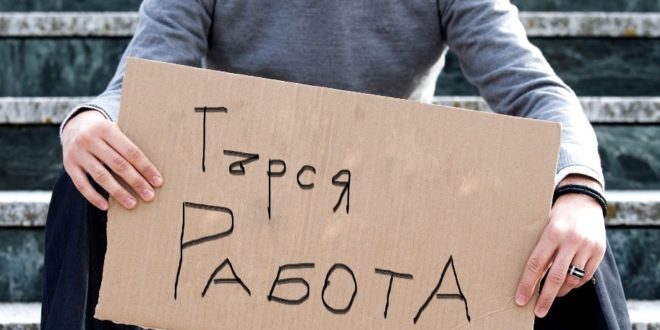
Yesterday (Wednesday, April 1) the government announced its desire to extend the state of emergency by another month until May 13. Alas, this was not an April Fool's joke. And judging by the statements made by government representatives, this means maintaining all currently effective quarantine measures and combating the spread of Covid-19. Given the damage that the current situation is already doing to the material well-being of the population, extending the period of severe restrictions could have catastrophic consequences for the country's economy.
Is it necessary to extend the state of emergency?
It is not at all clear why such an extension of the state of emergency is necessary. Official data shows that the trend in the growth of coronavirus cases in our country is smooth, not exponential. We have a relatively stable, non-accelerating growth rate, which over the past 10 days has averaged 7.4% per day. This shows that the spread of the infection is moving slowly and at the moment there is no danger of overloading the healthcare system. This also gives the authorities time to expand the capacity of the healthcare system and prepare it to deal with the infection in the longer term.
We must not forget that, according to all health professionals in the field, the goal of restrictive measures on any kind of social contact is not to "stop" the pandemic. Their goal is to slow its spread, to make the growth of cases smoother, so that there is no sharp short-term exponential spike in the number of infected people, like in Italy, which would overload the health system and lead to its collapse. So far, we are apparently managing to prevent this scenario. For which the efforts of the government and health professionals deserve praise.
Precisely because we have apparently already managed to achieve the main goal – to prevent exponential growth of the infection – it is puzzling why it is considered necessary to extend the state of emergency until May 13. Even more important is the question of whether it is imperative to continue with the state of emergency and the severe restrictions in the country?
We need to carefully weigh the pros and cons.
We must not forget that measures to limit the spread of the virus have two sides. On the one hand, they save lives and prevent a collapse in the healthcare system. On the other hand, they harm lives by leading to bankruptcies and unemployment. These are the inevitable consequences of the massive restriction of economic activity. We must be aware of these pros and cons of quarantine measures and constantly weigh them. There is a point at which the scale of the negatives of quarantine outweighs its benefits. And we have almost reached it.
This week, the latest data from the Employment Agency showed that the number of newly registered unemployed was 12,661 in the second week of the state of emergency. This is almost double the number registered in the first week of the state of emergency. Of these, 7,235 people said they became unemployed due to the coronavirus and the restrictive measures. The Minister of Social Affairs said that the total number of newly registered unemployed since March 13 is 31,000 people and an average of 2,934 people per day are losing their jobs.
This is a frightening statistic. Of course, a significant part of this new unemployment is inevitable, regardless of whether there is a state of emergency and quarantine or not. It is simply a natural consequence of the slowdown in economic activity, which is inevitable in Bulgaria due to what is happening in key trading partners such as Italy and in the global economy as a whole. But another significant part of this unemployment is not inevitable, but a consequence of the measures that the government is taking in terms of limiting economic activity.
The effects on the economy are already becoming very serious
Of course, such measures are necessary to some extent. But they should not be overdone, especially in the longer term. According to a survey by the Economic Chamber, as of March 24, 12% of all companies in the country had completely ceased operations. About 19% of all previously employed people are now out of work – either on leave (usually unpaid) or have been laid off. Meanwhile, a Gallup survey showed that the incomes of 36% of Bulgarians have decreased since the start of the state of emergency. Another 23% say they fear that their incomes will decrease.
The longer the state of emergency continues, the larger these numbers will become. With each passing day, businesses in the country are losing more and more money, and citizens are losing more and more income and jobs. They will generally continue to lose even if the state of emergency is completely lifted, but at least the loss will be smaller. This is precisely the most effective measure to support businesses and workers at the moment. Not covering 60% of salaries by the state, not subsidizing businesses through the Bulgarian Development Bank – simply loosening the current regime of restrictions.
Don't get me wrong. Most of the social distancing measures should remain in place. However, some do more harm than good. For example, the travel restrictions between regional cities are a measure that creates serious logistical difficulties for businesses and workers with very dubious benefits. After this restriction was introduced, the coronavirus still spread to almost all regions of the country. So the only thing that was achieved in this way was massive traffic jams on key roads in the country. It is also unclear what exactly is achieved by banning walks in the park, where there is enough space to maintain the necessary distance anyway.
Let's minimize the damage to businesses and workers
At a minimum, the current restrictive measures should be loosened and made more flexible after the one-month state of emergency has expired. Retail outlets in the country should be allowed to operate, but under strict hygiene conditions. Those where there is a risk of large crowds in a closed room may be required to allow a limited number of customers at a time, depending on the area of the outlet, so that the necessary distance can be maintained. Supermarkets are doing this anyway and it seems to be working well. Of course, all recommendations for social distancing and strict hygiene by citizens should remain.
The important thing is to allow the country's businesses to start restoring their cash flow as much as possible. Otherwise, a wave of bankruptcies is inevitable, especially given the government's refusal to take more serious and effective measures to stimulate business through tax breaks. At the moment, it seems that a doubling of unemployment this year is almost inevitable. Let's at least do everything we can to prevent a tripling.



"For example, limited travel between regional cities is a measure that creates serious logistical difficulties for businesses and workers with very dubious benefit."
What difficulties have you encountered?
I've never had a problem passing through checkpoints before, especially when I drive a truck.
I hope that the state of emergency does not necessarily mean maintaining or tightening the measures. On the contrary, some of them will most likely begin to be gradually phased out. Now I read that in our area, hot food display cases and pastry shops can now operate.
The problems of our economy will be dictated more from abroad. We will not see foreign tourists soon, exports will collapse due to a lack of orders, outsourcing will also probably suffer from the contraction of their clients' activities abroad. It will be necessary to restructure businesses, not pour money.