EKIP– Expert Club for Economics and Politics A Different Opinion
The title is a quote from the popular Bulgarian march "Great is our soldier", which was written in 1916. The author of the text is Second Lieutenant Konstantin Georgiev Popov from the 23rd Infantry Shipka Regiment. The year of writing is important. At that time, the country was involved in its third war in the second decade of the 20th century.
Bulgarian participation in the First World War lasted from 1915 to 1918. It was the greatest military effort made by the Bulgarians in the period after the Liberation, which ended in a real national catastrophe. In this presentation, well-known stylized facts that relate to the causes of the war, the course of the fighting and their consequences will not be repeated. The goal is to verify whether Konstantin Popov’s words are true. In order to fulfill this goal, certain aspects of the war have been “read” through the eyes of some of the most distinguished Bulgarian officers who published books about it or kept diaries during the fighting. These are: the hero of the offensive in Dobrudja in 1916, Gen. Stefan Toshev, the organizer of the defense at Dojran in 1918, Gen. Vladimir Vazov, Gen. Konstantin Zhostov, Chief of Staff of the Active Army, and Gen. Stefan Noykov, Chief of the Operations Department at the Headquarters of the Active Army. They cannot be "accused" of pacifism or disregard for national interests. Therefore, they deserve to be heard.
The dark side of war: supply and logistics
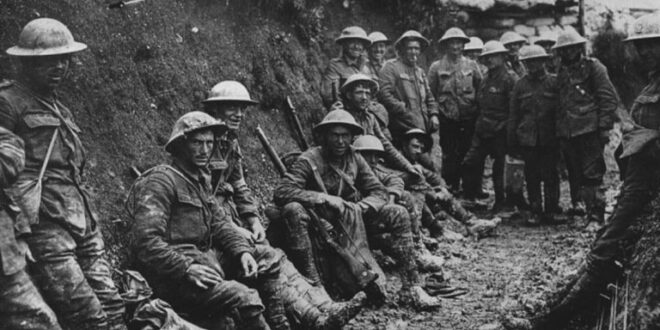
At the beginning of the 20th century, Bulgaria was predominantly an agricultural country, which meant that it did not have its own production of weapons and ammunition, but at least the supply of the army with food and clothing should have been decent. It turns out that the poorly developed economy was an obstacle even to feeding the hundreds of thousands of soldiers called up under the battle banners. All four authors mentioned agree that the supply of the army with food, clothing and footwear was humiliating. Where Bulgarian units fought close to German allies, the weaknesses became even more visible. General Vazov wrote that the German troops located in the vicinity of Bulgarian units “were both better fed and impeccably dressed”.
As early as 1916, senior officers noted malnutrition among the soldiers. The situation became particularly bad in 1918. Then the bread ration per soldier was reduced to 600 grams, and in some units even to 500 grams. The quality of the bread was also subject to all kinds of criticism, it often contained remnants of ground corn cobs and straw, which caused stomach disorders in the soldiers. In the same year, 1918, the situation with clothing became intolerable. Stefan Noykov noted, "In almost all units, the soldiers had completely torn outer clothing." In order to go on home leave, the soldiers borrowed healthy uniforms. Information shows that there were combat units in which half of the soldiers were barefoot, and in some they were shod with stilettos. Similar information abounds in almost all documents about the Bulgarian participation in the First World War.
In addition to the primitive economic structure of the country, a number of subjective factors also contribute to this situation. Before Bulgaria joined this war, it participated in the First and Second Balkan Wars (1912-1913). The organization of food and clothing supply during these wars was weak. More importantly, after their end, no effort was made to overcome the shortcomings that had become visible. General Stefan Noykov noted, "No improvement in the rear service from the experience of the Balkan War was made." He stated that the entire system of supplying the army was devoid of flexibility and elasticity, which were imposed by local conditions. The work of the requisition commissions, which collect from the population the products necessary for the army, is distinguished by rudeness, confusion, bureaucracy, disregard for the interests and dignity of the people who hand over their produce or livestock. In individual cases, the requisitioning of products supposedly for military purposes turns into speculative robbery by the authorities. Thus, Gen. K. Zhostov writes that the government requisitioned wool from the peasants, paying them 3 leva per kilogram. The same wool was then sold to the Germans for 12-20 leva per kilogram, and “the profits went into some partisan pockets.” Such actions and rumors undermined the morale of the combat units and called into question the point of participating in the war.
The Darker Side of War
War is an extreme event in which many of the latent flaws of social organization become apparent.
Even before Bulgaria's actual entry into the war, Gen. K. Zhostov noted disturbing trends in his diary. According to him, the main occupation of Bulgarian ministers was to place their party followers in services outside the army, or at least outside those military units that would participate in actual combat operations. These attempts were temporarily repelled, but the ministerial pressure to release individual privileged individuals from service continued. It can even be assumed that with the intensification of hostilities they became stronger and more successful. Stefan Toshev noted the presence of a large number of young people released from the front by ministerial decrees. Similar information can be found in Gen. Stefan Noykov's book "Why We Didn't Win 1915-1918". Vladimir Vazov also spoke of "favored and illegally left healthy people in the Kingdom - to earn and debauchery". During his visit to Sofia in 1917, Vl. Vazov noted with bitterness, "Sofia is full of revelers. You don't feel the war here." The results of such political favoritism are negative. Those who remain in safe places are not shy about declaring that "war is for fools" and amassing significant profits from government supplies and speculation. The fighters at the front are given a reasonable feeling that they are forced to bear the burdens of war while the "smarter" ones save their skins.
According to all four senior officers, the Bulgarian army command at its various levels suffers from serious shortcomings. General Stefan Toshev is categorical: “we lacked a decisive and enlightened command”, not enough effort is made to carefully study the positions of the units, and the lower officer ranks lack courage and initiative. Bulgaria is an ally of Germany, but the Bulgarian delegate to the German High Command allows himself to be deceived about the available reserves at the disposal of the Germans. And this negatively affects the way the Bulgarian command organizes military operations in the Balkans. Konstantin Zhostov writes that the commander-in-chief of the active army, General Nikola Zhekov, is not interested in work and prefers to enjoy the natural beauties of Macedonia. His main activity consists of “congratulatory telegrams and replies .... He only expects praise and greetings”. At the same time, individual officers are subjected to physical punishment and suffer together with their soldiers from malnutrition. The intensity of the fighting led to some soldiers going mad from the stress of enemy artillery, others self-harming in order to be pulled from the front line. There were cases of suicide, and by 1918 many soldiers were fleeing their units into the interior of the country or surrendering to the enemy.
The invisible cost of war: a hypothesis
In the conditions of war, many worthy people with remarkable characters appear and gain fame. A true legend of the First World War is the Skopje-born Colonel Boris Drangov, whose courage leaves unforgettable memories in his subordinates. He trains and inspires hundreds of young people at the Reserve Lieutenants' School. His are the famous words "There are no two deaths, but one cannot do without one." Boris Drangov and many like him found their death on the battlefields of the First World War.
In his "Biographical Notes", Gen. Vladimir Vazov tells of an officer who, at the request of relatives, was withdrawn to a safe part of the front. However, the officer refused to move because he did not consider such an act moral. Behind this short story there are at least two things that need to be said. First - hardly everyone who had a chance to save their life through immoral actions gave up such an opportunity. And second: people remain on the front line who either have no connections or are carriers of extremely important qualities for society such as honesty, integrity, courage, loyalty, a sense of duty. This gives us reason to assume the existence of an invisible price of war. Proportionally, many more carriers of such qualities die in it, compared to the cunning, the dishonest, the cowardly.
Is Lieutenant Popov right?
Not only from the words of the four Bulgarian senior officers, but also from all primary sources for the period of the First World War, one can make the categorical conclusion that Lieutenant Popov is right. The Bulgarian soldier in the First World War is “wet, hungry, tired”. But that is far from all. He is often poorly or inadequately commanded, his suffering and patriotism are abused, he is treated as a “fool” by the heroes in the rear.
The facts presented are not just a reminder of the past. They can serve as a basis for other questions and observations. As early as 1776, Adam Smith stated that “defense is more important than wealth”, his words were later repeated by the Bulgarian economist Assen Hristoforov. However, a brief overview of the Bulgarian participation in the First World War leads to the question: is meaningful and effective defense possible without wealth? Because when a society is poor, it spends much more on cheap human lives in war, rather than expensive equipment. And because poverty very quickly and painfully clearly turns war into a means of enriching limited, privileged elites…
Reserve Corporal, Prof. Pencho D. Penchev