EKIP– Expert Club for Economics and Politics A Different Opinion
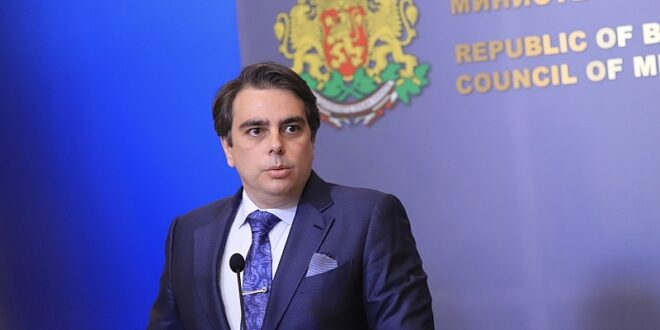
Today, the first state budget prepared by the government of the so-called "Coalition of Change" will be submitted for discussion in the National Assembly. Expectations, especially for the party that leads the coalition and controls the Ministry of Finance - "We Continue the Change" - are high. GERB governments, especially the last one, deservedly do not have a very good reputation in terms of public finance management. But instead of correcting the old mistakes in the fiscal approach, an objective reading of Budget 2022 indicates that the Bulgarian people will receive something completely different and even worse than the old approach.
Where it borrows from the previous government, the new Finance Minister borrows the worst, while where it takes a different approach, the state budget of "Change" creates economic risks. If indeed, as they stated before the election, the MPs of the ruling majority want Bulgaria to change for the better, Budget 2022 needs serious adjustments. Here are the key concerns regarding the budget that MPs should address to Finance Minister Assen Vassilev.
Why is such a high deficit being set?
The first, and most crucial, question is what happens to the deficit. The 2022 Budget sets it at 4.1% of GDP. This is a significant increase from 3%, which was in 2021, according to early data from the Ministry of Finance. As I already wrote in December, there is absolutely no logic in setting even a 3% deficit for 2022, let alone such a significant increase. By the way, if it is implemented, the deficit set in the 2022 Budget would be the highest since the bankruptcy of Corpbank.
In macroeconomic terms, Bulgaria is not currently in recession, quite the opposite, in 2021 we witnessed a relatively rapid and sharp rebound in GDP from the recession in 2020. Unemployment is at a record low of 4.8%, and inflation is the highest since 2008. Deficits are pro-inflationary and even supporters of deficit fiscal policy (from the Keynesian school) say that they are necessary only when there is a problem with unemployment. Currently, Bulgaria's economy certainly has problems (most acute in energy and price dynamics), but unemployment is not one of them. Accordingly - why is the deficit rising?
Since 4.1% of GDP does not just melt away, the deficit will remain at 3.0% or more of GDP until 2024, inclusive. This means an annual increase in government debt by placing government bonds on the financial markets. In the current changing financial environment, this is a very risky plan. Inflation is already causing investors to retreat, and interest rates on government debt have started to rise in recent months. Central banks are finding themselves increasingly pressured to accelerate the tightening of monetary policy and the raising of interest rates in order to counter the depreciating effect of inflation.
At such a time, to bet on such large and long-term deficits is extremely dangerous for the fiscal stability of Bulgaria. The forecasts of the Ministry of Finance will most likely turn out to be too optimistic, the increase in interest rates will surprise them and the state debt will swell more than expected. It should be noted that Bulgaria has never, since the introduction of the Currency Board (1997), been betting on a deficit of 3% or more of GDP for more than 2 consecutive years. If the plan of the Minister of Finance Assen Vassilev is implemented, we will get a 5-year period with a deficit of 3% or more.
What happens to capital expenditures?
From the case of the deficit, it logically comes to capital expenditures. Why? During the years of GERB's rule, Vladislav Goranov's favorite practice was to set deficits, which within the framework of budget implementation during the year turned out to be surpluses due to unfulfilled capital expenditures. Therefore, for any economist who has followed fiscal policy in our country in recent years, after seeing the huge deficit in Budget 2022, it is logical to turn his attention to capital expenditures. And what does he see there? A record increase of about 35% compared to 2021.
If we base ourselves on history, the probability that these capital expenditures will be fully implemented is negligible. Especially considering that the budget begins to be implemented in April, i.e. the state will have one quarter less to spend on capital expenditures this year, which are 1/3 higher than those for the previous year. It is logical then to conclude that Minister Vassilev is taking from Goranov's magic hat and is betting on purposefully inflated capital expenditures, with the idea of leaving an unspent surplus.
This surplus could be used for emergency spending during the year, especially in case of a need to quell political tension - an approach that was very typical of Boyko Borisov. Or, if it is not necessary, it will remain as a surplus towards the end of the year, which can be spent "hastily and secretly", as has happened every December in recent years. This would not be a change at all, but a continuation of one of the most vicious budgetary practices of GERB governments.
Are macroeconomic forecasts realistic?
If this is the idea, however, Assen Vassilev's calculations may turn out to be quite skewed. A number of experts and institutions, including the Fiscal Council, have already pointed out that the government's macroeconomic forecasts for the current year are probably too optimistic. The budget assumes 4.8% GDP growth in 2022. Real growth will most likely be lower, all international and national institutions are already revising their forecasts downwards. For example, the BNB expects GDP growth in 2022 to slow to 3.6% from 3.9% in 2021. This is a much lower level than predicted by the Ministry of Finance. The World Bank predicts 3.8% GDP growth, and the EC predicted 4.1% GDP growth back in early November (before economic expectations began to fall).
Compared to all other institutions, especially in the context of the worsening economic expectations due to the inflation and energy crisis, the Ministry of Finance's forecast for economic activity in 2022 seems too optimistic. And in this regard, if we return to capital expenditures - this is where the bill may not work out very well. The growth expected in Budget 2022 is attributed mainly to growth in investments caused by the record increase in capital expenditures.
However, if, as is likely to happen, capital spending is not implemented, even by its own overly optimistic estimates, the government will not be able to push GDP growth to the expected level. If this happens, the deficit will swell even more. In the context of rising interest rates, the risk of a debt spiral becomes very tangible in such a development.
Conclusion
In conclusion, the logical summarizing question that follows from everything discussed so far - why are so many unnecessary fiscal risks being taken? And in the first budget of a government that should be the bearer of change towards better management of public finances? I hope that in the discussion of Budget 2022, the MPs will ask the same question. Not only to themselves, but also to the Minister of Finance, Assen Vassilev.