EKIP– Expert Club for Economics and Politics A Different Opinion
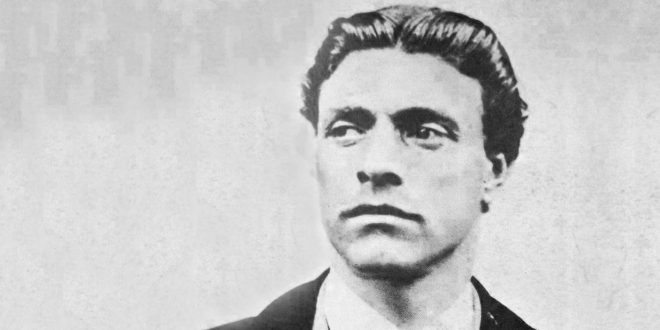
Today (July 18) is a significant date in the Bulgarian calendar. On this day, in 1837, the greatest Bulgarian hero and revolutionary was born – Vasil Ivanov Kunchev, better known by the famous nickname Vasil "Levski". Also known as the Apostle of Freedom, Levski is the most important Bulgarian revolutionary. His achievements as an organizer of the revolutionary movement in Bulgaria laid the foundations of the April Uprising and were therefore key to the later liberation of the Bulgarian people from the subjugation of the Ottoman Empire.
Although much has been written (and spoken) about Levski's deeds, relatively much less is known about his political and social worldview. This is a big omission, because Levski's legacy of values is just as valuable as the legacy of his revolutionary activity in practice. It is only right that everyone who calls themselves a free Bulgarian and is proud of this identity should be aware of what political and social values Levski defended and what his vision was for the future independent and free Bulgaria, which he unfortunately did not live to see.
Levski's political worldview is the driving force behind his activities as a revolutionary. His political and social vision is as valuable and inspiring a legacy as his self-sacrifice as a revolutionary against the Ottoman Empire.
Yet, we can glean information about his political values and vision from his letters. This information is scarce, but sufficient to form an idea of what the values and social vision were for which Levski sacrificed his life. This is what we will focus on in this article and try to establish what the intellectual tradition in political and social theory was that influenced Levski to the greatest extent and, accordingly, what the legacy of values he left to future generations of Bulgarians was.
Freedom
It would be almost a tautology to say that Vasil Levski was a freedom fighter. The name "Levski" is almost synonymous with "freedom". For him, freedom - at all levels, for himself, for his loved ones, and most of all, for his own people - is the highest value, for which even life is worth sacrificing. Here it begins to become clear In his fervent defense of freedom as a basic human right, especially in the context of the freedom of national self-government, Levski clearly demonstrates that he was inspired by the famous (classical) liberal revolutions between the 17th and 19th centuries. In a letter dated 6.10.1871, he wrote:
"Sir, today's century is the century of freedom and equality for all peoples. Today, everyone who is worried and oppressed, everyone who has the chains of slavery weighing on their necks and who bears the pitiful and shameful name of slave, has strained all his strength - both moral and physical - and is looking for an opportunity to shake off the burden of slavery in any way possible, to break the chains of slavery and remove the name of slave far from himself. [Everyone] wants to live freely and enjoy God's nature, [everyone] wants to be a man."
For Levski, being human means, above all, being free. Not being subject to someone else's will, having the right to control and determine the direction of one's life. Something that every Bulgarian subject to a foreign and tyrannical power, such as that of the Ottoman Empire, cannot have. In this definition of freedom as a fundamental human right, without which man is not complete, Levski follows the thought of the classical liberal thinkers from the tradition of John Locke, to whom the founding fathers of the USA also belong.
Justice
The next key political value for the Apostle is justice. This is evident from Levski's fierce criticism of the trampling of the natural rights and freedoms of every person and every nation - the right to life, to property, to self-determination. In the same letter quoted above, Levski writes:
"But we too are looking for an opportunity to break the chains of slavery, to drive the Turkish tyrants far from our land, to erect and build the temple of the first freedom and give everyone their own."
The last phrase is key – "to give everyone their due". Levski seeks justice, not just revanchism against the Turkish people and state (as becomes even clearer in some of his other letters, which we will examine below). From his words that the revolutionary cause of the Bulgarians aims to achieve freedom and to "give everyone their due", it is implicitly clear that he is talking about restoring the natural social order, in which the freedom, life and property of every person - the fundamental rights - are respected and not taken away. He is not looking for reciprocal privileges or revenge, he is looking for justice.
Levski's political values and his vision for the ideal future political and social system in Bulgaria are perhaps most explicitly expressed in the "Order of the Workers for the Liberation of the Bulgarian People" from the charter of the Bulgarian Communist Party:
"P o d b u d a. The tyranny, inhumanity and the very state system of the Turkish government on the Balkan Peninsula.
Objective. With a general revolution, to radically transform the current state despotic-tyrannical system and replace it with a democratic republic (people's government). In the same place that our ancestors bought with the power of arms and with their blood, where today the Turkish kesedjis and janissaries rage inhumanly and where the right of force reigns, to erect a temple of truth and true freedom. And the Turkish chorbadzhilik to give place to agreement, brotherhood and perfect equality between all nationalities. Bulgarians, Turks, Jews, etc. will be equal in every respect: whether in faith, whether in nationality, whether in civil relations, or in anything else. All will fall under one common law, which will be drawn up by the unanimous consent of all nationalities."
Fighting against the Turkish state, not the Turkish people
In this text, Levski eloquently sets out the motivation and goal of Bulgarian revolutionary activity, as he sees it. Note that the motivation specifically refers to the Turkish state, not the Turkish people. This is a very important distinction, which is further developed in the next paragraph. Levski sets the goal of revolutionary activity as the replacement of the then despotic-tyrannical state system with a democratic republic. The motivation of Levski's revolutionary activity is the tyranny and inhumanity of the Turkish state system, and the goal is its abolition and replacement with a democratic republic.
The distinction between the Turkish government and the Turkish people is key, because as Levski himself explains later in the text, in the new republic, as he imagines it, "Bulgarians, Turks and Jews will be equal in every respect". Levski is eloquent. His struggle is not against the Turkish people in principle, but against the tyrannical rule of the Ottoman state. And in his vision of a future Bulgarian republic he includes all ethnicities, including the Turkish, as equal with the Bulgarian. This is expressed even more categorically in another of his letters from 10.05.1871, which reads:
"In our Bulgaria it will not be like it is now in Turkey. In it all peoples will live under the same pure and holy laws... for the Turk, for the Jew, etc., whoever they are, it will be the same for everyone... That is how it will be in our Bulgaria. We do not persecute the Turkish people, nor their faith, but - the tsar and his laws, in a word, the Turkish government, which barbarically rules not only us, but also the Turks themselves."
Note what Levski is talking about here – about the liberation from the Turkish government not only of the Bulgarian people, but also of the Turks themselves, who, like the Bulgarians, are "barbarically" ruled by it. The Turkish people are not what Levski is trying to free the Bulgarians from, but the Turkish state power, the Turkish Tsar (Sultan). The fact that Levski also says that "we do not persecute the Turkish people, nor their faith" is also very indicative of his political mentality. And in this respect, the Revolutionary seems to be influenced by the school of classical liberalism, which as a political movement since its inception in the 17th century in England has emphasized religious tolerance (and this issue is deeply addressed in Locke's political writings). Levski ends his letter with:
"In Bulgaria there will be no king, but "people's government" and "to each his own". Everyone will serve according to their faith and both Bulgarian and Turk will be judged legally. Freedom and a pure republic."
Equality
Levski again uses the phrase "to each his own" and emphasizes the freedom and equality before the law of all, both Bulgarians and Turks, as fundamental for the new Bulgarian republic. Equality before the law is apparently key for the Apostle and is apparently perceived by him as the foundation of any just republic composed of free citizens. In the letter to the newspaper "Svoboda" published on 13.02.1871, Levski also touches on these motives:
"We are also human beings and we want to live as humans: to be completely free in our land, where the Bulgarian lives - in Bulgaria, Thrace [and] Macedonia. Whatever nationality they may be living in this paradise of ours, [they] will be equal to the Bulgarian in everything."
"[The] right must be given to every nation, and to every person who wants to live honorably and freely."
The extent to which Levski was influenced by the liberalism of the 18th and 19th centuries is also evident in his distrust of monarchy as a form of government. The Apostle's dislike of this form of government was certainly largely colored by the "tyrannical" and "barbaric" rule of the Ottoman Sultan, but even when it came to the establishment of a Bulgarian monarchy (including a constitutional one), Levski was firmly against it:
"If anyone despises and rejects the predetermined state system of a democratic republic and forms parties for a despotic-tyrannical or constitutional [in the sense of monarchical] system, then such people will also be considered enemies of our fatherland and will be punished with death."
Remarkable is the severity of the punishment that, according to Levski, is imposed on those who want to reject the "democratic republic" and accept a "despotic-tyrannical" or "constitutional" monarchy - death. This demonstrates how important this issue was for the Apostle. The above words are also inscribed in the statute of the Bulgarian Revolutionary Party, which also demonstrates that these beliefs of his were of fundamental importance to Levski, since he sewed them into the document that laid the foundation of the revolutionary movement for the liberation of the Bulgarians.
The valuable legacy of Vasil Levski
It is very important to remember all these words and the Apostle's emphasis on "agreement, brotherhood and perfect equality between all nationalities" as a goal that will be realized in the new Bulgarian republic. Especially when the face and name of Levski and other of his revolutionary contemporaries are being adapted by people who are trying to incite ethnic tension through anti-Turkish and false-patriotic slogans and messages. This, as we see, is categorically not Levski's legacy.
What are the key political values for Levski? Those values that, in his opinion, should be fundamental in the new independent republic of Bulgaria? As we see from his letters, these values are freedom, justice and equality not only for Bulgarians, but also for Turks and everyone else. As for the Apostle, the state form of government that most fully professes and protects these values is a democratic republic.
In Levski's political thought, no matter how scarce information we have about it, the thread of classical liberalism is clearly visible. Two centuries before the Apostle, the famous English philosopher and classical liberal John Locke set forth freedom, justice and equality as the fundamental values that should be protected by the state. For Locke, and the classical liberals after him, as for Levski, there are fundamental human rights to life, property and freedom, which are inadmissible to be violated. And any power that violates them is illegitimate.
It was this philosophy that inspired the famous American Revolution in the second half of the 18th century. In the American Declaration of Independence, Thomas Jefferson wrote:
"We hold these truths to be self-evident: that all men are created equal; that they are endowed by their Creator with certain unalienable Rights; that among these are life, liberty and the pursuit of happiness."
Judging by the letters quoted above, this message could have been delivered by our own Apostle of Freedom, and in fact it has been, in one form or another. Ultimately, in view of not only the actions but also the thought of Vasil Levski, it is fitting that he be remembered as one of the greatest liberal revolutionaries not only of Bulgaria, but of the entire world. The legacy that men like him have left to future generations must never be forgotten. They must be remembered and constantly recalled. The best way to honor the greatest hero of our history is to remember for what values, for what dream, for what future Levski died... and to realize and preserve it.