 EKIP– Expert Club for Economics and Politics A Different Opinion

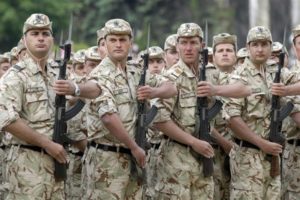
In recent weeks, the possibility of returning compulsory military service for all adult males in Bulgaria has been increasingly seriously considered. This is an idea that seems to have captured the public imagination for some time now and enjoys fairly broad support among the Bulgarian people. Is this support justified, however? Will the return of the barracks solve the deep problems of the Bulgarian army or will it worsen them? These are the key questions that everyone should be asking themselves, but it seems they are not.
As has already been noted in other comments on the subject in the Bulgarian media, the state of our army is currently deplorable, almost as bad as the state of our judicial system. Just ask any current or former military person to tell you about the Bulgarian army, about the incompetent management, about the lazy bureaucracy and corruption at the top, and even the widespread petty crime at the bottom, about how frequent thefts are, etc. Or just search the internet for yourself and I guarantee you that the picture you will see painted is not at all a picture of a stable, strong and well-managed army.
The fact that fewer and fewer young men are volunteering to become soldiers is the most definitive proof of how serious its problems are. And the return of the barracks alone cannot solve any of them; on the contrary, such a reform would only deepen them.
Modernization and capital
The main problem of the Bulgarian military is the lack of resources and modernization. A quarter of a century after the fall of the socialist regime, the Bulgarian army still relies on Soviet-era equipment and technology, the maintenance of which is becoming increasingly expensive. The problems of the army's material base have been discussed for years, but despite this, a complete modernization for one reason or another has not yet been implemented. According to a report by the Ministry of Defense on the state of the armed forces from last year, the army's capital expenditures amount to only 1% of all expenditures, which is too low, and the lack of quality weapons and equipment is one of the main problems in the preparation and implementation of the tasks and missions of the ground forces.
The return of the barracks may restore the strength of the Bulgarian army, but it will certainly not improve the material base, whose deplorable condition, combined with the lack of attractive remuneration, are most likely the main reasons for the almost complete lack of interest in military service on the part of young Bulgarians. The situation is so bad that it is not even clear whether the army has enough resources to equip and feed all the new recruits during their compulsory service, if such a service were to be introduced.
The only thing that the introduction of compulsory military service can achieve is to cover up these problems. At the moment, the constant attrition of the Bulgarian armed forces gives a clear signal that our army suffers from serious problems that need to be addressed and solved by the state authorities. But if all Bulgarian men are obliged to serve in the army anyway, we will lose this clear signal and all these problems will be largely covered up. At the moment, the incompetent management of the Bulgarian army by the state authorities is punished by Bulgarian men through their refusal to serve in it. If this freedom of choice is taken away from them, it also takes away their opportunity to punish the administrative failures in the Ministry of Defense and in the military forces as a whole and to give a clear signal that a serious reform is urgently needed.
Let us not forget that a professional army is always the better army, because unlike a conscript army, it is composed of soldiers who are closely specialized in waging war. Compulsory military service, on the other hand, builds a large reserve of soldiers, none of whom are specialists, but are simply civilians with one or two years of training at most, who spend the rest of their lives engaged in a completely different profession.
Forced labor has an economic cost
Furthermore, compulsory military service is a forced redistribution of labor, and such redistribution leads to certain rather unpleasant economic effects. The most obvious is that the barracks slow down the professional development of young men at the very beginning, which is perhaps the most important period in anyone's career. This negative effect should not be underestimated. According to a 1995 study by the Harvard Economics Department, men who underwent temporary compulsory military service 10 years later had wages that were at least 5% lower than those who had not served. According to another Harvard study from 1990, this difference could be as high as 15%.
The loss of one to two years of professional development also means that the necessary specialization of the workforce is seriously delayed, which in the long run has a negative effect on the overall economic productivity of a country. According to a study by the Organization for Economic Cooperation and Development, compulsory military service leads to lower GDP growth.
Since compulsory military service is forced labor, its price is automatically drastically artificially understated compared to the real one. This, in addition to meaning that the men forced to serve are disadvantaged because they are not paid enough, or not paid at all, also causes a serious increase in the ratio of soldiers to military capital, specifically weapons, food, equipment, etc. This will only worsen the critical problems of the material base of the Bulgarian military forces and the shortage of resources and modern technological capital will be exacerbated to the limit. Of course, since military service is already mandatory, the state lacks a serious incentive to seriously address the problem.
Ultimately, let us not delude ourselves that the introduction of mandatory barracks would lead to some imaginary renaissance of the Bulgarian army, which on a subconscious level we may also associate with a potential renaissance of the Bulgarian state as a whole. The only way to change our military forces, and our state, for the better is through substantial fundamental reform that would solve the deep structural and administrative problems, and not simply gloss over their existence, which would be the only achievement of mandatory barracks (and mandatory voting).





It should be clear that sentiments about the return of compulsory military service are just that - sentiments, and as such are far more emotionally based than economically or militarily. Debates about compulsory service invariably veer towards "making men out of boys" and generally towards a kind of romantic conservatism towards a past when men were real men, women were real women, and the little green men from Alpha Centauri were real little green men from Alpha Centauri.
In this sense, rational economic arguments are practically redundant, because anyone who would pay attention to them is already aware of them. The debate is being conducted at a lower level and the arguments in it must be relevant, otherwise they have no effect.
I'm in 1-2 months of military training, maybe at school - in 1988 I was in military training at a general education school and then 1.5 years in the barracks, so the first 3 months were actually for training and the rest was a waste of time.
They need to know the basics and shoot a little with a pistol and a machine gun, and the rest is for a professional army.
After "crying" I stopped reading..
You served in the navy, didn't you, my friend?
The problems listed have always existed and always will exist, and they do not make our army weaker, but more disciplined.
You write like that because you haven't seen the American army - no discipline, the generals don't know what color the cover of their charter is, etc.
What is there to specialize in for a soldier - he only follows orders? A year and a half is enough time for a soldier to receive the necessary training and military discipline. A regular army is useless (even more so, in Bulgaria).
See also:
http://bognagorata.dir.bg/_wm/diary/diary.php?did=726792&df=46&dflid=3
And the biggest irony is that it is precisely those who want the return of the barracks - the so-called "patriots" (actually false patriots) who have destroyed the barracks - Angel Djambazki has destroyed the barracks, even though he was subject to military service, and Volen Siderov has also destroyed the barracks.