EKIP– Expert Club for Economics and Politics A Different Opinion
I'll start with a little linguistics. The original meaning of the word "art" with the Latin root ars, artis is "dexterity, craft, technical skill", but also "approach, cunning, way of behaving". Only much later did the modern interpretation of the word appear as "creation of a work". And the word canard is translated as duck, but it also has the colloquial meaning "newspaper", "dissonance", "fiction". Le Canard enchaîné is a French weekly with a satirical profile. It does not use advertising, i.e. it does not depend on advertisers. It supports itself from the circulation, which in the last two editions reached cosmic heights. And very soon it contributed to the end of the candidate François Fillon.
We have been watching the upheaval of the French political landscape for more than a week now.
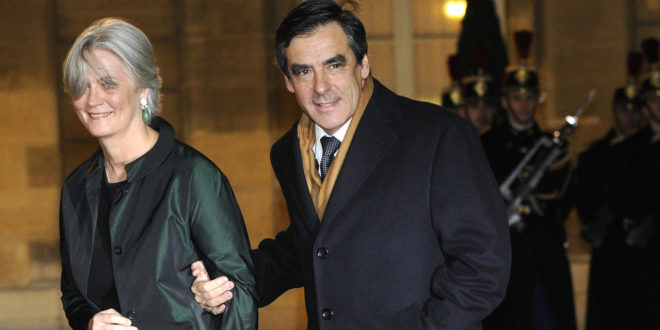
We have all heard that " The Chained Duck " published data on the fantastic salary of the wife of right-wing presidential candidate François Fillon as his parliamentary assistant when he was an MP and senator. Subsequently, the newspaper added revelations about the solid fees of two of his children and to top it off - on February 2, the public television France2 showed an excerpt from an interview with a British media outlet by Penelope Fillon, now the wife of a prime minister. An alphabetical error - Madame Fillon goes to the interview alone, unaccompanied by a media advisor. During the interview in question, she states that she is not interested in politics, does not interfere and does not assist her husband in any way. In fact, as of this date - May 2007, she has already been registered as a parliamentary assistant for six years and has signed for the solid sum of 831,440 euros, i.e. for a monthly salary of more than ten thousand euros (gross). In addition to joining the ranks of other French statesmen mired in financial and corruption scandals, Fillon lost the most important claim for which he was elected by his supporters - his integrity.
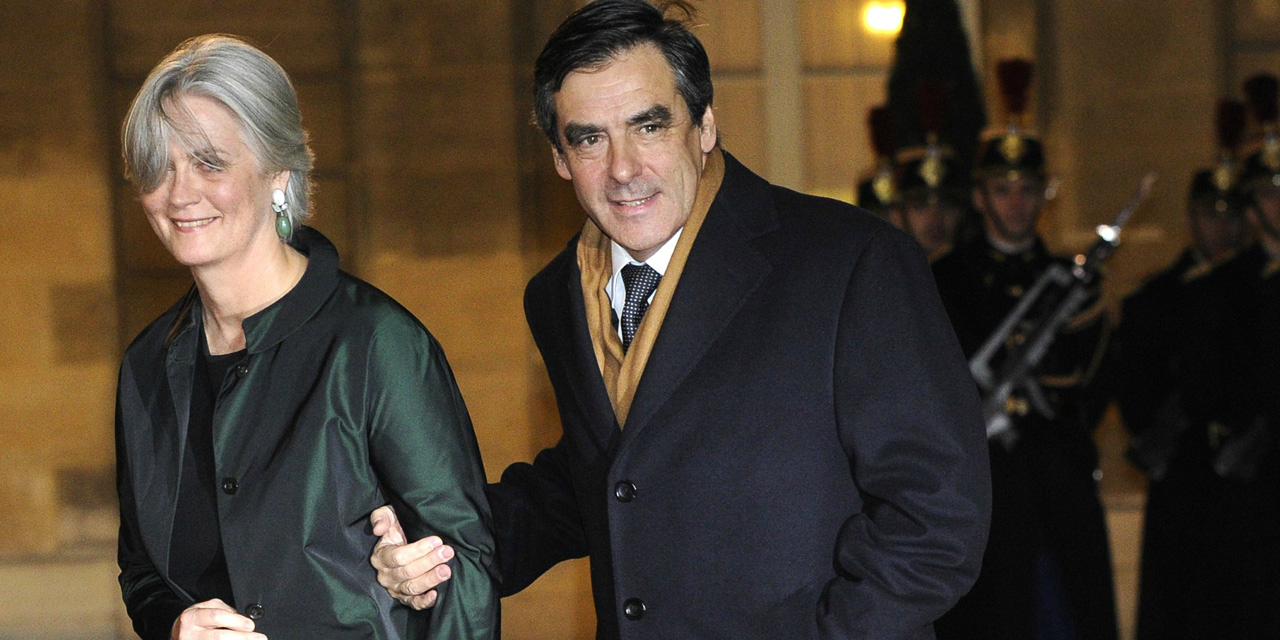
Worse. The interview reinforced the suspicion that Madame Fillon was unaware of her generously paid work commitments. She said: “I am not his assistant. I do not interfere in politics. I enrolled in university. That way I will have some work.” “ Verba volant scripta manent” (Words fly, what is written ( on the Internet ) remains) – this Roman maxim has been forgotten by the educated Fillon and no one has reminded him of it. Why?
Because it's even worse. It turns out that the closest circle of the presidential candidate, i.e. the people who are supposed to bring his campaign to the doors of the Elysee Palace, were also in complete ignorance. Those who write his speeches, consider the options for the television debates, prepare the answers to the trick questions and the blows "below the waist". He didn't tell them. It's incomprehensible. It's probably related to the character traits of a distrustful, closed and self-confident person. Until now, he has succeeded alone.
The confused and contradictory explanations he gives to the voters show the absence of a strategy, even of common sense and an attempt to regain lost trust. People see only a greedy man who has lied to them about his integrity. The French republican, and a true monarchist at heart, accepts in principle that those in power have privileges. This is not the Anglo-Saxon culture. They are shocked, however, by the size of the sums.
Here we come to the art of communication. On the world stage, we saw the brilliant communicator Obama with skills that twice brought him to the top. Recently, the “king of the Internet” – Donald Trump – has risen. Justin Trudeau has also won, and he managed to make all of Canada fall in love with him.
Whoever underestimates the power of the media or is simply devoid of communication talents - loses. Like Hillary Clinton or James Cameron, who were neither able to convince nor become sympathetic to the audience. And left the taste of something outdated, outside the imperatives of the time and quite distant from the aspirations of the electorate.
In the early 1960s, along with the popularization of television, political PR (or Spin Doctors) in the United States began to arrange political communication as a basic strategy in any political activity. They introduced concepts such as image, charisma, developed large formats, such as party rallies and television debates. For these capital meetings, scripts, scenographies were prepared and controlled to the extreme and nothing was left to chance. Later, this trend arrived and settled permanently in Europe.
The first and essential purpose of political communication is to elect the respective candidate. If this task is not fulfilled – it loses its meaning. To achieve it, one should work on the image of the candidate so that he appears in the lives of citizens. To implement a strategy of a storyteller who presents a story - the story of the candidate, which will touch the voters, awaken their memories or make them realize that there are many things in common between them and the candidate.
In politics, image is essential, but not sufficient, for the success of the political game. It must be supported by a message, and here again we find the role of political PR, which should prepare this message and ensure its successful dissemination.
Today, Fillon's message has disappeared, drowned out by the financial scandal. He did not communicate properly, he did not find the right tone, the wording of an apology or a promise that "it will not be done like this again". Time is running out so quickly, voters are abandoning him, he is already in third place, in danger of being overtaken even by the socialist Ammon.
And to the one who invented and implemented "Penelope-gate", who chose a strategically precise moment and media medium, we can write "excellent+" in the discipline of communication skills.
P.P. As an ordinary observer and an ordinary Bulgarian, I wonder how, in this context, we should interpret the qualification "Bulgaria is the most corrupt country in Europe", with which we are so often presented with the "first democracies of Old Europe"?
[1] Literal translation of the name of the French weekly "Le Canard enchaîné".