Stoyan Panchev
Stoyan Panchev graduated from Sofia University and the University of London. He worked at the Institute of Economic Affairs, London and the Institute for Market Economics, Sofia. Chairman of the Bulgarian Libertarian Society. Co-founder of the Expert Club for Economics and Politics (EKIP). Lecturer at Sofia University "St. Kliment Ohridski"
Stoyan Panchev May 09, 2023 Economic and fiscal policy
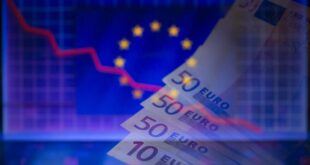
The introduction of the euro usually breaks fiscal discipline, causing government debt to increase. This phenomenon has been observed for a long time, since the very creation of the eurozone in the countries that founded it. Debt burden of a country The ratio of public debt to gross domestic product (GDP) in a country is the most appropriate indicator …
More » Stoyan Panchev September 02, 2022 Politics
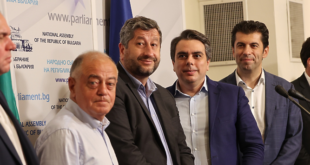
It is increasingly clear that the conflict that led to the beginning of the current phase of the political cycle[1] is fading away, far from the focus of public attention. Removing Borisov is no longer a priority, and the coalition assembled for this purpose has disintegrated. The Borisov glue, as I have called it, is increasingly less relevant because of (i) its ritualistic …
More » Stoyan Panchev August 08, 2022 Politics
A temporarily popular, unorthodox macro counter-indicator is the covers of famous economic publications. When the Economist or BusinessWeek announce on the front page that a certain major trend is beginning or ending – then we can expect exactly the opposite. For example, the aforementioned British publication said in 1999 that the world was “drowning in oil”, shortly before …
More » Stoyan Panchev July 04, 2022 Energy, Economics
At the last minute, the parliament extended the program for compensation of the industry with the price of electricity. Although clumsily played by the Petkov government and with contradictory ideological and economic justification, the program was somewhat inevitable, due to the massive compensations distributed in Western Europe (Spain and France have ceilings below 50 euros), and …
More » Стоян Панчев 10 май 2022 Политика
Since the beginning of the war in Ukraine, the word “neutrality” has been used a lot in Bulgaria in relation to Russia’s actions and the subsequent sanctions. When we talk about international conflicts, the factors for decision-making suddenly multiply in geometric progression. Being closely tied to trade relations, the global economy turns out to be a pole …
More » Stoyan Panchev April 26, 2022 Politics
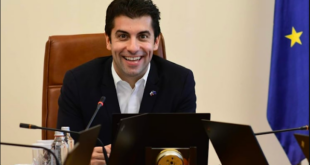
Prime Minister Kiril Petkov's proposal for individual donations to help Ukraine met with mostly negative reactions. The criticisms were varied, but an important discrepancy between the capabilities and needs of the Ukrainian economy stands out. The country's monthly budget deficit is expected to reach nearly $7 billion. If we compare it with the revenues of …
More » Stoyan Panchev April 18, 2022 Politics
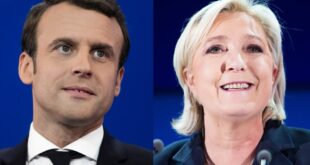
Bulgarian sociologists have discovered the political realignment[1]…at least in France. In Friday’s Panorama on April 15, Boryana Dimitrova (Alpha Research) practiced explaining how strange it is that the two largest parties in the country of baguettes are respectively globalists (Macron) and anti-globalists (Le Pen). She even dared to use the correct …
More » Stoyan Panchev March 31, 2022 Politics
The historical realignment[1] in the political philosophies of parties across the Atlantic and in Europe is in full swing – hawkish socialists against Russia, pacifist and isolationist conservatives, right-wing protectionists and left-wing defenders of free trade and international agreements, modern left-liberals against local heavy industry and covering up blue-collar unionists and modern right-wingers in …
More » Stoyan Panchev March 23, 2022 Politics
Boyko Borisov and his power apparatus are the main obstacle to the ongoing processes of political realignment in Bulgaria[1]. For and against the Gerbadzhi domination is our, local division, which even today manages to unite in one camp forces with opposite attitudes to the new main dividing line in countries with a Western-style policy …
More » Стоян Панчев 15 февруари 2022 Икономическа теория, Политика
One currency rules them, it alone will discover them, it alone will gather them all and wrap them in control in the city of Frankfurt, where the Brussels darkness looms. The debate on globalization shifts its focus from the traditional plane of left and right and reorganizes itself under a new dimension, namely national versus …
More »
 EKIP– Expert Club for Economics and Politics A Different Opinion