EKIP– Expert Club for Economics and Politics A Different Opinion
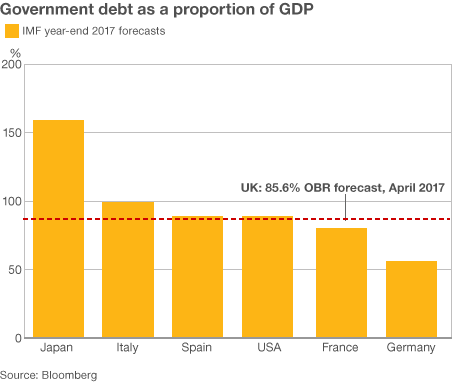
It is difficult to argue with arithmetic and, accordingly, with the thesis that the welfare state is facing bankruptcy. About 30% of everything produced in Europe and North America is seized by the state and spent to improve the well-being of certain social groups – the poor, children, pensioners, etc. However, this redistribution is still not enough, the elected representatives promise more and more and as a result we have more and more budget deficits and more and more debt – reaching truly gigantic levels (visible even from the optimistic estimates of the IMF in Chart 1).
Graphics 1
The ethical-philosophical basis of the welfare state is also not particularly stable. You take the money earned by some people by force in order to give it to their neighbors - describing the whole process as "solidarity". Or, several generations do not save for retirement (or are deceived into saving) and then the bill is written on the youngest and the unborn. Or maybe, you make certain "social benefits" more tempting and suddenly the number of disabled pensioners jumps by 250% [1]. That is, maybe instead of real help and solidarity, you have a system of forced seizure and freebies.
Is it okay then, to leave the needy on the streets? Yes, the welfare state has serious problems, but there is no alternative. Without the political class and its mechanisms of seizure, where will the "safety net" for the members of a society come from?
It turns out that if we look at history, we will understand that social services did not emerge with any form of legislation or government decree. As early as the 19th century in Britain, private, voluntary activity reached large proportions in a wide variety of forms - through charities, they provided relief for the poor, treatment for the sick, housing for the working class, support for the disabled, education for poor children and much more. [2] All this thanks to all kinds of donors, from wealthy industrialists (in London, the homeless shelters built by George Peabody still stand) to large church boards to local, community organizations - without any use of coercion.
Even more interestingly, in the 19th century and until the mid-20th century, there were so-called “mutual-aid societies” (mutual-aid societies in the USA, friendly societies in the UK and auxiliary funds in Bulgaria). In essence, they were membership organizations where, for an annual fee, a person could receive a range of social services. It is documented in detail that they dealt with health (everything from general practitioners, through sanatoriums to entire hospitals), with assistance in case of incapacity for work, education of children, orphanages, payment of sick leave, covering funeral expenses, nursing homes, etc.
American historians estimate that by the 1930s, about 30 million Americans were members of such societies, spread across 124,000 lodges across the country—thus providing a “safety net” for themselves and their families without any form of violence, coercion, or political interference. [3] It is important to note that these societies were not a form of entertainment for the wealthy or middle class. In fact, Americans from the poorest strata of society [4] used mutual aid societies to gain not only a better and more secure life, but also a sense of independence, of which they were extremely proud.
Mutual societies operated entirely on the free market, entirely on the basis of voluntary participation. In this sense, there was serious competition among them, which is why they sought to offer an ever better and more profitable service - they published magazines, presented detailed reports at general meetings, hired specialists from doctors to actuaries, the management was elected at special congresses, and much more.
And most importantly, those whose model didn't work or who didn't offer the promised service went bankrupt, thus cleansing the system of errors. Something unthinkable in a welfare state, where errors are incentivized with more money.
Unfortunately, these companies disappeared after the mid-20th century, just when the state forcibly intervened in the sector and crowded out (the economic term is crowding out) any kind of voluntary solutions, undercutting prices and taking away income that would otherwise have gone to this type of activity.
State intervention interrupts voluntary, genuine solidarity between people and replaces it with forced dispossession and politically motivated redistribution.
Finally, let's just imagine what kind of society and what kind of social care we would have - with the solidary, voluntary model and the level of global wealth of today. A system that feeds on political elites is unlikely to have failed.
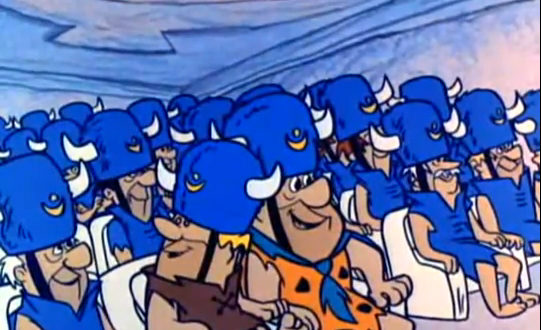
P.P. Fred and Barney from the Flintstones are members of The Loyal Order of the Water Buffalo, a mutual aid society. Many of these societies had distinctive uniforms, exotic names, rituals, etc., coming from the ethnic or religious background of the members or from the mysticism fashionable at the time.
[1] http://ime.bg/bg/articles/znaete-li-e-invalidnite-pensii-narastvat-nad-25-pyti-mejdu-2000-i-2010-g/
[2] For some examples: http://www.civitas.org.uk/pdf/cs16.pdf
[3] From Mutual Aid to the Welfare State: Fraternal Societies and Social Services, 1890-1967 [David T. Beito]
[4] There are well-documented examples of immigrant companies, as well as those created by blacks in the poorest and most segregated parts of Mississippi, that managed to build entire hospitals (see Beito).