EKIP– Expert Club for Economics and Politics A Different Opinion
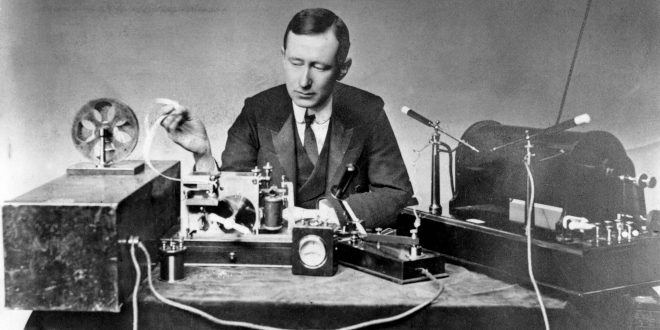
On October 17, 1907, Guglielmo Marconi's company, The Wireless Telegraph & Signal Company, launched the first transatlantic 24-hour wireless telecommunications service. Messages were transmitted via powerful radio transmitters developed by the Italian inventor and located in Glace Bay, Nova Scotia, Canada, and Clifden, Ireland. In doing so, Marconi broke the long-standing monopoly over telecommunications between Europe and North America, established by the operators of the undersea transatlantic telegraph cable.
The technology developed by Marconi also found widespread application in shipping after the Italian demonstrated the possibility of wireless communication between ships and shore operators in 1903. Interest in the service initially came mainly from the British Navy, but market demand for the technology rose sharply after the tragic sinking of the Titanic in 1912.
His inventive and entrepreneurial achievements earned Marconi the Nobel Prize in Physics in 1909. Although he was not the only contributor to the development of the technology, the Italian is considered the "father" of radio and telecommunications to this day for his successful adaptation for mass production and distribution on the market.
Beyond its narrow specialization in radio transmission, The Wireless Telegraph & Signal Company developed a wide variety of technologies over the years of its existence. It made key contributions to the development of electronics, radar, television transmission and avionics. The company has produced major telecommunications operators such as the British media company BBC and the Italian television company RAI.
" With each passing day, humanity scores victories in its struggle against time and space."
Guglielmo Marconi