“They have sown the wind, and they shall reap the whirlwind” (Hosea 8:7) The year is 2025, a time when technological advances flourish alongside the lingering echoes of past conflicts. From Huxley’s perspective, the world shines with advances in artificial intelligence, biotechnology, and digital connectivity, while humans struggle with the seductive …
More »Chipped for War: The Dangers of the Technology Race
Once upon a time, in mysterious California laboratories in the mid-20th century, microchips were born as small, fragile dreams, barely whispering promises of a future in which machines would think faster than their creators. Engineers like Jack Kilby and Robert Noyce were the alchemists of this new world, turning sand into sheets of silicon, …
More »The New Economy: Trump and Europe
What does Trump's return mean for Europe's economic future? In a word, difficulties. Donald Trump's return to the White House poses a serious challenge for Europe, which is heavily dependent on the United States economically. The expectation is that Trump will adopt a significantly more aggressive approach to trade and economic policies, which ...
More »Why services like Airbnb don't need government regulation
Over the past week, the proposal of the Minister of Tourism Nikolina Angelkova to introduce stricter regulation of sites like Airbnb.com has become a serious subject of debate in the media space. Angelkova's thesis is that these sites practically operate as intermediaries of hotel services. For the uninitiated, in simple terms Airbnb.com is …
More »23.10 - Apple announces the first version of the iPod
On October 23, 2001, Apple announced the first version of the iPod. It was a music player with a 5 GB hard drive, compatible only with Macintosh systems. Its announcement came a few months after the release of iTunes, a program that converts audio CDs into compressed audio files and organizes a person's music collection.
More »21.10 - Alfred Nobel was born
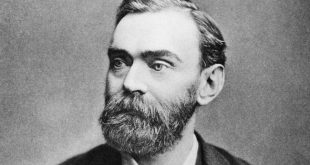
On October 21, 1833, Swedish engineer, chemist, and entrepreneur Alfred Nobel was born in Stockholm. He is remembered in history as the man who invented dynamite and established the Nobel Prize. At the age of ten, Alfred moved with his family to St. Petersburg. At the age of eighteen, he left Russia and went to Paris, where he studied chemistry, …
More »17.10 - The first transatlantic telecommunications service is launched
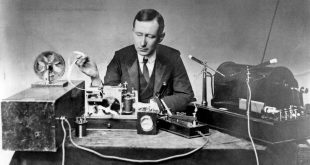
On October 17, 1907, Guglielmo Marconi's company - "The Wireless Telegraph & Signal Company" - launched the first transatlantic 24-hour wireless telecommunications service. Messages were transmitted via powerful radio transmitters developed by the Italian inventor and located in Glace Bay, Nova Scotia, Canada and Clifden, Ireland. On this …
More »Problem group in education – the system of academician Blagovest Sendov
Every new thing is a well-forgotten old + a pinch of salt. Can you imagine how an educational initiative during the socialist era was regularly branded as “pro-Western” and “American”, a few years after the fall of the regime it was closed by revanchist-minded politicians because it was “communist”, and today everyone is stubbornly struggling…
More »15 years since the destruction of the first charter school in Bulgaria
Special thanks to Svetlina Nancheva for her help in preparing this article. If anyone is wondering why the Bulgarian education system is failing compared to others, let them stop and read this – during the entire period of the so-called "transition", all the projects that were leading innovations in their time, not only in ...
More »No, tax breaks are not subsidies
There is a widespread misconception that tax breaks for an industry are no different from subsidizing it. Unfortunately, like many other economic myths, this one just won’t die. The video game industry is one recent example. For years, critics have argued that game developers are given an unfair advantage…
More »
EKIP– Expert Club for Economics and Politics A Different Opinion