Pencho Penchev September 27, 2021 Culture and history
In the famous essay "What is seen and what is not seen" by the French economist Frederic Bastiat, there is a brilliant insight. It is that every action in the socio-economic sphere has visible but also invisible consequences. The invisible are events or processes that did not happen because of the undertaking of one or …
More » Pencho Penchev September 13, 2021 Culture and history
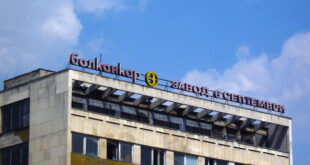
The title is a quote from the Report-Analysis of Quality, Defects and Complaints at the Electric Transport Plant "6th September" - Sofia. The document dates from the second half of 1961. It is an internal attempt by the plant to identify organizational, technical and other shortcomings in the production of electric forklifts. With the help of authentic archival sources from the end of …
More » Pencho Penchev September 03, 2021 Culture and History, Society
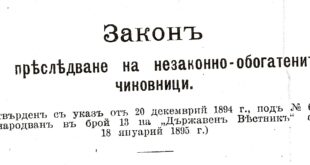
The belief that various economic and social problems are solved by adopting or improving special laws, regulations, and ordinances is a persistent myth. Its existence is most easily established in the conditions of an election campaign. Then all competitors offer legislative programs that should improve the lives of voters. The myth is systematically nurtured …
More » Georgi Vuldzhev August 30, 2021 Economy, Economic and fiscal policy
About a month ago, the Bulgarian online media outlet “Factcheck.bg” published an article with the following title: “Bulgaria in the Eurozone: Between Misconceptions and Facts”. Under the guise of combating disinformation, the author of the article, Yordan Barzakov, claims to be debunking “myths” about the “negatives of eurozone membership”. The introductory paragraph of the text is eloquent: “The closer it gets …
More » Theodore Karakolev August 20, 2021 Culture and History, Society
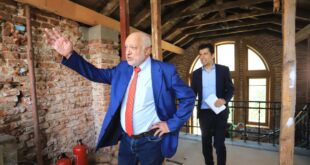
Photo: BGNES A statement by Acting Minister of Economy Kiril Petkov at the Sofia Arsenal Gallery stirred up the spirits in the cultural sphere a few days ago. It was presented as shocking news in a headline by clickbait media that almost from tomorrow all money for culture will be stopped and which orchestra or museum will not …
More » Pencho Penchev August 18, 2021 Culture and History, Society
The socialist economic model was imposed on the Bulgarian countryside between 1948 and 1958. The process is known as collectivization. Labor Cooperative Agricultural Farms (TCAF) were created by force, into which land, livestock and equipment were taken. Over the years, they were enlarged, restructured, renamed, etc., but their essence was not …
More » Martin Nikolaev August 12, 2021 Energy, Economics
The Bulgarian Energy Exchange closed at a day-ahead baseload price of BGN 285.10 per MWh. The peak energy price has again come close to the shock values of BGN 330 per MWh from a few days ago. For comparison, the price on Western exchanges is significantly lower – 99 euros in France and 100 …
More » Stefcho Stanev August 10, 2021 Economy, Economic and fiscal policy
My position against the adoption of the euro and the corresponding national plan is based on the following main arguments. 1. Keeping the national currency does not mean a worse economy. Sweden is a good example of this. - Sweden's economic growth since 2003 has been between 1.5% and 3%, i.e. higher than that of the eurozone. …
More » EKIP August 07, 2021 Analyses and opinions, Economic and fiscal policy
OPINION From: Expert Club for Economics and Politics (EKIP) Subject: Draft National Plan for the Introduction of the Euro in the Republic of Bulgaria DEAR LADIES AND GENTLEMEN, In connection with the published draft National Plan for the Introduction of the Euro in the Republic of Bulgaria (Plan), we express the following opinion on behalf of the Expert Club …
More » Pencho Penchev July 29, 2021 Culture and History, Society
In a previous post, we showed some of the reasons why the political system cannot be relied on to successfully solve socio-economic problems (see here). The theory of regulatory captivity and Bulgarian economic history revealed how the interaction between management structures and interest groups ends in a conspiracy against society and the plunder of resources. …
More »
 EKIP– Expert Club for Economics and Politics A Different Opinion