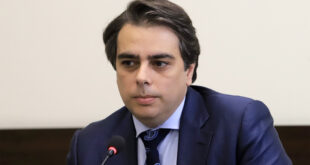
Assen Vassilev will try to drain the coffers of the Bulgarian Energy Holding (BEH) in order to patch up the budget and reduce the deficit to 3% of GDP. This is clear from a letter sent by him to the new Energy Minister, the authenticity of which has already been confirmed by several media outlets. And several media outlets with …
More »2023
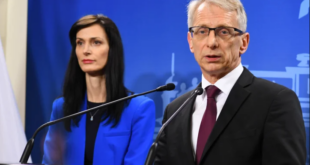
The theory of political realignment with another prognostic triumph
Our previous text[1] on the issue of reshuffle showed the way out of the so-called political crisis in the country. The way to overcome the difficulties in forming a stable, coherent government. At that time we wrote: “It is increasingly clear that the conflict that led to the beginning of the current phase of the political cycle is fading away, far from the focus of public …
More »How the euro increases government debt
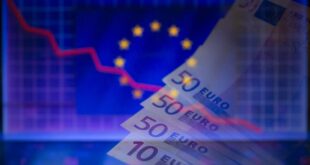
The introduction of the euro usually breaks fiscal discipline, causing government debt to increase. This phenomenon has been observed for a long time, since the very creation of the eurozone in the countries that founded it. Debt burden of a country The ratio of public debt to gross domestic product (GDP) in a country is the most appropriate indicator …
More »The new opponent of "Continuing Change" is now their own coalition partner
With their preemptive stance against any agreements and negotiations with GERB, "Continuing Change" is trying to maneuver from a battlefield where they are certain to lose to one where they could win. However, on this battlefield, their main opponent is no longer GERB, but their own coalition partner...
More »Healthcare Prices – Problems and Solutions
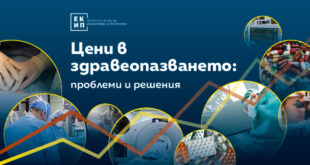
|Full text of the analysis| Healthcare prices, as well as cases surrounding its financing, are not a new phenomenon on the economic horizon in Bulgaria. Since the beginning of the healthcare reform in 1999 to this day, the main topic of discussion has been the methods of financing and redistribution of resources in the system. The elements of upgrading …
More »How did we come to hate capitalism?
The question in the title is too general and a bit misleading, because not all of us hate capitalism. For a large part of the people in Bulgaria, however, the market economy is a necessary evil that they come to terms with, that they tolerate, but with gritted teeth. Some hate capitalism because of nostalgia for the good old days, others because they think, …
More »
EKIP– Expert Club for Economics and Politics A Different Opinion