EKIP– Expert Club for Economics and Politics A Different Opinion
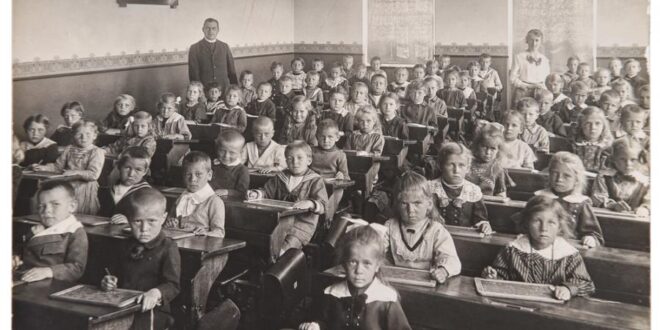
A widespread cliché states that education is universally useful, that whoever studies will succeed, and “science is the sun”. The economic translation of this statement finds expression in the hypothesis of Nobel laureate Gary Becker that education is an investment that yields high returns because it increases productivity. Common sense suggests that generally accepted truths should not be rejected, but that a question mark should be placed after them, i.e. an attempt should be made to verify them. In this case, we will test the hypothesis about the benefits of education during the early history of the educational system in the Bulgarian state after the Liberation. With the help of historical reconstruction, it can be established whether the education provided by the schools of that time brought harm or benefit to society and/or to individuals.
The principles of the education system
At the time of liberation, Bulgarian society consisted mainly of poor peasants. About 3% of Bulgarians were literate. Before 1878, there were some educational traditions in Bulgarian lands that had developed independently of the Turkish state. Local municipalities supported the schools, and they served the economic and cultural needs of the population relatively well.
The main trend in the development of education after the Liberation is towards its centralization and nationalization. The fundamental principles of the education system are enshrined in the Tarnovo Constitution (1879). In Art. 78 of the basic law of the Principality, it is stipulated that “ Primary education is free and compulsory for all subjects…”. What exactly is meant by primary education is left to be specified in subsequent normative acts. The most important characteristics of education in the country are clear: it is compulsory and free. During the discussion of the constitution, some deputies made a proposal in Art. 78 to specify that municipalities will pay for primary education. The proposal is reasonable and fair, but it was rejected and the constitution contains a blatant lie. It is clear to everyone that education is not free, that money is needed for teachers’ salaries, for the construction and maintenance of school buildings, for furnishing, heating, etc. However, the populist and politically correct formulation of free education was adopted. The concept of compulsory primary education does not raise any particular objections. If, as is believed then and now, education is useful, its compulsory nature will be of public and personal benefit. The possibilities of implementing such an idea in an extremely poor, agricultural country were not taken into account, which sets a time bomb in the education system.
Public primary schools – "Leave every hope here"
In the years after 1879, regulations stipulated that compulsory primary education covered the four sections of primary schools. In 1891, an education law was passed, whereby the state budget assumed the payment of the majority of teachers' salaries, because the municipalities were too poor and often could not cover this expense. The Ministry of Education was charged with the supervision and control of schools, including private ones. The number of schools, students, and teachers increased. The number of supposedly literate Bulgarians also increased.
A close look at compulsory and free education shows that its achievements are superficial. A little more than a quarter of a century after the restoration of the Bulgarian state, in a specialized study on the state of primary education, its author wrote that the famous verse from Dante's "Inferno" - "Here leave all hope" - should be placed at the entrance of 70 to 75% of Bulgarian schools.
The progress of literacy was slow and hesitant. Despite the mandatory provision of primary education, by 1901 about 700,000 young people subject to compulsory education remained illiterate. According to informed contemporaries, more than half of “each of our generation remains illiterate” because they do not attend school or leave it too early. In 1908, the then Minister of Education, Nikola Mushanov, stated that primary education was ineffective. According to him, after its completion, cases of “secondary illiteracy” can be observed, reaching “complete illiteracy”. A large part of the rural population sends their children to school reluctantly, because school takes away their labor force. Rural children attend school at best from the end of October to around April, when their parents burden them with work. Many villagers are categorical that compulsory education does not ease, but rather undermines their economic situation.
The fact that in 1891 the state took over a large part of teachers' salaries was well received by the teaching profession, but it led to an unexpected consequence. As one agricultural deputy put it in 1908, teachers began to look down on farmers "and the population in general". The de facto transformation of teachers into civil servants resulted in their being cut off from the needs of ordinary people, teachers began to comply with the one who pays them, i.e. the state.
At the beginning of the 20th century, medical authorities found appalling, even by the standards of the time, conditions in primary schools. The school buildings were unhygienic, dusty, damp, dirty and cold in winter. The state of primary schools in the Sevlievska district in 1910 was described in naturalistic detail: “All toilets in urban and rural schools are absolutely unclean, dirty, disgustingly smelly… And most importantly, in many places there are none. There, students are forced to go to relieve themselves in the neighborhoods or on the road, and if it weren’t for the village pigs to clean them… who knows what kind of infection would have spread to these places.” The conditions in schools were dangerous for both students and teachers. In the 1919/1910 school year alone, two teachers in the Sevlievska district died of tuberculosis, which was “acquired in the schools,” and 28 boys and 11 girls among the students died. And the Sevlievska district is no better or worse than the others. Again, according to medical professionals, it is an undeniable fact that the conditions under which primary school teachers work cause their physical and neuro-psychological degeneration.
Clerical proletariat and schools for the benefit of teachers
Compulsory and free education do not apply to the higher levels of the educational system. They are also nationalized with the idea of providing specialists for various branches of the economy and management. The results in this aspect are not impressive either. The general poverty of Bulgarians affects the work of specialized schools. At the beginning of the 20th century, the director of the Kazanlak Pedagogical School noted that “the poverty of students greatly hinders success… There are such poor students who simply do not even have a lamp to read by, no amenities at all.”
After the liberation, the Bulgarian state monopolized postal services, and later the railways also became state property. Despite this, for many years no technical school was founded to meet the needs of personnel for the post office and for the organization of railway transport. However, the production of civil servants by the school system was not late. As early as 1886, Ivan Evstratiev Geshov noted that in Bulgaria there were 7 high schools and 6 of the so-called secondary schools, which were “factories for civil servants”, preparing candidates for civil service, breaking the aspiration for “personal self-confidence” in young people and instilling in them the idea that “they must rely on the state for everything”.
Geshov recommended the establishment of technical schools and others that were oriented towards practical education. In fact, the establishment of such schools began, among which the agricultural schools were of greatest importance for the then state of the Bulgarian economy. They were supposed to prepare specialists with whom to modernize the most important sector of the Bulgarian economy. At the beginning of the 20th century, an assessment was made of the results of agricultural education. The figures show that in the 15 years since the establishment of agricultural schools, 760 young people graduated from them. Of the graduates, only 5 worked in agriculture, all the rest became officials or teachers. The reasons for the unhappy results, according to observers of the time, are at least two: firstly, the program in agricultural schools was oriented towards training personnel for large farms, which did not exist in the country, secondly, agricultural schools also gave pedagogical qualifications to graduates, and faster and cheaper than specialized pedagogical schools. Obviously, state policy in the field of agricultural education is not successful and brings more social harm than benefits.
The poorly structured system of vocational schools demonstrates another shortcoming. Two decades after the Liberation, astute observers noted that some of the specialized schools exist solely to provide employment for their teachers. This is the case for some of the teachers in the agricultural schools. The interest of the teachers leads them to sabotage even the few measures taken by the state to reform the educational system and bring it into line with the material possibilities and needs of the Bulgarians of that time. An example of this is the inability of Prime Minister Petko Karavelov to transform the Drawing School founded in 1896 into the Art and Industrial School.
Conclusion
The nationalized and centralized educational system after the Liberation increased the number of literate Bulgarians, but the system became detached from the needs of society and began to work for its own benefit. The initial poverty of free Bulgaria turned schools literally into tombs for teachers and students, and specialized schools produced mainly civil servants and clients of the corrupt political system. Compulsory education in a certain sense emerged as a tax that did not bring prospects for improving the material situation of ordinary people, but rather reinforced their poverty.
In the conditions of post-liberation Bulgaria, education also brings benefits, but the above facts convincingly show that the thesis of its universal benefit cannot be accepted. The history, which is distant from today, is also important because the fact that the state did not do well in the past raises reasonable doubts about whether it is coping with building an adequate education system today.