EKIP– Expert Club for Economics and Politics A Different Opinion
Adam Ozimek, Forbes.com
Note: This article is about the TV show "Game of Thrones" and contains spoilers.
The technological and economic development of Westeros seems to have been frozen for a very long time. Bran the Builder built Winterfell and the Wall around 8,000 years ago, which suggests that the same medieval building technologies were in place back then. The context of the story suggests that it is not at all certain that the Wall could have been built in the present, which is an indication of some kind of economic decline. Given how much time has passed, why hasn't Westeros yet undergone an industrial revolution to lift society out of medieval poverty?
Westeros is part of a fantasy universe, so the obvious answer to this question is “because the author wanted it to be.” However, I believe that the lack of an industrial revolution in Westeros is logical and lies in the basic economic, cultural, and institutional facts of history. So let’s look at which aspects of the Westeros world contribute most to the lack of an industrial revolution.
What conditions are necessary for an industrial revolution?
What makes this task difficult is the lack of consensus on the beginning of the first British Industrial Revolution. One theory, developed by Robert Allen, focuses on analyzing which resources were scarce and which were abundant. The idea is that strong incentives for investment and productivity-enhancing innovations arise when labor is scarce and capital and energy are abundant. Viewed through this lens, it is easy to see why the essential ingredients of the Industrial Revolution are missing in Westeros.
First of all, there seems to be no coal in Westeros. Hellfire is a potential energy source, but it suffers from several drawbacks. First, it is unclear how much energy is wasted in its production. Few know how to create it, keeping the recipe secret and claiming to use magic. It seems unlikely that hellfire would be as cheap and widespread as coal was in Britain.
Secondly, hellfire is very unstable and dangerous to use. Because of this, it is mostly used as a weapon to blow up and/or burn the enemy. Accordingly, in this context, it seems that the lack of a good source of energy like coal is one of the reasons for the stagnant development of Westeros.
Lack of incentives for capital accumulation and scientific innovation
Another thing that Westeros lacks is a shortage of labor and an abundance of capital. The capital that the continent does have is wasted on waging war and, during the reign of King Robert Baratheon, on tournaments and feasting. It is difficult to estimate how scarce labor is, but wages certainly do not appear to be high. The enormous mortality caused by the incessant wars certainly reduces the supply of wage labor, but it also destroys capital.
Another theory of the development of the Industrial Revolution is based on information and culture, and in particular on what we might call a "scientific culture". This theory is associated with Joel Mocker and considers the supply of innovation, contrasting with Allen's focus on the demand for innovation. Mocker sees the Industrial Revolution as a kind of continuation of the Enlightenment. This places cultural and institutional change at the heart of its historical development, presenting a society in which innovators worked side by side with artisans and the vision of achieving material progress through science and technology first emerged.
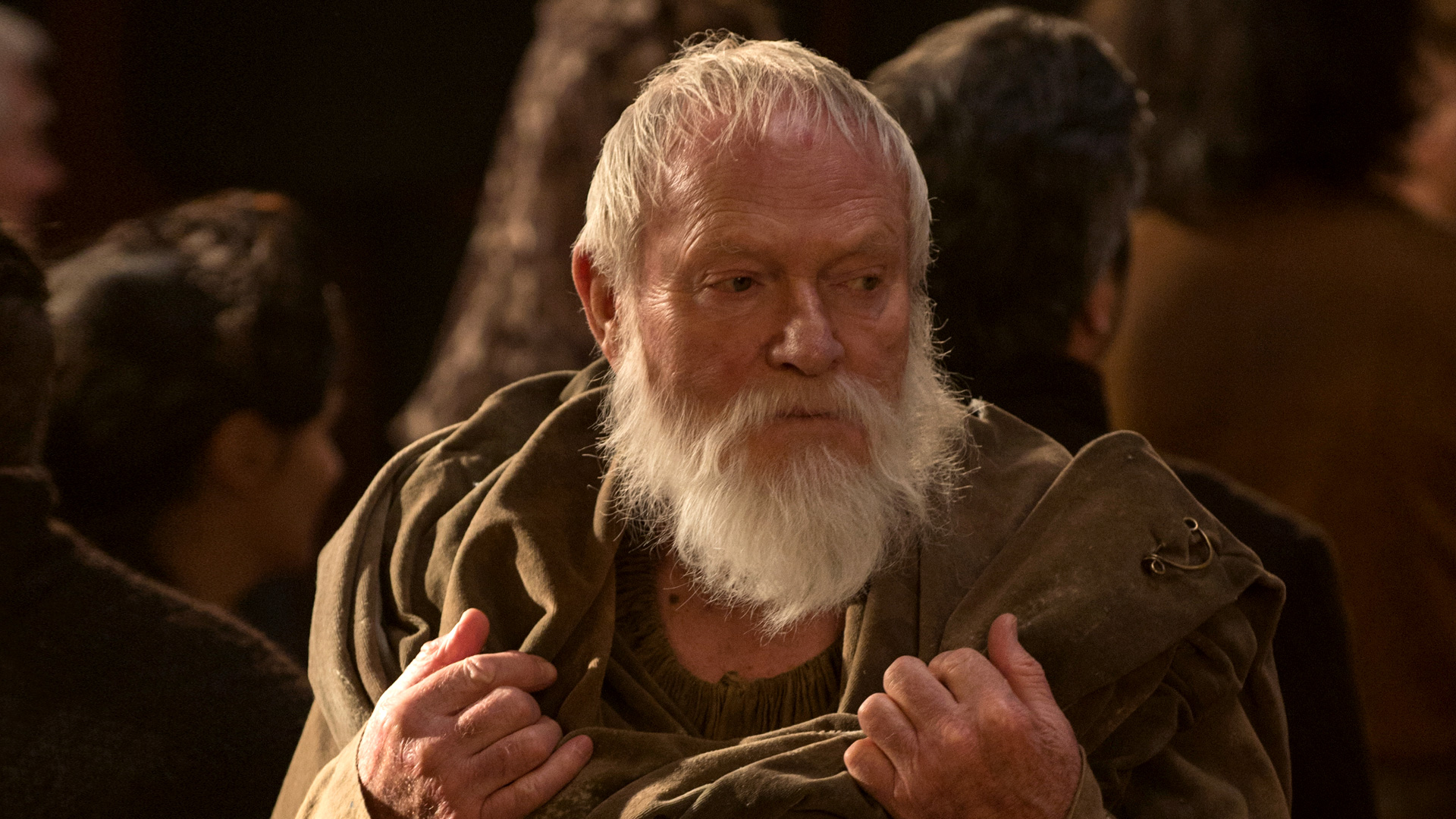
Innovation and scientific knowledge in Westeros are almost entirely the work of the maesters. Their system is almost the exact opposite of what Mokar described as the necessary conditions for the existence of an industrial revolution. Openness to new ideas is a key element of any innovative society. Available knowledge must be widely distributed, with the help of postal systems and printing presses.
During the Industrial Revolution, this process was aided by the so-called “Republic of Letters” – a system in which scientists exchanged correspondence and discussed their discoveries. The meritocratic, non-hierarchical structure of the scientific community is closely linked to this system of information exchange. Scientists and innovators proved themselves by convincing their colleagues through measurable results, not just on the basis of authority or ancient wisdom.
The scientific community of Westeros is backward and encapsulated
The maesters operate in the opposite of the ideal conditions listed above. The dissemination of their knowledge to the outside world is limited, sometimes literally kept under lock and key, as we can see from Sam's attempts to gain access to important books. When Sam tries to warn Grand Maester Ebrose about the white walkers, he is rebuffed, and the decision whether to address the issue is de facto rejected by a vote in the maester council. With an open scientific community, Sam could write an article about the white walkers that would be widely distributed throughout the kingdoms and debated by all the maesters. Others could add their evidence and experience to this knowledge, and the debate would be built on reason and data. Instead, a handful of elders vote not to have the debate.
The system is not only hierarchical, but also closed. To gain access, one must first become a maester, which is a long and arduous process. Sam cannot prove his scientific abilities in an open and fair competition of ideas. Instead, he is forced to clean toilets and wait his turn (whenever that comes, according to the decision of the senior maesters). In a healthy scientific environment, the fact that Sam manages to cure a gray scale would bring him prestige. In the world of Westeros, however, the Grand Maester emphasizes that this does not bring him anything.
The society and institutions of Westeros suffer from several other serious problems that contribute to its stagnant development. One of them is that business cycles are predetermined by long winters. To survive these cycles requires high savings and productivity in the summer and increased consumption of savings and low productivity in the winter. To this we can add the fact that property is feudal, that is, the lord owns the land, and the peasantry only cultivates it. How could an entrepreneur make any profit in such conditions, for example by opening some kind of factory?
The master system is actually an obstacle to scientific development
I am not an economic historian, so I cannot take a firm position on the necessary conditions for the onset of an industrial revolution. But, given the closed, hierarchical, elitist system of scientific knowledge exchange in Westeros, the fact that technological development stagnates and does not lead to material prosperity is not surprising. In general, even with affordable energy and high wages, we could not see the beginning of an industrial revolution in Westeros without serious reforms of the culture of knowledge and science.
If this is true, then the maester system has seriously hindered the development of Westeros, condemning it to a prolonged existence in medieval conditions. And the damage could be even greater in the future. If the maesters do not listen to Sam about the White Guards, do not warn the kingdoms and do not contribute to the invention of an effective method of dealing with the problem, everyone on the continent could die. The answer to the question "Why is Westeros poor?" may be the same as the answer to the question "Why was Westeros destroyed?"
As I said, I'm not an economic historian. So I'd like to ask an open question to the economic historians reading these lines: "Why is Westeros still so poor?"
Image source: IGN, HBO
Original article: Why Is Game of Thrones' Westeros Still Poor?
Translation: Kaloyan Pravov