Georgi Vuldjev
Georgi Vuldzhev is a member of the board of directors of BLO and editor-in-chief of EKIP. His articles on economic and political topics have been published by both Bulgarian and international publications such as Mises Institute, Foundation for Economic Education, European Students for Liberty, etc. He worked as an economist at the Institute for Market Economics and currently holds the position of economic analyst at CEEMarketWatch and is a weekly columnist on investment topics for the Tavex blog.
Georgi Vuldzhev February 14, 2020 Economy, Economic and fiscal policy
This week, Greek government debt yields fell to record lows. The yield on the country's 10-year government bond fell below 1% for the first time in history on Wednesday, and later fell below 0.9%. This is a particularly significant development, given that Greece is the country that has been …
More » Georgi Vuldjev February 09, 2020 Investments, Market Commentary
The epidemic in China has caused an almost historic slowdown in global trade in recent weeks. In Europe, the most directly affected are the large economies such as Germany, France and Italy. Italy and France recorded a decline in GDP at the end of 2019, while the total GDP of the euro area rose by only 0.1%. The situation may …
More » Georgi Vuldjev February 05, 2020 Politics
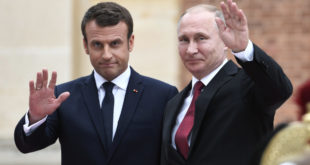
On Monday, during his visit to Poland, French President Emmanuel Macron made statements that scandalized the Bulgarian public. Macron said bluntly that the admission of Bulgaria and Romania to the European Union was "hasty", thereby directly questioning our place in the so-called European community. Let's not …
More » Georgi Vuldzhev February 02, 2020 Economy, Economic and fiscal policy
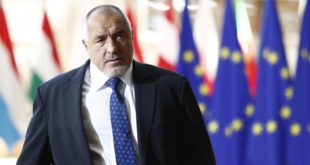
In the debates that erupted this week over the dangerous amendment to the BNB Law, the authorities were forced to launch into a desperate defense of the current political course towards the fastest possible membership in the eurozone. One of these desperate defenses was the claim made by Prime Minister Boyko Borisov that joining the eurozone would …
More » Georgi Vuldzhev January 16, 2020 Economy, Economic and fiscal policy
I'll say it bluntly. The creation of a common, centralized state water supply holding company that would unite all water supply companies across the country is phenomenally stupid. The idea that such a holding company could prevent the emergence of more problems like the one with the water supply in Pernik is absurd. The creation of such a holding company betrays either a misunderstanding of the problem...
More » Georgi Vuldzhev January 15, 2020 Economics, Economic theory
Author: Frank Shostak, Mises.org The idea that more money can boost the economy is based on the belief that money has a stimulatory effect by increasing aggregate spending. More money in people’s pockets means they can spend more, and the rest follows from that. Money, in this sense, is a means …
More » Georgi Vuldjev January 09, 2020 Politics
Today, all media outlets exploded with the news that the leader of the Women GERB party and former regional governor of Pernik, Irena Sokolova, was arrested during a raid by the prosecutor's office in connection with the water crisis in the city. Meanwhile, the Minister of Environment and Water, Neno Dimov, was also detained after special forces …
More » Georgi Vuldjev December 30, 2019 Team TV, Investments, The Intelligent Investor
0:23 – Introduction to the topics in the episode and special guest Alexander Karolev 04:33 – How was 2019 for the financial markets? 18:03 – What were our predictions for 2019? Which ones came true and which ones didn’t? 24:13 – Brexit 42:50 – What’s happening with the banking system? 49:40 – What’s happening …
More » Georgi Vuldzhev December 21, 2019 Economy, Economic and Fiscal Policy, Market Commentary
At the end of 2019, instead of a market commentary on the last month, I think it is appropriate to do a more general overview of the economic and financial trends that we have observed over the past year. Such an overview is extremely valuable right now, because over the past year it has already become very clear that the economic cycle …
More » Georgi Vuldzhev December 14, 2019 Economics, Economic theory
Author: Frank Shostak, Mises.org It is widely believed that the resources that in normal times are used to generate economic prosperity are not used to their full capacity during recessions. Some experts argue that what is needed in such situations are policies that will increase the availability of credit …
More »
 EKIP– Expert Club for Economics and Politics A Different Opinion