Guest Author August 01, 2019 Economic and fiscal policy
Author: Yaroslav Romanchuk A common criticism of libertarians is that instead of offering innovations, solutions, and concrete projects, they direct all their efforts to discredit power and the status quo. For supporters of freedom, it is of utmost importance that the world understands that this criticism is unfounded. And we can do this by promoting working …
More » Georgi Vuldzhev July 28, 2019 Economic and fiscal policy
Let's be honest: the way the Bulgarian media covered the latest stress test and conveyed the information presented by the ECB in the official press release was contradictory. The articles in some media were of the type "The stress test showed that the banking system is stable", while the text itself contradicted the headline by saying that ...
More » Christian Atanasov July 26, 2019 Economic and Fiscal Policy, Culture and History
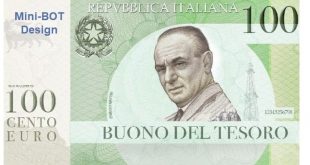
Author: Hristiyan Atanasov About a month ago, The Wall Street Journal published an article explaining the intentions of the Eurosceptic parts of the Italian political sector to issue mini-bonds (mini-BOT from Buoni Ordinari del Tesoro – i.e. lit. “small ordinary treasury bonds”) with a face value of €50[1], according to other sources €100. The idea of …
More » Stefan Stoyanov July 17, 2019 Economy, Economic and fiscal policy
Last week, the Confederation of Bulgarian Trade Unions (CITUB) announced a proposal for restructuring the tax system in Bulgaria, which includes 9 measures for “fairer” taxation. Of course, coming from their side, “fairness” means an increase in the tax burden. The unions are proposing a number of reforms to the system, most of which are the introduction of new and increases in old taxes – …
More » Georgi Vuldzhev July 15, 2019 Economy, Economic and fiscal policy
Last week, the largest trade union organization in Bulgaria, the Confederation of Bulgarian Trade Unions (KITUB), publicly presented a proposal for a comprehensive tax reform. Among the many points put forward by the union, two measures stood out as the main pillars of the reform – the introduction of a non-taxable minimum for income tax and the creation of a new "wealth" tax to be imposed on …
More » Stoyan Panchev July 14, 2019 Economy, Economic and fiscal policy
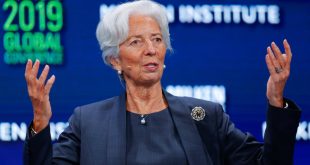
After three days of secret meetings and pledges in Brussels, European Union leaders emerged from the conference rooms with consensus candidates for the most important political posts in the bloc. The biggest surprise of the four nominations is that of current IMF chief Christine Lagarde, who is set to succeed Mario Draghi as ECB president. Although …
More » EKIP July 11, 2019 Economic and Fiscal Policy, Media
The activity of the experts from the EKIP continues in June with participation in media discussions related to reforms in the pension system and healthcare, the proposal to reduce VAT, entry into ERM II, legalization of marijuana, etc. The topic that most excited the public during the month was the proposal of the MRF to reduce …
More » Georgi Vuldzhev June 29, 2019 Economy, Economic and fiscal policy
If you follow the local media, you've probably already heard about yet another scandalous loan granted by the Bulgarian Development Bank. This time, it's not about one of the big businesses connected to Delyan Peevski, but about another businessman with a dubious public reputation – Rumen Gaitanski, nicknamed "Vulka", known for his closeness to …
More » Stoyan Panchev June 21, 2019 Economy, Economic and fiscal policy
The common European currency is not particularly successful in its task of bringing the peoples of the Old Continent closer together – this is easily seen in the division of Europe into one or two speeds, the groups of countries that comply with and do not comply with the Maastricht criteria, and of course the severe tension between center and periphery, north and south, expressed most clearly...
More » Daniel Angelov June 19, 2019 Economy, Economic and fiscal policy
Author: Frank Hollenbeck, Mises.org The gap between the rich and the poor continues to widen. In 1975, the top 1% of the U.S. population owned 8% of the economic wealth. Today, they own more than 20%. This is a striking change from the 1950s and 1960s, when the top 1% owned just over 10%. A study by Emmanuel Saez found that …
More »
 EKIP– Expert Club for Economics and Politics A Different Opinion