Guest Author September 12, 2017 Energy, Economics
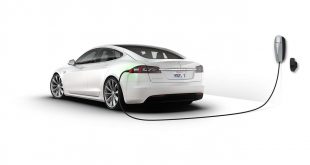
Author: Georgi Angelov, Senior Economist, Open Society Institute In the late 19th and early 20th centuries, electric cars were preferred – they were quieter and more comfortable, and they also did not require a crank and manual start, like internal combustion engines. Over time, however, petrol cars overcame these problems: the electric starter …
More » Stoyan Panchev September 10, 2017 Economics, Economic theory
In 2016, industrial robots won the presidential election of the world’s largest economy for Donald Trump. No, artificial intelligence has not yet reached a level where it can consciously make decisions on its own (including in the field of politics), nor have concerned activists influenced R2D2[1] or its more primitive …
More » EKIPic and Fiscal Policy, Politics, Translation
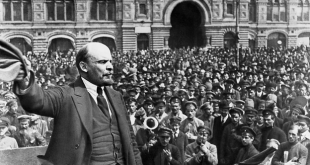
Dear readers, EKIP presents to your attention a modern Bulgarian translation of "New Economic Policy" - a speech by Vladimir Ilyich Lenin, delivered before the second All-Russian Congress of Political Educators in the USSR in 1921 - a text from which we can learn a lot about the true nature of the communist socio-economic system and its catastrophic consequences, ...
More » Guest Author September 08, 2017 Healthcare, Society
Author: Kaloyan Staykov In mid-August, the government published for public discussion warmed-up proposals for reform of the drug policy, with the focus on improving access to medicinal products in the country. The problem with access arises mainly for two reasons: parallel export[1] – it is envisaged to create a restrictive list of medicines whose export can be …
More » Guest Author September 07, 2017 Economics, Economic theory
Author: Simona Zlatkova The purpose of this article is to analyze the publication “Indirect Damages” (ed.), published in the Economist magazine in July last year, and by building a comparison with the information provided by the US Chamber of Commerce a few months later, to build an argumentative structure that allows everyone to give their own answer to the ongoing …
More » Guest Author September 06, 2017 Economy, Economic and fiscal policy
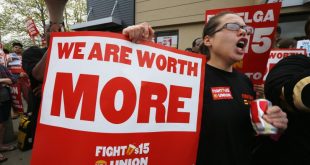
By John McDermott, MEL Magazine A few weeks ago, researchers at the University of Washington published a new study that found Seattle’s attempts to improve the economic prospects of the city’s working class have backfired. Seattle is one of many U.S. cities that are gradually raising the minimum wage to $15 an hour in …
More » Guest Author September 04, 2017 Economics, Economic theory
Author: Georgi Angelov At the end of April, Donald Trump completed his first 100 days as US president. His election in November already caused polarized reactions. Trump's supporters and his team claimed that the new president would radically change the way Washington works and greatly accelerate the economy. His opponents …
More » Georgi Vuldjev August 30, 2017 Economics, Economic theory, Personal freedoms
This month, the latest edition of the Cato Institute’s Human Freedom Index in Washington, D.C., was published. According to this edition, which is based on data from 2014, Bulgaria’s human freedom index score is 7.86, a slight improvement over last year’s level of 7.80. …
More » Kaloyan Pravov August 25, 2017 Economics, Economic theory, Culture and history
Adam Ozimek, Forbes.com Note: This article is about the TV show Game of Thrones and contains spoilers. Westeros’ technological and economic development seems to have been frozen for a very long time. Bran the Builder built Winterfell and the Wall about 8,000 years ago, suggesting that the same medieval building technologies were in place back then. …
More » Georgi Vuldjev August 24, 2017 Economy, Macroeconomic Monitor
Highlights: - Growth slowed in all sectors in June, but the average level for the first half of the year is significantly higher than that reported in 2016 - Despite the slowdown, the growth rate in all sectors in our country remains above the EU average - The recovery in the construction sector continues at a strong pace, but there are …
More »
 EKIP– Expert Club for Economics and Politics A Different Opinion