Metodi Tsanov August 21, 2015 Economy
As September approaches, market participants are increasingly anxiously awaiting the Federal Reserve's (FED) decision on the key interest rate in the United States. Will the world's most influential central bank raise the key interest rate, which has been in the range of 0.0-0.25% since late 2008? How will this affect …
More » TEAM August 18, 2015 Economy, Translation
Julian Adderney[1] People who believe that capitalism is about huge, powerful, multinational corporations miss some of the key elements of free markets. Information, capitalism and open source In a surprisingly influential article in The Guardian, Paul Mason argues that the sweeping changes taking place in the economy are early symptoms of so-called “post-capitalism.” But …
More » TEAM August 10, 2015 Economy
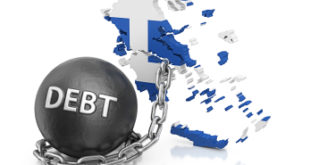
Patrick Barron Much of the commentary surrounding the Greek crisis has focused on whether or not the country will leave the Eurozone, with less attention to the structural problems that have arisen after decades of socialism. At the same time, the Greek government has borrowed more money than the local population can repay, and the depreciation of the …
More » Georgi Vuldjev August 06, 2015 Economy
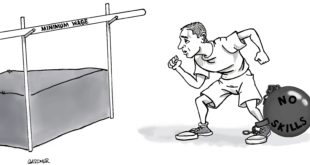
In the first part of this series, we looked at what economic theory can tell us about the potential effects of the minimum wage and its increases on employment in those sectors of the economy where the least skilled (or inexperienced) workers work; i.e. the sectors that are directly affected by it. As we saw, if, …
More » TEAM July 29, 2015 Economics, Economic theory
One of the most frequently put forward arguments in favor of the government redistributing funds through the so-called "welfare state" states: "If there are no state institutions to collect money in the form of taxes and then direct it to those in need (i.e., the poor), the latter will not be able to ...
More » Georgi Vuldjev July 28, 2015 Economy
The minimum wage (MW) has been an extremely hot topic lately. After yet another increase in the minimum wage threshold to 380 leva at the beginning of the month, we recently learned that a draft of the Council of Ministers proposes that the minimum wage level be fixed between 35% and 55% of the average. We often hear complaints about …
More » Nikola Filipov July 27, 2015 Economy
Nikola Filipov We would probably all agree that a functioning capital market is of fundamental importance for a developed market economy. A number of economic studies clearly reveal the strong correlation between market capitalization and the level of GDP per capita in an economy. The positives – both corporate and …
More » TEAM July 22, 2015 Economy, Education, Translation
Josh Grossman Last week, former U.S. Senator and Secretary of Education Lamar Alexander wrote in the Wall Street Journal that college degrees are both cheap and an excellent investment. He repeated the usual argument about how a degree increases the holder’s income by a million dollars “on average.” It is the use of …
More » Dimo Stefanov July 20, 2015 Economy
The Greeks said “OXI” to the austerity measures proposed by the creditors. The country missed a payment to the IMF, becoming the first developed country to boast such an achievement. The Greek banking system has been on a “bank holiday” for the second week now, and the markets are anxious about the outcome of the current crisis. Throughout …
More » Daniel Vassilev July 16, 2015 Economy
Two days ago it became clear that the European Commission is proposing a new bridge loan for Greece. The idea is that our southern neighbor will receive 7 billion euros, maturing in 3 months, with the money to cover the repayment of its debts to the IMF (3.6 billion euros) and the European …
More »
 EKIP– Expert Club for Economics and Politics A Different Opinion