Kuzman Iliev February 18, 2016 Economy
The ECB’s Governing Council has decided to abolish the 500-euro note, it was announced on February 15. It is the second most widely used denomination after the 50-euro note. It also accounts for 30% of the value of physical euro banknotes in circulation. Why is this move important and what are the effects? …
More » Stoyan Panchev January 31, 2016 Economy
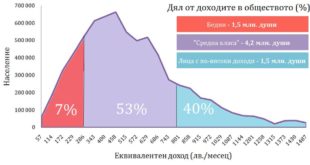
Earlier this week, the Institute for Market Economics (IME) presented its detailed study of income inequality in Bulgaria to the public – “Poverty Cuts - Education and Employment as Factors for the Income and Happiness Curve in Bulgaria”. The study is a continuation of IME’s long-standing interest in the field – …
More » Boyan Rashev January 28, 2016 Economy
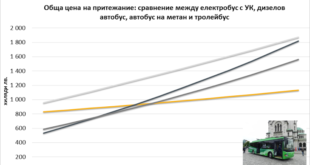
The news about the sale of 5 electric buses to the Bulgarian-Israeli company Chariot Motors in Belgrade did not find a place in the media flow in Bulgaria. In Serbia, on the other hand, they are ecstatic: "Belgrade will be the first capital in Europe to have an entire bus line with only electric buses," said Mayor Borko Milosavljevic. This …
More » TEAM January 19, 2016 Economy, Politics
In 2000, the UN presented its “Millennium Development Goals,” an ambitious program that should show what humanity should strive for in order to improve life on the planet at the beginning of the new millennium. One of the main goals of the international organization is to reduce the world population living in extreme poverty …
More » Stoyan Panchev January 11, 2016 Economic and fiscal policy
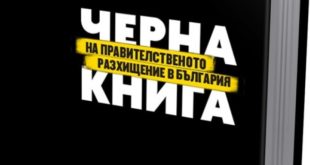
We paid for a bridge connecting two puddles and for a sociological survey about potholes on the roads. What is happening to my money – this is the question that every Bulgarian taxpayer should ask himself after leafing through the pages of the new “Black Book of Government Waste in Bulgaria”. What is happening …
More » Ivelina Petrova January 07, 2016 Economy
Argentina is definitely a country with a number of instructive examples in its history, reminiscent of the well-known expression “don’t try this at home.” Its economic past hides a whole series of harmful and destructive policies - state regulations and price controls, nationalization, accumulating budget deficits and defaulting on the country’s foreign debt…
More » Stoyan Panchev December 04, 2015 Economic and fiscal policy
Something has changed in the last year. No, it's not like we no longer hear about all the wonderful projects being built with the European Union's cohesion money – the political vocabulary is still full of highways, stadiums, halls and ribbons – but recently other words have been joining them. And …
More » Stoyan Panchev November 20, 2015 Economic and fiscal policy
Following the terrorist attacks in Pakistan and Kenya in 2013, Secretary of State John Kerry commented that the fight against extremism and violence goes beyond simply identifying and removing specific terrorists from the streets, but depends on providing “economic opportunities to marginalized, at-risk youth.”[1] Cleared from …
More » Ivo Kolarov November 18, 2015 Economic theory
Brian Kaplan* I have just finished the unpublished collection Inequality and Economic Policy: Essays in Honor of Gary Becker, edited by Tom Church, Chris Miller, and John Taylor. For me, the most striking part of the text is John Korhane’s on inequality: “The most mysterious thing is why left critics focus on the one percent in …
More » Kuzman Iliev October 20, 2015 Economy
Record sales of US government securities by central banks around the world. The Chinese central bank is selling massively from its foreign exchange reserves, the Russian, Brazilian, Taiwanese — too. Although China is still the leader in holdings of US government securities for 1.4 trillion, it has thinned them by 200 billion dollars since August. The net …
More »
 EKIP– Expert Club for Economics and Politics A Different Opinion