 EKIP– Expert Club for Economics and Politics A Different Opinion
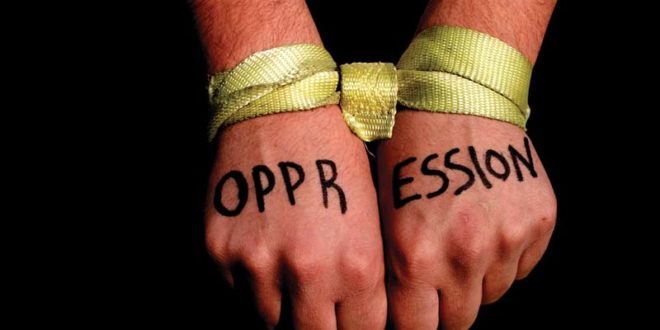
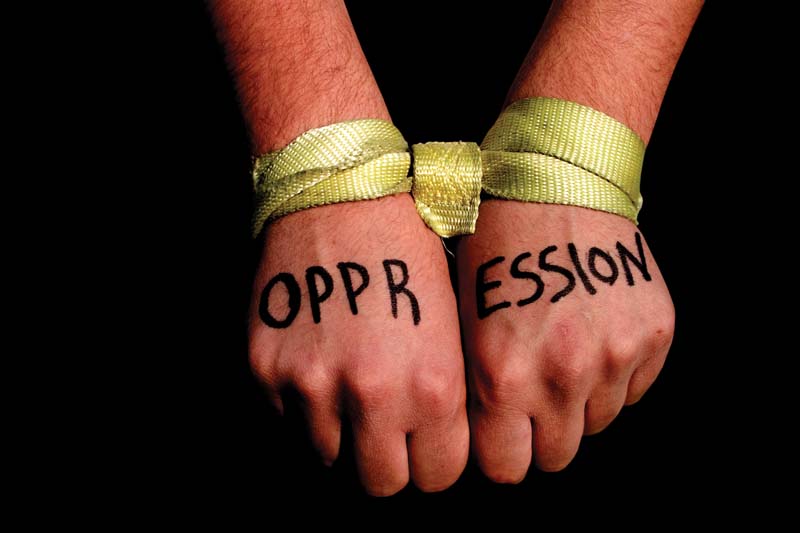
On October 5th, many will head to the polls. The purpose of voting – at least for most of them – will undoubtedly be to improve their well-being, to help resolve social conflicts, and to redirect resources to the most important public spheres for them. But let us see whether the political system, and democracy in particular, is an effective way to achieve such desires; that is, let us apply economic analysis to the political system.
First of all, in a system of voting for parties with a comprehensive program, voters by default vote for the “package” of measures, reforms and policies that the political force promises. Even if the voter agrees only with the party’s promises in the field of education, for example, he cannot help but “get” its other policies in the fields of healthcare, defense, social system, etc., whether he wants it or not. Therefore, except in the rare case where the potential voter fully supports the entire party campaign, he will get something he does not want. When it comes to the redistribution of resources, this de facto means that by voting, the voter gives the green light to the political structure to redirect the funds produced by the private sector to areas and activities that potentially no one – perhaps except the politicians themselves – wants. This means that, as we will see below, the political system is not at all aimed at satisfying the needs of individuals, while providing guaranteed inefficiency in the allocation of scarce resources.
Voting itself—the supposed way to express the preferences of the majority (and in fact, the largest voting minority)—generates distorted signals to politicians and analysts. Let’s compare this to a free-market economic system. If no one consumes good X, it signals entrepreneurs not to invest in its production and to direct scarce resources to something else that individuals want. In the political system, this signal is rarely interpreted in this way. Abstaining from casting a ballot, which is often a sign of disagreement with the existing system itself, is often misinterpreted by politicians and analysts as “giving up the vote” or as “refusing to participate in government.” The latter is somewhat true, because refusing to cast a “valid” ballot is often a refusal to use the current political system as a way to achieve the goals of some individuals. And that is precisely why it should be taken into account as an extremely valid and important decision by those who refused to vote, instead of either not being taken into account or being declared a wrong move by using naive and invalid logic. Another problem with voting signals is the above-mentioned voting for “packages”. This hides the real wishes of voters for politicians; the latter do not know whether they were elected for their reforms in area X or for their policies in area Y. The problem with communication and signals in the political system is also a guarantee of its inefficiency.
Every kind of political system creates dissatisfaction, because in almost every case politics is the forcible imposition of the views and desires of a minority (voters, ruling elite, sole monopoly of the king, etc.) over everyone else. Of course, as long as someone's views and desires coincide with those of the government (or at least do not differ significantly), he is unlikely to be harmed. But this is achieved only at the cost of sacrificing the needs of everyone else.
Every political system, including democracy, does not satisfy the requirement of “Pareto optimality.” Whether it is a “small” liberal state that is limited to providing “courts, an army, and a police force,” or a totalitarian state with a huge bureaucratic machine, the political system must always forcibly seize resources from productive individuals in the private sector (i.e., harm them) in order to direct them to satisfy its own interests and/or the interests of individuals related to it (whom it benefits). In this case, the pursuit of goals through the political mechanism, although again it may benefit specific individuals or organizations close to power, is to the detriment of all people.
We could not describe in just one article the distortion of the motives and culture of individuals, which is created by the political system. In turn, these distortions always lead to economic inefficiency, destruction of nature and waste of resources. Of course, ineffective government programs are not necessarily a consequence of the political system (for example, state pensions appeared only at the end of the 19th century during the time of Bismarck), but today they can be seen everywhere in the world. Through the so-called "public property", which exists all over the world, the system provides people and organizations with a free or cheap resource for which no one is responsible. This causes the real disappearance of resources, which, if they were private, would be a valuable economic asset. It is enough to look at the state of state nature parks as evidence of the harm of "public property".
The provision of “free” services (education, healthcare, “security,” etc.) causes people to fall into the trap of rationality and at the same time exhibit rent-seeking behavior. This means that, although many are aware of the economic inefficiency of political programs, no individual has any incentive to stop using them. Moreover, the fact that they are declared “free” causes more and more people to use political programs, which leads to even more colossal waste and even less individual responsibility.
It is naive to believe that voting and the political system can bring about positive change for society. Although brief, economic analysis shows us that this system absolutely always harms certain members of society to the benefit of others. Moreover, the political system destroys the scarce resources of society, because by default it takes them from individuals under the threat of punishment and directs them to undertakings of their own choice. That is, the funds are no longer spent on things that their original owners want, but on satisfying the will of politicians. If we want efficiency and prosperity, then the political system is the most inefficient way to manage the redistribution of resources.
As the elections approach, calls are heard from everywhere to vote "according to conscience", "out of stubbornness", "against the status quo", etc. But even if 100% of those eligible to vote exercise it on October 5, this will in no way solve the inherent problems of democracy and the political mechanism in general. Moreover, all the problems that humanity is trying to solve through political means can be solved much more effectively by the free market and freely acting individuals. Something that, as is evident from the populist slogans of all parties, is the exact opposite of the politicians' desires for more control, restrictions and power of the state over the individual.




One comment
Pingback: The Genocide in the Philippines – Another Lesson in Democracy – Avada Church