Slavcho Marinov September 14, 2018 Economy, Economic and fiscal policy
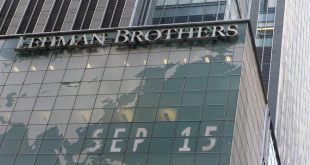
The world put out the fire with debt that will sooner or later have to be paid. On September 15, 2008, the United States woke up to the bankruptcy of its fourth largest investment bank, Lehman Brothers. With assets of $639 billion (at least on the balance sheet) and $619 billion in debt, it was the largest bankruptcy …
More » Nikola Filipov September 12, 2018 Economy, Economic and fiscal policy
Yesterday the government announced its intention to increase the salary levels in the state administration by 10%. The measure is expected to come into effect from January 1, 2019, and according to initial estimates it will cost all of us taxpayers between 800 million and 1.1 billion leva. This is certainly great news…
More » Slavcho Marinov September 06, 2018 Economy, Economic and fiscal policy
Emerging Market Pain May Be a Sign of Future U.S. Trouble Emerging markets are on fire. In the past week, Turkey’s currency crisis has been joined by similar financial conflagrations in Argentina and Indonesia. The central bank of the Gauchos raised its key interest rate to 60% (the world’s highest) from 45%, after …
More » Guest Author August 30, 2018 Economy, Economic and fiscal policy
Author: Martin Nikolaev One of the previous chairmen of the Financial Supervision Commission and a manager of part of the largest financial and industrial group in the country stated that "today the FSC finally died". The committee, scattered in terms of competence and already completely seized by politics, is truly experiencing its hardest days. And instead of this senseless agony to ...
More » Martin Terpev August 24, 2018 Editor's Choice, Economy, Economic and Fiscal Policy, Society
The state is about to take another inadequate step towards the integration of people with disabilities in Bulgaria. Changes in labor legislation are being discussed, according to which companies will be obliged to hire a certain number of employees with disabilities. Quotas are envisaged, depending on the number of employees in specific companies: employers with 20 to 49 …
More » Georgi Vuldzhev August 19, 2018 Economy, Economic and fiscal policy
The factors that lead to the current crisis in Turkey are at a fundamental level two. The huge balance of payments deficit and high levels of price inflation, especially since 2012. In turn, these two factors are a direct result of the fiscal and monetary policies that Turkey has chosen to follow over the last …
More » Guest Author August 10, 2018 Economy, Economic and fiscal policy
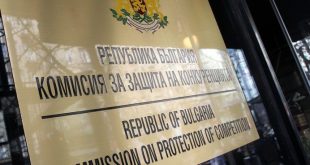
Guest author: Martin Nikolaev From fines for patent leather bags to a political bludgeon Until a month ago, the Competition Protection Commission was known as just one of the many useless state institutions, mainly dealing with fining online stores and women's boutiques for uncompetitively pampering Bulgarian girls with a bonus leather bag...
More » Ivelina Petrova August 06, 2018 Economy, Economic and fiscal policy
Author: Philip Bagus* *Philip Bagus is an associate professor at Rey Juan Carlos University. He is an associate scholar at the Mises Institute. He is the author of numerous books, including In Defense of Deflation, Blind Robbery!, The Tragedy of the Euro, and co-author of Deep Freeze: Iceland's Economic Collapse. While the euro crisis seems to be stuck in …
More » Georgi Vuldzhev July 21, 2018 Economy, Economic and fiscal policy
Over the past week, a stormy scandal has erupted in the media over the amendments to the Law on Privatization and Post-Privatization Control proposed by the Ataka party and supported by GERB and VMRO. Accusations have poured in from the media that the proposed amendments are completely "lobbying" aimed at protecting the financial interests of the Domuschievi brothers and Delyan Peevski in particular. The most …
More » Pencho Penchev July 17, 2018 Economic and Fiscal Policy, Culture and History
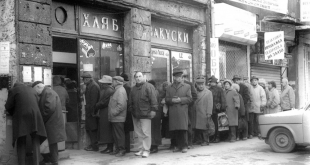
The emergence and spread of socialism, national socialism and fascism is not simply the result of an unfavorable combination of circumstances. These ideologies and their mutations in the conditions of various crises have the dangerous charm of convincing part of the masses of their rightness. In addition to being inhumane, they are also anti-market. When after September 1944 the Bulgarian …
More »
 EKIP– Expert Club for Economics and Politics A Different Opinion