Macroeconomic Monitor
Home / Society / Culture and History (page 10)

Culture and history

When the state itself destroys its cultural heritage

Very often, when a given object from the cultural and historical heritage of Bulgaria – and around the world – is in some unenviable condition, the reactions are that “the state should take care of it.” Care, of course, must be there, but the fact that state care is expected is no guarantee of quality. If the object is …

More »

The Capitalist Roots of Modern Christmas

Author: B. K. Marcus, fee.org Excited men in colorful rags gathered in front of the best houses in the city and demanded to be let in. Some of them disguised themselves in pseudo-luxurious clothes, as a mockery of the unwelcome hosts, while others blackened their faces or were dressed as animals. If you try …

More »

Origin and economic importance of Christmas

Christmas is the most commercialized holiday of the year?! While it is stigmatized with such statements, people rarely think about where Christmas comes from and what they actually celebrate. With this article, we bring some clarity to the historical origin of the holiday and its modern significance, especially in economic terms. How was Christmas born? The distant history Interesting …

More »

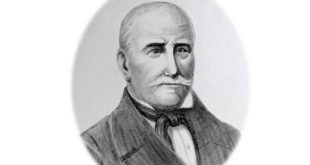
The life and philanthropy of Ivan Denkoglu

Ivan Denkoglu

On November 30, 1781, Ivan Denkoglu (Ivan Nenov Denkov) was born. He is known as the "benefactor of Sofia" and is one of the great donors of education and science during the Bulgarian Renaissance. Denkoglu was born into a poor family of the tailor Neno in the Sofia village of Balsha. As a child he was a shepherd ...

More »

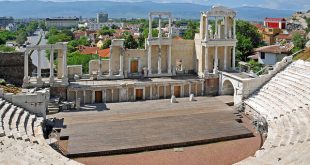
How does the free market protect cultural heritage?

cultural heritage

Or how foundations or other non-governmental organizations take care of cultural heritage around the world without government subsidies. Capitalism and the free market often receive criticism for topics related to products or activities that would not generate profit on their own, i.e. they cannot exist limited to their own budgets with their own …

More »

A different perspective on history

economic innovation

The history we are taught in school and presented to us by the daily media consists mostly of political events, processes and leaders. The course of world history is viewed through the entire series of political processes, including declarations, revolutions and elections. Thus, progress in it is measured through the prism of …

More »

Culture does not need more state funding

The problem in the field of culture is related to the spending of funds, not their quantity. This was stated in Investbook with Dimitar Vuchev by Kapana.bg editor-in-chief Teodor Karakolev. According to the interlocutor in the program, the top priority should be to resolve the problem related to what exactly cultural funds are spent on. “It is hardly …

More »

I am not the 99%

"Banality is the eighth deadly sin," says Milen Ruskov, the author of "Vazvishenie", "Chamkoria" and "Pocket Encyclopedia of Mysteries" in an interview. "The first person to compare a woman's sides to roses is a genius. The first to repeat it, of course, is an idiot," says Salvador Dali. For me, there is nothing more terrible than sameness. …

More »

The little shepherd who became a king through his hard work - the Bulgarian Henry Ford

Avram Chalovski

On November 3, 1943, Avram Chalovski died. He was known as one of the most significant Bulgarian industrialists and prominent donors at the beginning of the 20th century. He was called the "Bulgarian Henry Ford" by his contemporaries. He was born in 1854 in the then village of Galichnik on the territory of the Ottoman Empire, today part of …

More »

The Three Hadzhienovs – about a Bulgarian National Revival family from Kazanlak

Ivan Hadzhienov

1. Stefan Ivanov Hadzhienov / Hadji Enyo (1809 – 1894) The founder Persistent, skillful, enterprising, the Bulgarian emigrant in Bucharest managed to gain an enviable position as a large merchant and landowner. He was a prominent Russophile and an active participant in the activities of the “Virtuous Company” in all its cultural, educational and political affairs. He provided significant …

More »