Pencho Penchev December 02, 2018 Editor's Choice, Culture & History, Society
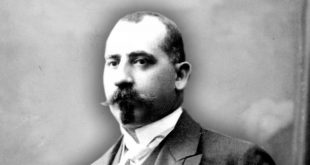
The words in the title are a quote from a parliamentary speech by the Bulgarian Prime Minister from 1926 to 1931, Andrey Lyapchev (1866-1933). They are an expression of the life credo that one should remain true to one's beliefs and not change them according to the requirements of a specific historical situation. It is well known that …
More » Pencho Penchev November 15, 2018 Culture and History, Society
Voting on legislative acts takes place in a well-known, transparent manner. Behind the precise wording of all the elements of a particular law, there are forces that rarely become publicly known. They are driven by a direct interest related to the operation and scope of the legislative act. Material interest is often masked by patriotic arguments. In …
More » Guest Author November 11, 2018 Economic theory, Culture and history
Guest author: Stefan Boyadzhiev Man never mounts higher than when he knows not where he is going. —Oliver Cromwell* Two weeks ago, EKIP published an article by Slavcho Marinov, which was dedicated to a critique of libertarianism. It, in turn, was the second part of the author's more general theme and idea, to …
More » Kaloyan Pravov November 09, 2018 Economic theory, Culture and history
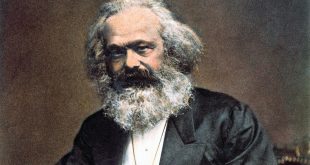
Despite its obvious failures in the twentieth century, Marxism remains one of the most widespread political and economic ideologies of our time. Western democracies have adopted many of the principles and policies advocated by Marx and his followers, and many post-colonial developing countries have built their societies on the basis of socialist …
More » Pencho Penchev October 29, 2018 Culture and History, Society
The love for state ownership and state economic initiatives is periodically revived. The economic effect of the activities of state-owned enterprises usually sharply contrasts with the expectations for the promotion of social justice, the reduction of inequalities, the reduction of poverty, etc. And because the devil is in the details, the assessment of the results of their functioning ...
More » Theodore Karakolev October 25, 2018 Urban Planning, Editor's Choice, Culture and History, Society
Parks are an invention and a luxury of modern society. This is true of many things that we take for granted, but they are a direct result of the general affluence in some parts of the world, a consequence of the division of labor, of scientific progress, and in general – the opportunity to live without working every day, all day, …
More » Pencho Penchev October 16, 2018 Editor's Choice, Culture & History, Society
Prohibitions have been part of the history of mankind since biblical times. Their emergence and public acceptance or rejection are the result of a long evolutionary process. In fact, the past abounds with examples in which attempts by state or other authorities to impose certain restrictions ended in failure. The most popular is probably the attempt to introduce …
More » Pencho Penchev October 01, 2018 Culture and History, Society
The basic facts about the history of Eastern Rumelia are well known. It was created with the consent of the main European powers, including the Ottoman Empire and Russia. According to the decisions of the Treaty of Berlin (July 13, 1878), the region has administrative autonomy under the direct authority of the Sultan. His representative is the Governor-General (Chief Governor), who …
More » Pencho Penchev September 21, 2018 Economy, Economic and Fiscal Policy, Culture and History, Society
Industrialization is one of the visible dimensions of the economic and social modernization experienced by developed capitalist societies in the 19th century. The process of the emergence of industrial structures is a complex result of relative spiritual, economic and scientific freedom, security of private property and appropriate institutional structure. Communists put industrialization among their main economic …
More » Pencho Penchev September 10, 2018 Culture and History, Society
The economic bankruptcy of socialism has long been convincingly proven by Ludwig von Mises and Friedrich Hayek. In the absence of private ownership of the means of production, there is no market, and without a market, money prices cannot be formed. Without prices, rational production, construction, etc. cannot be organized. Separately …
More »
 EKIP– Expert Club for Economics and Politics A Different Opinion