Pencho Penchev September 27, 2021 Culture and history
In the famous essay "What is seen and what is not seen" by the French economist Frederic Bastiat, there is a brilliant insight. It is that every action in the socio-economic sphere has visible but also invisible consequences. The invisible are events or processes that did not happen because of the undertaking of one or …
More » Pencho Penchev September 13, 2021 Culture and history
The title is a quote from the Report-Analysis of Quality, Defects and Complaints at the Electric Transport Plant "6th September" - Sofia. The document dates from the second half of 1961. It is an internal attempt by the plant to identify organizational, technical and other shortcomings in the production of electric forklifts. With the help of authentic archival sources from the end of …
More » Pencho Penchev September 03, 2021 Culture and History, Society
The belief that various economic and social problems are solved by adopting or improving special laws, regulations, and ordinances is a persistent myth. Its existence is most easily established in the conditions of an election campaign. Then all competitors offer legislative programs that should improve the lives of voters. The myth is systematically nurtured …
More » Theodore Karakolev August 20, 2021 Culture and History, Society
Photo: BGNES A statement by Acting Minister of Economy Kiril Petkov at the Sofia Arsenal Gallery stirred up the spirits in the cultural sphere a few days ago. It was presented as shocking news in a headline by clickbait media that almost from tomorrow all money for culture will be stopped and which orchestra or museum will not …
More » Pencho Penchev August 18, 2021 Culture and History, Society
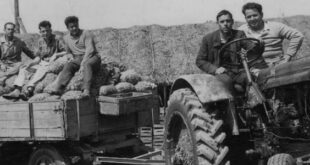
The socialist economic model was imposed on the Bulgarian countryside between 1948 and 1958. The process is known as collectivization. Labor Cooperative Agricultural Farms (TCAF) were created by force, into which land, livestock and equipment were taken. Over the years, they were enlarged, restructured, renamed, etc., but their essence was not …
More » Pencho Penchev July 29, 2021 Culture and History, Society
In a previous post, we showed some of the reasons why the political system cannot be relied on to successfully solve socio-economic problems (see here). The theory of regulatory captivity and Bulgarian economic history revealed how the interaction between management structures and interest groups ends in a conspiracy against society and the plunder of resources. …
More » Pencho Penchev July 10, 2021 Culture and History, Politics
Different views on the (re)organization of society are promoted with different labels. Probably the most widely used are left and right. They should briefly explain the essence of proposed reforms and policies, and help identify the political opponent. In this text we will read the views of a Bulgarian “right” from the 1930s and early …
More » Pencho Penchev June 29, 2021 Culture and History, Society
In his book "Capitalism, Socialism and Democracy", the economist Joseph Alois Schumpeter (1853-1950) argued that capitalism is an evolutionary and dynamic system. The main impulse that causes evolution and dynamism comes from the supply of new consumer goods, new methods of production or transport, new markets and new organizational forms of enterprises, ...
More » Pencho Penchev June 15, 2021 Culture and History, Society
...between those at the state table and everyone else. The restoration of Bulgarian statehood in 1878 marked the beginning of a deep class division in the Bulgarian nation. From the very first days and months of the Third Bulgarian State, two classes quickly and spontaneously formed. One can be conditionally defined as taxpayers, and the other ...
More » Pencho Penchev May 06, 2021 Culture and History, Society
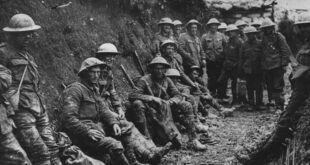
The title is a quote from the popular Bulgarian march "Great is our soldier", which was written in 1916. The author of the text is Second Lieutenant Konstantin Georgiev Popov from the 23rd Infantry Shipka Regiment. The year of writing is important. At that time, the country was involved in the third war in the second decade of the 20th century. Bulgarian participation ...
More »
 EKIP– Expert Club for Economics and Politics A Different Opinion