Miroslav Alexandrov Financial Fair Play was created in 2013 with the aim of improving the financial situation of football clubs by preventing them from spending more than they earn (or more precisely, no more than 5 million euros for any 3-year period) in their pursuit of quick success. UEFA's good intention was to …
More »2014
Guest article: Who wins and who loses from “export promotion”?
Since the currency board was introduced in Bulgaria 17 years ago, every now and then some political pundit appears in the Bulgarian press to tell us that it is harmful to the Bulgarian economy. Now, I might agree with the statement in principle, considering that any …
More »The structure of public procurement in Bulgaria – the new initiative of EKIP and BizMonitor
The state likes to redistribute funds acquired from tax revenues to areas it calls “priority”. This process is usually opaque and manipulated to benefit one or another interest. There is no other area of public administration where this is more visible than the allocation of public procurement. In the structure of the Bulgarian …
More »Whose interests does the ECB protect?
"The European Central Bank (ECB) is the central bank responsible for the single European currency, the euro. The ECB's main task is to maintain the purchasing power of the euro and, consequently, price stability in the euro area. The European Central Bank is committed to performing efficiently all central banking tasks entrusted to it, and in doing so …
More »Guest article: Commercialization of Bulgarian education? Well, come on, it's about time
Martin Tarpev Education in Bulgaria has never been commercialized - and has been disgraced. From the mouths of politicians we hear and in their programs we read that one of Bulgaria's fundamental problems was commercialization, and specifically the commercialization of education. To realize the anti-logic in this statement, it is enough to simply...
More »The political mechanism, democracy and efficiency
On October 5th, many will head to the polls. The purpose of voting – at least for most of them – will undoubtedly be to improve their well-being, help resolve social conflicts, and redirect resources to the most important public areas for them. But let's see if the political …
More »The ideas of Radan and the Gamble
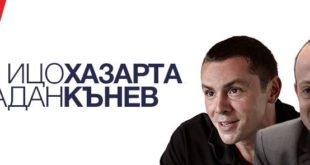
Yesterday, in a successful PR move, the headquarters of the Reformist Bloc managed to include in Radan Kanev's live interview with Kapital newspaper hip hop artist Itso Hazarta - making the conversation significantly more interesting and more watchable. The Upsurt rapper himself insisted in front of the camera that he wanted to support "Radan, the people around him" because of ...
More »Higher social security contributions – less employment
Although the BSP has not been in power for some time, the party spirit and "social" sentiments continue to hover in the corridors of power. Further proof of this is the actions of the acting Minister of Social Affairs, Yordan Hristoskov. A few weeks ago, he warned that if unions and employers do not agree on an increase ...
More »Income inequality between men and women – a cause for concern or a hidden misconception?
Can we talk about inequality when we compare the free choices of different individuals regarding what education to get or what job to start? In a competitive market, we cannot expect everyone to earn the same, and very often people confuse the difference in wages with discrimination or inability to …
More »10 things inflation is to blame for
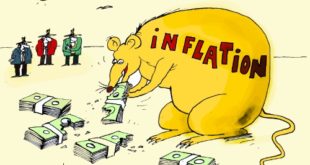
Andreas Marquardt Inflation, defined as the expansion of the fiat money supply, is a primary evil whenever and wherever it occurs. It is the primary and most overlooked cause of many economic and social problems, including: 1. Inflation causes the economy to be cyclical An increase in the money supply, involving more lending, means that new …
More »
EKIP– Expert Club for Economics and Politics A Different Opinion