Pencho Penchev
Professor Pencho Penchev is a lecturer in "Economic History" at the Department of "Political Economy" at the Faculty of General Economics of the University of National and World Economy.
Pencho Penchev January 09, 2022 Economic theory, Culture and history
One of the important questions about the social order is whether ideas determine the actions of the authorities or do the representatives of the authorities order the ideas they need? The question, posed in this way, is so general that any answer can be both right and wrong. There are enough world authorities who take opposing positions, …
More » Pencho Penchev December 28, 2021 Culture and History, Society
A Bulgarian translation of the novel "In the First Circle" by Aleksandr Solzhenitsyn (1918-2008) was recently published. The story is based on his life experience and concerns one of the so-called sharashkas - secret Soviet camps where imprisoned scientists worked on intelligence or military projects. The disappointment of ...
More » Pencho Penchev December 16, 2021 Culture and History, Politics
Emotions and feelings inevitably have an impact on the overall socio-political and economic life. It is especially strong in decisive historical moments. This justifies the interest in them. The main questions that will be answered in this text are: when and under what conditions has political life in Bulgaria caused joy, delight …
More » Pencho Penchev December 05, 2021 Culture and History, Society
In the footsteps of a politically useless past The politically useless past is ugly and does not inspire national pride or enthusiasm among voters. That is why it is left to rest in peace in archives and libraries. When told meaningfully and honestly, it functions as a vaccine against social diseases such as populism, demagogy, corruption, use …
More » Pencho Penchev September 27, 2021 Culture and history
In the famous essay "What is seen and what is not seen" by the French economist Frederic Bastiat, there is a brilliant insight. It is that every action in the socio-economic sphere has visible but also invisible consequences. The invisible are events or processes that did not happen because of the undertaking of one or …
More » Pencho Penchev September 13, 2021 Culture and history
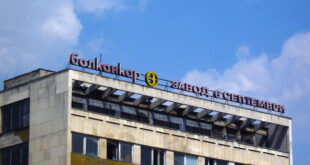
The title is a quote from the Report-Analysis of Quality, Defects and Complaints at the Electric Transport Plant "6th September" - Sofia. The document dates from the second half of 1961. It is an internal attempt by the plant to identify organizational, technical and other shortcomings in the production of electric forklifts. With the help of authentic archival sources from the end of …
More » Pencho Penchev September 03, 2021 Culture and History, Society
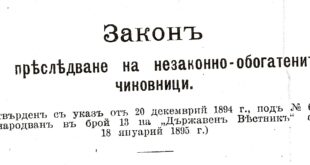
The belief that various economic and social problems are solved by adopting or improving special laws, regulations, and ordinances is a persistent myth. Its existence is most easily established in the conditions of an election campaign. Then all competitors offer legislative programs that should improve the lives of voters. The myth is systematically nurtured …
More » Pencho Penchev August 18, 2021 Culture and History, Society
The socialist economic model was imposed on the Bulgarian countryside between 1948 and 1958. The process is known as collectivization. Labor Cooperative Agricultural Farms (TCAF) were created by force, into which land, livestock and equipment were taken. Over the years, they were enlarged, restructured, renamed, etc., but their essence was not …
More » Pencho Penchev July 29, 2021 Culture and History, Society
In a previous post, we showed some of the reasons why the political system cannot be relied on to successfully solve socio-economic problems (see here). The theory of regulatory captivity and Bulgarian economic history revealed how the interaction between management structures and interest groups ends in a conspiracy against society and the plunder of resources. …
More » Pencho Penchev July 22, 2021 Economy, Economic and fiscal policy
"Waiting for Godot" is a popular play by Samuel Beckett in which nothing happens. Two tramps wait for a certain Godot who never comes. Waiting for someone and/or something that never comes is an apt metaphor for the relationship between rulers and society. Politicians and bureaucrats are …
More »
 EKIP– Expert Club for Economics and Politics A Different Opinion