ЕКИП – Експертен клуб за икономика и политика Едно различно мнение

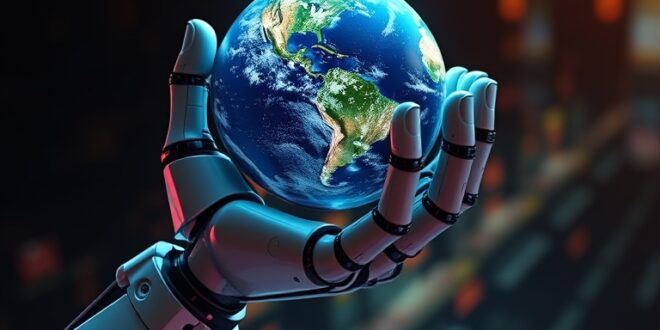
In 2025, world affairs are precariously poised between the bright horizon of technical ingenuity and the dark legacy of conflict. On one side stands Aldous Huxley’s futuristic anti-utopia: a realm powered by artificial intelligence, biotechnology and hyperconnected digital societies that promise longer and more carefree lives. On the other side is Erich Maria Remarque’s bleak account of the scars of war – how national rivalries, even temporarily suppressed, can explode into tragedy. In today’s multi-polar climate, these two perspectives intersect. And here is a brief tale of what happens in 2025…
Once upon a time, in the not-too-distant year of 2025, the world stage looked like a grand tapestry of shifting alliances, clashing ambitions and quiet hopes. At the center of this panorama stood the world’s two most feared powers, the United States and China. Like rival clans in a vast kingdom, they competed for economic and technological supremacy. From Silicon Valley to Shenzhen, their industries thrived, but each side was strengthening national regulations designed to protect critical sectors from foreign interference. In theory, decoupling sounds noble, but in practice, interdependence remains insurmountable. Even as officials in Washington talked about protecting supply chains, their national industries still sought Chinese manufacturers, just as Beijing’s new data centers required American software breakthroughs. These delicate ties gave the world a semblance of stability, but simmering beneath the surface was the troubling realization that neither side could fully trust the other.
If we head west, we will enter the withering realm of the European Union, often compared to a grand palace that has lost some of its lustre. The EU enjoyed great economic influence and had once promised to become a beacon of ‘strategic autonomy’. Yet the corridors of power in Brussels echoed with disagreements over budgets, refugee policies and common defence. Sometimes start-ups with bold ideas found Europe’s legal maze too difficult, leading them to cross oceans in search of friendlier centres of innovation. Meanwhile, visions of clean energy and minimised imports of Russian fossil fuels rang through leaders’ speeches, but ongoing reports of oil supplies slipping through complicated supply chains have cast doubt on the sincerity of these promises. The EU’s dream of a unified defence pact has remained a mere whisper at summits, overshadowed by member states’ concerns about local sovereignty. In this realm, unity was professed but rarely practiced to its full extent, leading some courtiers to be skeptical of the Union’s ability to muster real collective action.
Beyond these familiar territories lies the expansive alliance known as BRICS, a confederation of states, each with its own ambitions and trials. Brazil, Russia, India, China and South Africa have come together under a banner that promises an alternative financial order less dependent on the old Western structures. At first glance, the pact seemed enticing. India’s growing population and digital skills suggested an economic renaissance, while Russia, cut off from many Western deals because of its war-loving ambitions, saw the BRICS as a more favourable place for its energy exports and technology. China, which has always been steady among them, invested in digital payment systems that promised to revolutionise cross-border trade. Yet, like a feudal council of powerful lords, these five could not ignore their private rivalries. China and India squabbled over disputed borders. Brazil, torn between nationalist appeals and global commitments, vacillated in its commitment. South Africa, burdened by domestic problems, found it challenging to respond fully to the enthusiasm of its partners. And so, even as the BRICS leadership talked of new trade corridors and alternative currencies, scepticism persisted: how long, the sceptics wondered, would it be before the disparate interests within the grouping would fray?
Turning south leads to a vast continent filled with promise and peril. Africa’s population exceeded a billion and a half, bringing with it the potential for burgeoning consumer markets, inventive start-ups and dynamic cultural movements. The African Continental Free Trade Area was the new shining emblem of this drive, creating a single economic space designed to raise incomes and bring nations closer together. Foreign applicants flocked: some came from China, expanding data centers and digital trade routes; others arrived from Europe, seeking resources for renewable technologies or labor for manufacturing. In epicentres like Lagos and Nairobi, innovators experimented with fintech tools, hoping to bypass the traditional constraints that have long hampered Africa’s rise. However, conflict raged in parts of the Sahel and the Horn of Africa, raising doubts about the durability of this renaissance. Local institutions, already fragile, struggled to quell the rebellions. Even as hope emerged, skeptics feared that corruption, poor infrastructure and sporadic violence could keep Africa’s dream half-realized forever.
Far away in the arid but prosperous Gulf, a very different drama is playing out. Here, countries have enjoyed high oil and gas revenues, bolstering their fortunes with futuristic megaprojects that glitter like gems under the desert sun. Saudi Arabia touted dramatic transformations as part of its grand „Vision,“ channeling countless funds into advanced research centers and breathtaking architectural endeavors. The United Arab Emirates also boasted futuristic cities and advanced logistics networks, attracting global investors. But rivalries simmered behind closed doors, and strained relations with Iran cast a long shadow over sea routes, such as the Strait of Hormuz, through which much of the world’s energy still passed. Traditional security ties with the United States persisted – though they were less reliable as Washington’s priorities shifted again – prompting the Gulf rulers to deepen contacts with other giants such as China. Beyond the glossy facade of AI-driven cityscapes, labor inequality persisted, and policymakers struggled with the harsh reality that a sudden geopolitical shock could reverberate across the globe.
Taken as a whole, these kingdoms formed a planet of protected alliances and uneasy truces. The unstoppable rise of technology-from quantum computers to automated factories-sometimes seemed like a dazzling promise of prosperity. Yet at every turn, old feuds and new disputes undermined trust. Even the shiny facade of global markets did not guard against suspicion: while leaders’ summits sometimes led to agreements, deeper national interests often undermined collective progress. Doubts prevailed among insiders – seasoned diplomats, cautious investors and committed observers: perhaps the world had become too complex to sustain simple treaties. Can disparate agreements and half-hearted measures really prevent the next crisis?
The story of 2025 thus resembled a great but fractured history of kingdoms bound neither by complete harmony nor by open hostility. In each, grand ambitions emerged that clashed with structural flaws or lingering fears. Although cataclysm had not yet erupted, the sense that the next plot twist might upset the balance was in the air. For all the talk of forming grand alliances and embracing modern miracles, it remained unclear whether these scattered efforts would evolve into a broader and more stable order or whether hidden fault lines would inevitably crack under the weight of so much ambition.
Ultimately, whether 2025 will be a step toward harmonious cooperation or an uneasy prelude to future conflict depends on the choices leaders and societies make at this critical juncture. Trade deals and technological cooperation can offer a path to peace if combined with genuine efforts to overcome inequalities and regional flashpoints. If we fail, then the dazzling but anti-utopian possibilities of a Huxleyan tomorrow risk collapsing under the weight of Remarque’s unlearned lessons about conflict. In this delicate balance lies the fate of the multipolar world, a world in which the promise of cooperation collides with the danger of new divisions.