Macroeconomic Monitor
Home / 2014 (page 7)

2014

Five unresolved issues for Thomas Piketty in the wake of the Financial Times controversy

June 16, 2014 by Phil Magnes In the past few days, Thomas Piketty and a few of his more unscrupulous defenders have begun to declare the data controversy surrounding Capital in the Twenty-First Century to be over, following the publication of Piketty’s response to Chris Giles of the Financial Times. I argue that the controversy is not …

More »

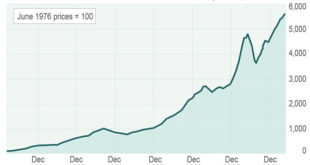
Ballooned Recovery – Part 3: The London Real Estate Bubble

We have written on this blog many times about bubbles created in various sectors of the economy “thanks” to government intervention in one form or another. Most often through manipulation of interest rates and provision of monetary stimulus by the central bank or government intervention in the form of fiscal stimulus and certain legal …

More »

Educated as if for corruption

It is true that in recent years people have dared to do business, the shootouts in the center of Sofia have long been forgotten, and shady deals seem to be disappearing (or simply being more skillfully concealed). However, is corruption in Bulgaria a fading phenomenon? Although such a development has been a long-standing dream, its implementation is still …

More »

Guest article: On the price of the "Crisis"

Iliya Lingorski* Yesterday, Sunday, June 29, we were reassured by our politicians that the crisis is over. Even that "there is no crisis." "Political parties and institutions declared their determination and readiness to provide the necessary resources and implement all necessary measures to guarantee banking stability in the country." the president said decisively ...

More »

Guest article: On the price of the Crisis

Yesterday, Sunday, June 29, we were reassured by our politicians that the crisis was over. Even that "there is no crisis." "Political parties and institutions declared their determination and readiness to provide the necessary resources and implement all necessary measures to guarantee banking stability in the country," President Plevneliev said decisively. They said ...

More »

In the footsteps of Mises in Vienna* – part two

The outbreak of World War I in 1914 came as no surprise to Mises. Unlike most of his contemporaries, however, he rejected the wild nationalism and imperialism that had gripped European societies, leading to the outbreak of war and ultimately the end of the relatively liberal period in Europe. As an artillery officer …

More »

Voluntary alternatives to the welfare state

It is difficult to argue with arithmetic and, accordingly, with the thesis that the welfare state is facing bankruptcy. About 30% of everything produced in Europe and North America is seized by the state and spent to improve the well-being of certain social groups – the poor, children, pensioners, etc. However, this redistribution ...

More »

Prostitution and drugs to help politicians – the new manipulations of GDP

In 2013, we witnessed various (more or less) creative ways to manipulate GDP. From the US, to Greece and the UK, to Nigeria[1], the index fell victim to politicians’ desire not to pay the price for the economic crises, harmful policies and cronyism they create. Starting this year, the NSI also …

More »