Pencho Penchev August 18, 2021 Culture and History, Society
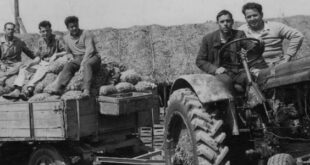
The socialist economic model was imposed on the Bulgarian countryside between 1948 and 1958. The process is known as collectivization. Labor Cooperative Agricultural Farms (TCAF) were created by force, into which land, livestock and equipment were taken. Over the years, they were enlarged, restructured, renamed, etc., but their essence was not …
More » Pencho Penchev July 29, 2021 Culture and History, Society
In a previous post, we showed some of the reasons why the political system cannot be relied on to successfully solve socio-economic problems (see here). The theory of regulatory captivity and Bulgarian economic history revealed how the interaction between management structures and interest groups ends in a conspiracy against society and the plunder of resources. …
More » Pencho Penchev July 10, 2021 Culture and History, Politics
Different views on the (re)organization of society are promoted with different labels. Probably the most widely used are left and right. They should briefly explain the essence of proposed reforms and policies, and help identify the political opponent. In this text we will read the views of a Bulgarian “right” from the 1930s and early …
More » Pencho Penchev June 29, 2021 Culture and History, Society
In his book "Capitalism, Socialism and Democracy", the economist Joseph Alois Schumpeter (1853-1950) argued that capitalism is an evolutionary and dynamic system. The main impulse that causes evolution and dynamism comes from the supply of new consumer goods, new methods of production or transport, new markets and new organizational forms of enterprises, ...
More » Pencho Penchev June 15, 2021 Culture and History, Society
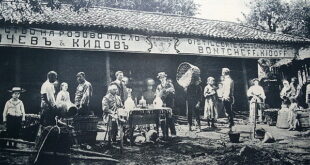
...between those at the state table and everyone else. The restoration of Bulgarian statehood in 1878 marked the beginning of a deep class division in the Bulgarian nation. From the very first days and months of the Third Bulgarian State, two classes quickly and spontaneously formed. One can be conditionally defined as taxpayers, and the other ...
More » Pencho Penchev May 06, 2021 Culture and History, Society
The title is a quote from the popular Bulgarian march "Great is our soldier", which was written in 1916. The author of the text is Second Lieutenant Konstantin Georgiev Popov from the 23rd Infantry Shipka Regiment. The year of writing is important. At that time, the country was involved in the third war in the second decade of the 20th century. Bulgarian participation ...
More » Theodore Karakolev May 05, 2021 Culture and history
Often in more specialized circles, there is talk of the “Overton Window” – the conditional shift of the political “center” to the left over time, as ideas once considered quite ordinary are today presented in society as “extreme”. Here we will go back 100 years, to the time of the Bulgarian National Union of Socialists and Alexander Stamboliyski. The government …
More » Georgi Vuldjev April 30, 2021 Culture and History, Society
Let's talk about culture on Good Friday. Specifically, about Tsvetelina Yaneva, the retrowave aesthetic and the lost futurism of contemporary mass culture. Keep reading if you want to find out what Tsvetelina Yaneva and Elon Musk have in common. Do you listen to Tsvetelina Yaneva, ladies and gentlemen? And do you watch her music videos? …
More » Pencho Penchev April 20, 2021 Culture and History, Society
The April 1876 uprising is a landmark event in Bulgarian history. The motives for it lie in the dissatisfaction of some of the Bulgarians of the time with the Ottoman state power. The history of the uprising is often misused, but there are two neglected and important aspects in it. First of all: it covered settlements with …
More » Georgi Vuldjev February 19, 2021 Culture and History, Society
"Margin Call" is probably my favorite feature film about finance. I say "maybe" because the far more famous "The Big Short" will always remain a serious contender. But "Margin Call" has a certain charm and, I would say, depth that "The Big Short" lacks. In "Margin Call" we follow the reaction of a large fund ...
More »
 EKIP– Expert Club for Economics and Politics A Different Opinion