Pencho Penchev January 17, 2021 Culture and History, Society
The market process played an important role in the development of Bulgarian society before the Liberation. It steadily penetrated even into spheres and areas that were perceived as isolated from it. Its spontaneous manifestations left an imprint on educational work, cultural institutions and social life. Read through the prism of voluntary exchange, supply and demand …
More » Guest Author September 20, 2020 Economics, Economic theory, Culture and history
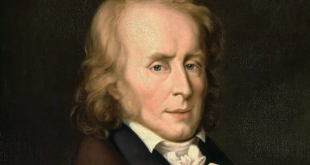
Author: Stefan Boyadzhiev “Variety is life, uniformity is death.” Benjamin Constant is one of the most notable and colorful representatives of the generation of classical liberals between Montesquieu and Tocqueville. Unfortunately, to a large extent, he shares the fate of another great French thinker, Frederic Bastiat, and remains poorly recognized by future generations, which …
More » Theodore Karakolev August 05, 2020 Culture and History, Society
Where are the people of culture? Why aren't directors of museums, galleries and theaters protesting too? The obvious and logical question with a clear – but ungiven – answer has been circulating on social networks in recent days. Here we will give this answer. There are people of culture who support the government. This should not be …
More » Theodore Karakolev June 08, 2020 Culture and History, Society
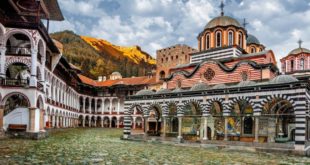
The Rila Monastery will receive over half a million leva as a state subsidy, it became clear in news from early June. In typical government style, a sensitive and popular topic related to one of the most important sites in Bulgarian history and culture was immediately resolved through unclear procedures by Prime Minister Boyko Borissov. …
More » Pencho Penchev April 18, 2020 Economic theory, Culture and history
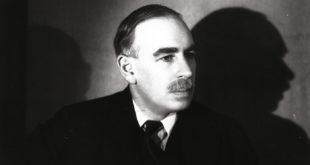
Many of the policies that our and foreign leaders are proposing in the context of the Covid-19 pandemic can be described as Keynesian, named after the English economist John Maynard Keynes (1883-1946). He was born in Cambridge, UK, his basic education was in mathematics, he listened to lectures on economics from brilliant scholars such as …
More » Christian Atanasov April 14, 2020 Culture and History, Society
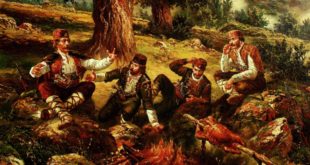
The carrying of weapons among the Bulgarian population has deep traditions even during the Ottoman rule. Contrary to popular belief, the Bulgarians were not at all defenseless. In fact, on the contrary, they were quite often found with weapons in their hands despite the suspicion and prohibitions of the authorities, and during the period of the Kardzhali unrest (the end of the 17th century …
More » Christian Atanasov April 06, 2020 Culture and History, Society
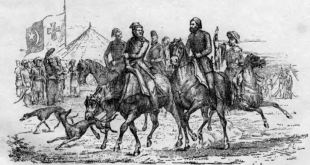
Author: Assoc. Prof. Dr. Hristiyan Atanasov The possession of weapons by Bulgarians during the Ottoman rule is not an unexplored or neglected problem by historians. However, it hardly figures in the mass consciousness, with the exception of the image of the outlaws, who in most cases are presented as rebels against the authorities and "people's champions". In fact ...
More » Guest Author April 03, 2020 Culture and History, Society
Author: Stilgar Naibov The reason consuming art is a good way to learn history is that it provides a better window through which to see how a society thinks than directly studying history. I clearly remember how in 9th or 10th grade we had to write some kind of analysis of Don Quixote …
More » Pencho Penchev March 29, 2020 Culture and History, Society
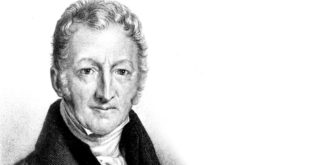
Thomas Robert Malthus (1766-1834) was an English economist whose name is associated with an influential theory. He argued that if there are no limitations on resources, population increases in geometric progression. The doubling period is 25 years. Over the same period, food supplies increase in arithmetic progression. This results in a severe …
More » Pencho Penchev March 23, 2020 Culture and history
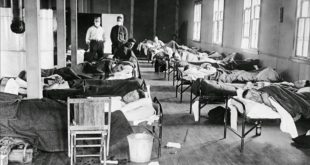
In recent days, Bulgarian politicians have, with surprising consensus, declared open war on the invisible enemy Covid-19. Measures have been and are being taken that are akin to martial law. Forgotten practices such as curfews, total control over behavior, control over freedom of speech, restrictions disproportionate to the danger, and attacks on private …
More »
 EKIP– Expert Club for Economics and Politics A Different Opinion