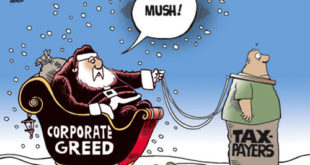
In the eyes of most people, business profits, especially large profits, are a bad thing. In 2010, a social survey in the United States found that the majority of people associate large profits with greater social harm [1]. Similar prejudices are also very widespread in our native Bulgaria, further fueled by our nearby socialist …
More »What will the ECB's monetary socialism lead to?
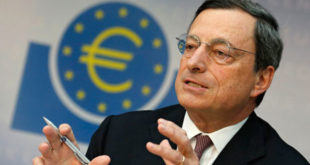
On March 9, the European Central Bank (ECB) launched its expanded asset purchase program, which was officially announced at the end of January at the central bank’s first board meeting of the year. With the expansion of the program’s scope and volume, the ECB will aim to buy 44 …
More »The moratorium on timber exports – an unprecedented state intervention
The ban on the export of unprocessed timber has provoked a lot of reactions, mainly because of the very initiative taken by the government. The ruling coalition, which has become known for its spontaneous decisions attacking specific problems under the guise of the term “reform”, has once again pitted business against society. The particular populism seen in …
More »Piketty backs down on his inequality thesis
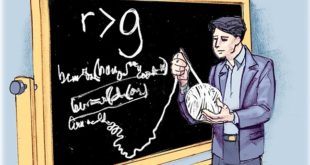
When the French economist Thomas Piketty published his massive paper arguing that the steady rise in economic inequality was inevitable under capitalism, his thesis and its supposed and empirical basis quickly gained support among leftists, who echoed Piketty’s call for greater redistributive taxation. Other economists spent a lot of time …
More »Violent egalitarianism and the harms of quotas for women in the workplace
The rhetoric of leftist movements is often peppered with arguments about inequality. Their strongest populist theses are based precisely on social phenomena, presented as “social inequalities” that should be remedied through the power of the state apparatus and regulatory coercion. The reason for using this type of populism is that it allows for easy …
More »Should we expect a tightening of monetary policy in the US soon?
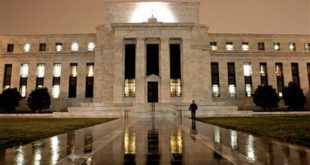
Several years after the start of the financial crisis and the subsequent launch of the quantitative easing program, politicians and central bankers reported a positive change in the values of some economic indicators, reading this as a signal of an improvement in the general situation of the economy and the labor market. In order to achieve some of the desired …
More »The weak defense of the new government debt
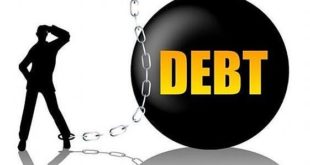
About 10 days ago, it became clear to the general public that the government would issue new external debt worth 8.1 billion euros (16 billion leva) in the form of bonds within the period 2015-2017. This news polarized commentators and the public into two camps: defenders of the debt (mainly "right-wing" analysts and ...
More »"Free market" does not mean "pro-corporation"
Art Carden Are the motives of those who defend the “free market” the same as those who support “corporations”? Libertarian economists find this question frustrating because our enthusiasm for free markets is often confused with enthusiasm for particular industries or corporate interests. But just because something …
More »The irresponsible populism of free sanitation
At the end of last year, GERB announced its intention to initiate a program for free renovation of EPK blocks with more than 36 apartments. Today, a few months later, despite the obvious problems and the lack of quality planning, the program is a fact and is already in its initial stage. For a large part of the citizens, …
More »When will we catch up with the Chileans (in terms of pensions)?
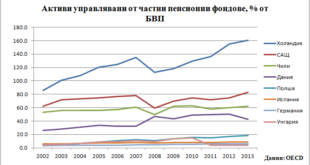
Often, when something in the economy or politics of their home country is bothering them, Bulgarians start comparing themselves to the countries of Western Europe and the United States, which are supposedly considered models of the good life. However, the Western world has changed a lot in the last few decades, from a symbol of capitalism and ...
More »
EKIP– Expert Club for Economics and Politics A Different Opinion